
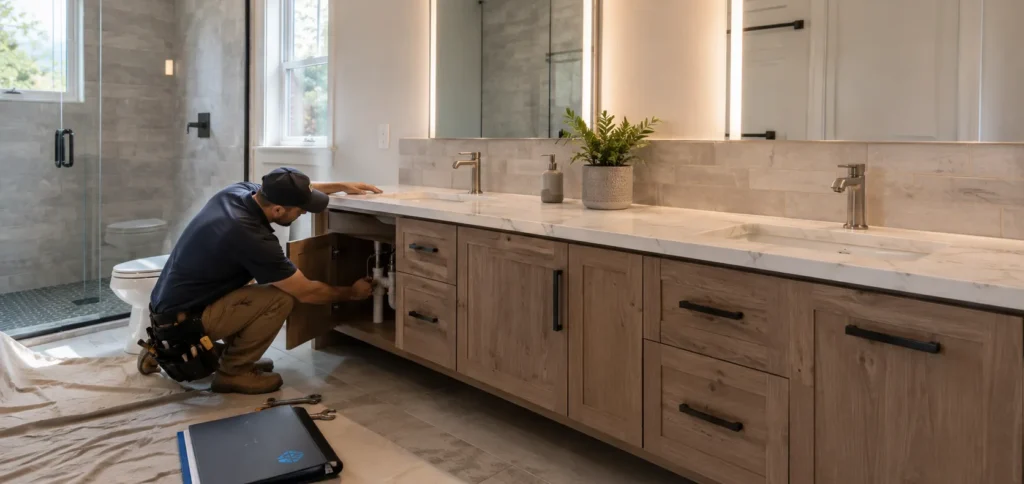
Bathroom vanity installation typically costs $600 to $4,000, including both the vanity and labor. The vanity itself usually ranges from $300 to $3,000, while installation labor generally falls between $100 and $1,000, depending on the project.
Your final price depends on several factors, including the vanity size, material, single or double sink configuration, custom or prefabricated construction, plumbing modifications, countertop selection, and the condition of the existing bathroom. Even relatively small upgrades, such as relocating drain lines or replacing flooring beneath the cabinet, can noticeably increase the overall cost. For larger bathroom renovation projects, Construction Estimating Services can help contractors and homeowners develop accurate budgets by accounting for materials, labor, plumbing modifications, and other project-specific costs.
This guide breaks down each cost factor in detail, with pricing tables, labor costs, material
comparisons, and practical ways to keep your project within budget.
How Much Does Bathroom Vanity Installation Cost?
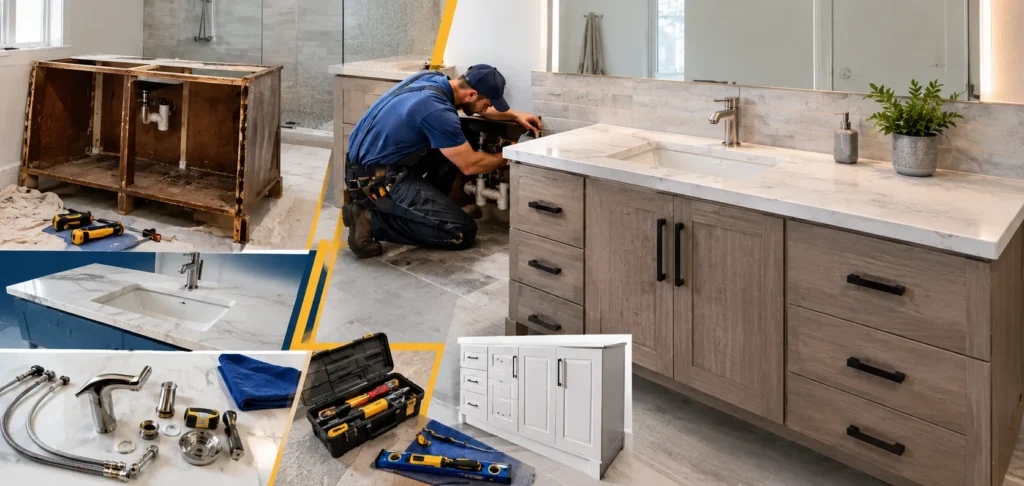
For most homeowners, installing a new bathroom vanity costs between $600 and $4,000, including the vanity cabinet, countertop, sink, fixtures, and installation. Projects that use existing plumbing and a standard prefabricated vanity tend to be on the lower end of the range, while custom cabinetry, premium countertops, or plumbing alterations push costs significantly higher.
| Cost Item | Typical Cost |
| Bathroom vanity unit | $300–$3,000 |
| Installation labor | $100–$1,000 |
| Old vanity removal | $100–$500 |
| Plumbing modifications | $150–$2,000+ |
| New faucet & drain assembly | $150–$800 |
| Countertop upgrades | $250–$3,000 |
| Total installed cost | $600–$4,000 |
Most vanity installations are completed by a licensed plumber, handyman, or bathroom remodeling contractor. Labor is usually straightforward when the new vanity fits the existing plumbing layout. Projects requiring relocated supply lines, drain connections, electrical work, or structural changes naturally require extra labor and increase the total budget.
Bathroom Vanity Installation Cost by Vanity Size
Vanity size has one of the biggest impacts on installation cost because it affects cabinet pricing, countertop dimensions, sink configuration, labor time, and material quantities. Larger vanities are harder to install, often require more countertop material, and frequently include double sinks that increase plumbing work.
| Vanity Size | Average Installed Cost | Typical Use |
| 24–30 inches | $300–$900 | Powder room, small bathroom |
| 36–48 inches | $650–$1,500 | Guest or full bathroom |
| 60–72 inches | $1,200–$3,000 | Primary bathroom, double vanity |
Bathroom Vanity Installation Cost by Vanity Type
The style of vanity you choose affects both material costs and installation complexity. Some models simply connect to the existing plumbing, while others require reinforced walls, custom cabinetry, or additional plumbing work.
| Vanity Type | Typical Size | Installed Cost | Notes |
| Freestanding | 24–48 in. | $500–$1,200 | Simplest installation |
| Wall mounted | 24–60 in. | $700–$2,000 | Requires wall anchoring and studs |
| Corner Vanity | 24–30 in. | $400–$1,200 | Designed for compact bathrooms |
| Double Vanity | 60–72+ in. | $1,500–$3,500 | Dual sinks and additional plumbing |
| Custom Vanity | Any size | $1,500–$5,000+ | Built to fit the space |
Freestanding vanities are the easiest and most affordable to install because they sit directly on the floor and typically connect to existing plumbing.
Floating vanities create a modern appearance but require secure mounting into wall studs, making installation more labor-intensive.
Corner vanities maximize space in compact bathrooms, although fitting them often requires more precise measurements.
Double vanities increase both cabinet and plumbing costs because they include two sinks, additional drain connections, and longer countertops.
Custom-built vanities offer the greatest flexibility but also have the highest installation costs due to custom fabrication, finish work, and possible plumbing adjustments. Most custom projects also require a cabinet maker before installation begins.
Most professional vanity installations take 3 to 6 hours, while custom installations or projects involving plumbing relocation can take a full day or longer.
Bathroom Vanity Installation Cost by Material
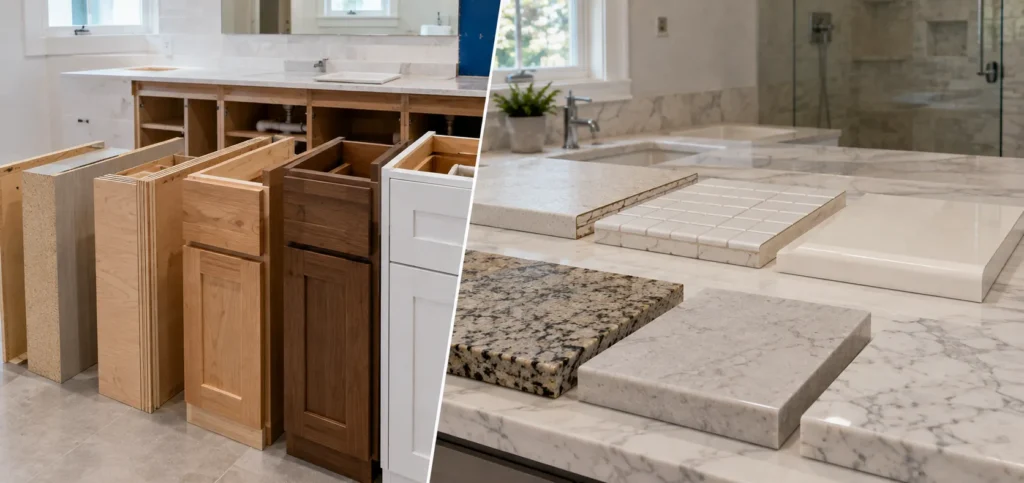
Material selection affects far more than appearance. It influences durability, moisture resistance, maintenance requirements, installation difficulty, and the overall lifespan of your bathroom vanity. Prefabricated vanities are typically the most economical choice, while custom-built units with premium hardwoods and natural stone countertops sit at the higher end of the market.
Vanity Cabinet Materials
| Material | Typical Cost | Best For |
| MDF / Particleboard | $160–$600 | Budget-friendly bathrooms |
| Plywood | $300–$1,200 | Moisture resistance and durability |
| Solid Wood (Oak, Maple, Walnut) | $700–$3,000 | Premium residential bathrooms |
| Custom Built In Cabinetry | $1,500–$7,000+ | Luxury and fully customized designs |
Medium density fiberboard (MDF) and particleboard are the most affordable options and work well in bathrooms with low moisture exposure. Plywood offers better structural strength and moisture resistance, making it a popular mid range choice.
Solid wood vanities provide excellent durability and a high end appearance but require proper sealing to withstand humidity. Custom built cabinetry is designed specifically for the room layout and offers the greatest flexibility, although it comes with the highest cost. For projects involving custom cabinetry and other interior fixtures, Furnishing Estimating Services can help determine material quantities and costs before fabrication and installation begin.
Countertop Materials
| Countertop Material | Typical Cost (Per Sq. Ft.) | Characteristics |
| Laminate | $20–$40 | Budget friendly |
| Ceramic Tile | $40–$50 | Economical and easy to replace |
| Cultured Marble / Acrylic | $40–$180 | Low maintenance, non-porous |
| Granite | $40–$200 | Natural stone, heat resistant |
| Quartz | $50–$200 | Highly durable and stain resistant |
| Marble / Quartzite | $100–$300+ | Luxury appearance, higher maintenance |
Beyond cabinet and countertop costs, additional expenses may include old vanity removal ($100–$500), plumbing hookups, countertop fabrication, backsplash installation, sink and faucet upgrades, and repairs to drywall or flooring uncovered during demolition. For projects involving substantial removal work before installation, Demolition Estimating Services can help contractors account for removal, disposal, labor, and related preparation costs accurately.
Bathroom Vanity Installation Labor Cost
Labor to install a bathroom vanity generally ranges from $100 to $1,000, depending on the type of vanity, plumbing requirements, and the amount of preparation involved. Replacing an existing prefabricated vanity that connects to the current plumbing usually costs much less than fitting a custom-built cabinet or relocating drain and water supply lines.
Most homeowners pay less for a straightforward replacement because the installer can reuse the existing plumbing layout. Custom vanities often require additional measuring, leveling, cabinet adjustments, countertop fitting, and finish work, increasing both labor time and overall installation costs.
Average Labor Cost
| Installation Type | Typical Labor Cost |
| Prefabricated vanity | $100–$500 |
| Custom vanity | $500–$1,000+ |
| Licensed plumber | $45–$200/hour |
| Handyman | $50–$80/hour |
Labor Cost by Installation Task
| Labor Task | Average Cost |
| Remove existing vanity | $100–$500 |
| Install vanity cabinet | $200–$500 |
| Plumbing hookups | $100–$450 |
| Floor or drywall repairs | $100–$500 |
| Backsplash installation | $200–$700 |
Additional work such as repairing water damaged drywall, leveling uneven floors, installing a new backsplash, replacing shut off valves, or modifying plumbing can increase labor costs well beyond a standard vanity installation.
What Affects Bathroom Vanity Installation Cost?

No two vanity installations cost the same. The final price depends on the cabinet you choose, the condition of the existing bathroom, and the amount of work needed before the new vanity can be installed. Projects that fit the current plumbing layout are usually completed faster, while custom installations or structural modifications require additional labor and materials.
Vanity Size
Larger vanities require bigger cabinets, longer countertops, additional hardware, and more installation time. A 24 to 30-inch single vanity may cost $300 to $900, while a 60 to 72-inch double vanity can reach $3,000 or more once installation is included.
Vanity Type
Freestanding models are typically the easiest to install. Floating, corner, double, and custom built vanities often require additional framing, wall anchoring, or plumbing adjustments, increasing installation costs.
Plumbing Changes
Keeping the existing drain and water supply lines in place helps control costs. Relocating plumbing, installing new shut-off valves, or adding a second drain line can add several hundred dollars to the project. When a project requires relocated supply lines, new drain connections, or additional plumbing fixtures, Plumbing Estimating Services can help contractors accurately account for the associated material and labor costs.
Countertop Materials
Materials such as MDF, plywood, solid wood, quartz, granite, and marble vary significantly in price, weight, and installation complexity. Premium materials generally require more labor and specialized handling.
Labor Rates
Installation costs also vary by location. Licensed plumbers, bathroom remodelers, and experienced installers typically charge higher hourly rates than general handymen, particularly in areas with higher labor costs.
Site Preparation
Removing an old vanity, repairing drywall, replacing damaged flooring, correcting water damage, or reinforcing walls before installation all add time and increase the final project cost.
Hidden Costs to Install a Bathroom Vanity
Many homeowners budget for the vanity itself but overlook the smaller expenses that often appear once the old cabinet is removed. These hidden costs can add several hundred dollars to the project, especially in older bathrooms or homes with outdated plumbing.
| Hidden Cost | Typical Cost |
| Rerouting pipes | $450–$1,800 |
| Drain relocation | Depends |
| New shut-off valves | $100 – $200 each |
| Floor patching | $500 – $2.000 |
| Side trim | $50 – $150 |
| Vanity removal & disposal | $100 – $500 |
| Electrical modifications | $150 – $800 |
| Drains parts | $50 – $600 |
Water damage behind the old vanity, uneven flooring, plumbing that doesn’t line up with the new cabinet, or damaged wall finishes are among the most common reasons projects exceed the original budget. A thorough inspection before installation helps identify these issues early.
Bathroom Vanity Installation Cost by Bathroom Type
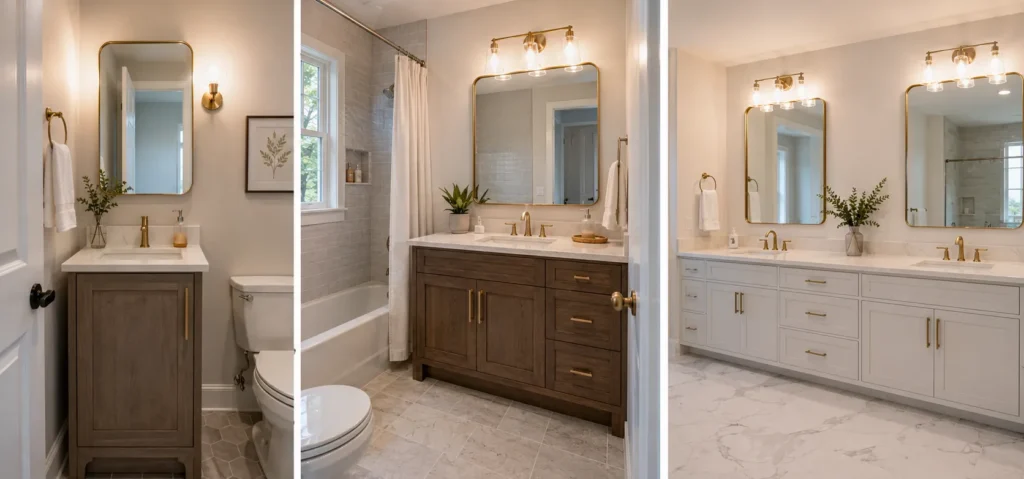
The bathroom itself also influences installation costs. Smaller spaces usually need compact vanities with minimal plumbing work, while larger bathrooms often require wider cabinets, double sinks, and additional fixtures that increase both material and labor costs.
| Bathroom Type | Typical Vanity Size | Average Installed Cost |
| Powder room | 24–30 inches | $300–$900 |
| Guest or standard bathroom | 36–48 inches | $600–$1,500 |
| Primary / master bathroom | 60–72+ inches | $1,200–$3,000+ |
Powder rooms generally use compact single-sink vanities that install quickly. Standard bathrooms often balance storage and countertop space, while primary bathrooms frequently include double vanities, premium countertops, upgraded plumbing fixtures, and custom cabinetry that increase the total investment.
DIY vs. Hiring a Professional for Bathroom Vanity Installation
Installing a bathroom vanity yourself can reduce labor costs, but it’s not the right solution for every project. The best option depends on the complexity of the installation, your plumbing experience, and whether modifications are needed.
| DIY Installation | Professional Installation |
| Lower upfront cost | Faster completion |
| Suitable for simple vanity replacements | Better workmanship |
| Good when plumbing stays in place | Handles plumbing and structural changes |
| Greater risk of leaks or installation errors | Usually includes insurance or workmanship guarantees |
A DIY installation often works well when replacing a vanity with another unit of the same size that connects to the existing plumbing. If the project involves relocating supply lines, installing a floating vanity, modifying walls, or fitting stone countertops, hiring a licensed professional is usually the safer and more cost effective decision.
How Long Does Bathroom Vanity Installation Take?
Most bathroom vanity installations take between 2 and 6 hours. Simple replacements are often completed within a few hours, while custom installations or projects involving plumbing modifications can take a full working day or longer.
| Installation Stage | Typical Time |
| Remove existing vanity | 30–60 minutes |
| Prepare and level area | 30–60 minutes |
| Install vanity cabinet | 1–2 hours |
| Plumbing connections | 1–2 hours |
| Final adjustments and sealing | 30–60 minutes |
The installation timeline depends on factors such as vanity size, countertop material, plumbing accessibility, wall condition, flooring repairs, and whether the existing plumbing aligns with the new cabinet. Straightforward replacements usually finish much faster than custom installations requiring additional carpentry or plumbing work.
Repair or Replace Your Bathroom Vanity?
A bathroom vanity doesn’t always need to be replaced. In many cases, a simple repair can extend its life and improve its appearance without spending thousands on a new unit. The right choice depends on how much damage is present, how well the vanity still functions, and whether it fits the style and storage needs of your bathroom.
If the cabinet is still solid and the damage is mostly cosmetic, repairing it is often the smarter investment. Small scratches, chipped paint, loose hinges, worn handles, or a damaged vanity top can usually be fixed without replacing the entire cabinet.
Replacement is usually the better option when moisture has caused the cabinet to swell, the countertop is cracked, the structure has become unstable, or the vanity no longer suits your bathroom layout.
Many homeowners also choose a replacement when remodeling to gain additional storage, install a double sink vanity, or upgrade to more durable, moisture-resistant materials. While the initial investment is higher, a new vanity often provides better functionality and longer service life. When a vanity replacement is part of a larger bathroom remodel, Renovation Estimating Services can help account for the combined costs of cabinetry, finishes, plumbing, flooring, and other renovation work.
How to Reduce Bathroom Vanity Installation Costs
A bathroom vanity upgrade doesn’t always require a large budget. Making a few practical decisions before the project begins can significantly reduce installation costs without sacrificing quality.
Compare estimates from several licensed contractors or plumbers instead of accepting the first quote. Pricing, labor rates, and included services can vary considerably between companies.
A prefabricated vanity is usually far more affordable than a custom-built cabinet. It also requires less installation time, which helps lower labor costs.
Keeping the new vanity in the same location allows installers to reuse existing plumbing lines. Avoiding drain or water supply relocation is one of the easiest ways to control your budget.
If you’re comfortable with basic demolition, removing the old vanity before the installer arrives may reduce labor charges. Just be sure to shut off the water supply first.
Mid-range materials such as plywood, cultured marble, quartz, or acrylic often provide an excellent balance between durability, appearance, and cost without moving into premium pricing.
For straightforward replacements that don’t require plumbing modifications, hiring an experienced handyman may cost less than using a licensed plumber. Plumbing changes, however, should always be completed by a qualified professional.
Common Bathroom Vanity Installation Mistakes
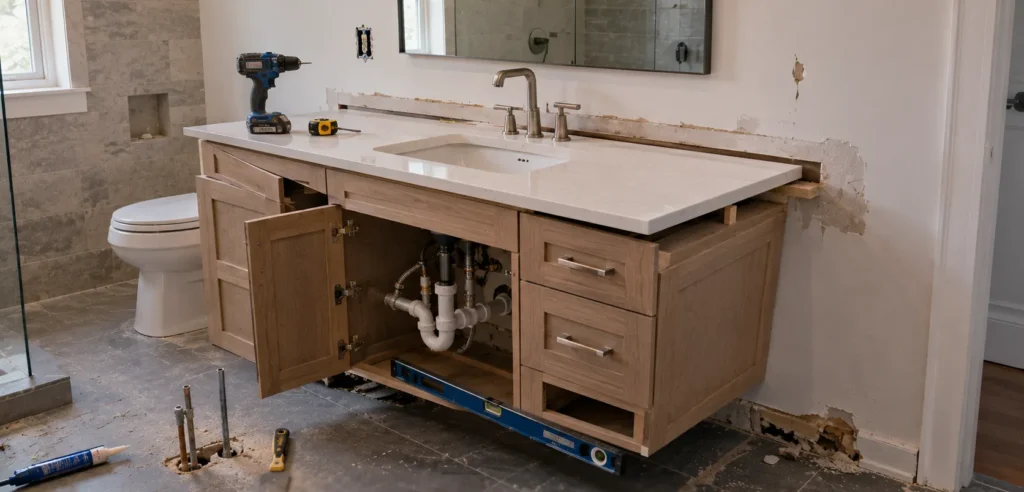
Bathroom vanity installation looks straightforward, but a few overlooked details can quickly turn into expensive repairs. Taking time to plan the installation properly helps prevent plumbing problems, poor cabinet fit, and unnecessary rework after the vanity has already been installed.
One of the most common mistakes is measuring only the cabinet and forgetting about countertop overhang, door clearance, drawer movement, or nearby fixtures. Even a small measuring error can leave the vanity sitting too close to a wall, toilet, or shower enclosure.
Wall preparation is just as important. Heavy vanities and floating models need proper structural support before they’re secured. Installing directly onto weak drywall can lead to movement or long-term stability issues.
Plumbing should always be checked before the cabinet is fixed in place. Misaligned drain pipes, poorly fitted water supply lines, or loose shut off valves can cause leaks that remain hidden until water damage appears.
Installers should also confirm the floor is level before fastening the vanity. Finishing the project with a complete inspection, including faucet operation, drain flow, silicone sealing, and plumbing connections, helps avoid callbacks and future repairs.
Bathroom Vanity Installation Cost Calculator
Use the guide below to estimate your project budget before requesting contractor quotes. Final pricing depends on vanity size, materials, plumbing work, labor rates, and local market conditions.
Bathroom Vanity Installation Cost by Size
| Vanity Size | Average Installed Cost |
| 24–30 inch | $300–$900 |
| 36–48 inch | $650–$1,800 |
| 60–72 inch | $1,200–$3,500+ |
Vanity Material Cost
| Material | Typical Price |
| MDF / Particleboard | $150–$600 |
| Plywood | $300–$1,200 |
| Solid Wood | $700–$3,000 |
| Custom Built | $1,500–$7,000+ |
Labor Rates
| Service | Average Cost |
| Handyman | $50–$80/hour |
| Licensed Plumber | $45–$200/hour |
Additional Project Costs
The figures above cover the primary installation costs, but some projects require extra work that can increase the final budget. Removing an existing vanity, repairing water-damaged drywall, replacing flooring around the cabinet, modifying plumbing lines, installing a new faucet or sink, fabricating a custom countertop, or updating shut off valves are all common additions.
Depending on the scope of work, these upgrades can add anywhere from a few hundred dollars to well over a thousand dollars. Identifying these items before installation begins makes it much easier to prepare an accurate budget and avoid unexpected expenses.
Final Thoughts
Installing a bathroom vanity is one of the most practical bathroom upgrades because it improves storage, functionality, and everyday comfort without requiring a complete remodel. Understanding the costs of the vanity, labor, plumbing work, countertop materials, and possible hidden repairs makes it much easier to plan a realistic budget before work begins.
If you’re comparing options, focus on overall value instead of the lowest upfront price. A properly installed vanity with durable materials and quality workmanship will perform better, require fewer repairs, and continue adding value to your bathroom for years.
Frequently Asked Questions
How much does it cost to install a bathroom vanity?
Most homeowners spend between $600 and $4,000, including the vanity, installation, and labor. The final cost depends on the vanity size, material, plumbing work, and installation complexity.
Is it cheaper to repair a vanity instead of replacing it?
Yes. Minor cosmetic issues such as scratches, chipped paint, or loose hardware are usually much cheaper to repair. Replacement becomes the better option when there is water damage, structural deterioration, or an outdated layout.
How long does bathroom vanity installation take?
A standard vanity installation usually takes 2 to 6 hours. Larger custom vanities or projects requiring plumbing modifications may take a full day or longer.
Can I install a bathroom vanity myself?
DIY installation is suitable for simple replacements that use the existing plumbing. Projects involving new plumbing lines, floating vanities, heavy stone countertops, or electrical work are generally best handled by experienced professionals.
Does moving plumbing increase installation costs?
Yes. Relocating water supply lines or drain pipes is one of the biggest factors that increases labor costs. Keeping the vanity in the existing location usually saves money.
What countertop material lasts the longest?
Quartz is one of the most durable options because it resists stains, moisture, and daily wear. Granite also performs well, while marble offers a premium appearance but requires more maintenance.
Do I need a permit to replace a bathroom vanity?
Simple vanity replacements generally do not require a permit. If plumbing or electrical systems are being relocated, local building regulations may require permits and inspections.
Should I choose a custom or prefabricated vanity?
Prefabricated vanities are more affordable and install faster. Custom vanities offer greater flexibility for unique layouts, premium finishes, and specialized storage, but they cost significantly more.
Can I reuse my existing sink or countertop?
Sometimes. If the dimensions match the new cabinet and both components remain in good condition, reusing them can reduce overall project costs.
Does replacing a bathroom vanity increase home value?
A well designed vanity upgrade can improve bathroom functionality, storage, and visual appeal, making the space more attractive to potential buyers during resale.

Tim C. is a construction estimating expert and Director at ACON Engineering, specializing in construction cost estimating, quantity takeoffs, and preconstruction planning. He has led thousands of successful project bids and helps contractors make informed, profitable decisions.