
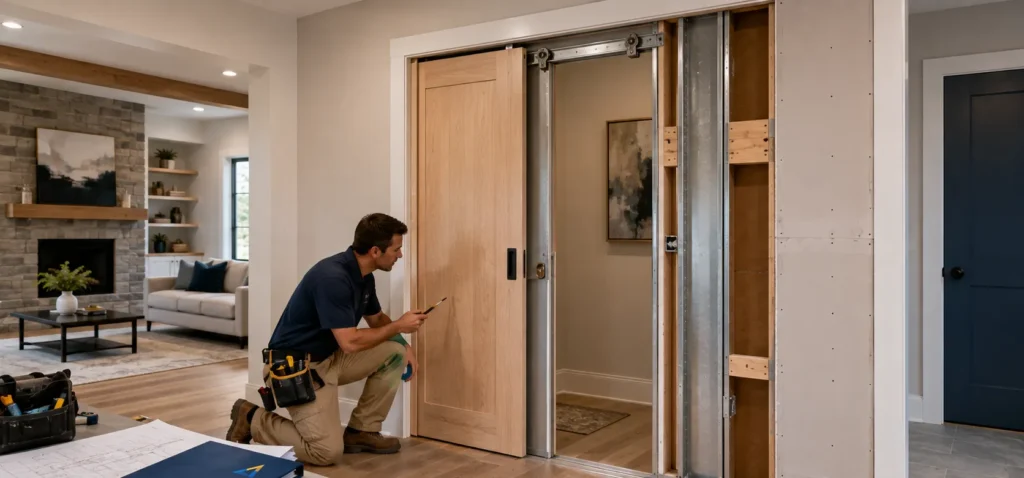
Installing a pocket door typically costs $500 to $2,500, while most homeowners spend around $1,050 for a professionally installed standard pocket door. The final price depends on the installation method, wall construction, door material, hardware quality, and labor rates in your area.
In this guide, you’ll learn exactly what drives the cost, how different door styles compare, what retrofit installations actually cost, and which upgrades are worth paying for before starting your project.
Average Pocket Door Installation Cost
Installing a pocket door during new construction generally ranges between $500 and $2,500, while projects involving existing walls often require additional demolition, drywall repairs, framing modifications, and finish work that increase the overall cost.
| Project | Average Cost |
| Low end installation | $500 |
| Typical installation | $1,050 |
| High end installation | $2,500+ |
| New construction | $500–$1,500 |
| Existing wall retrofit | $1,200–$4,500+ |
A simple installation during new construction usually stays on the lower end, while retrofitting an existing wall costs considerably more because sections of drywall must be opened and rebuilt.
What Affects the Cost of Installing a Pocket Door?
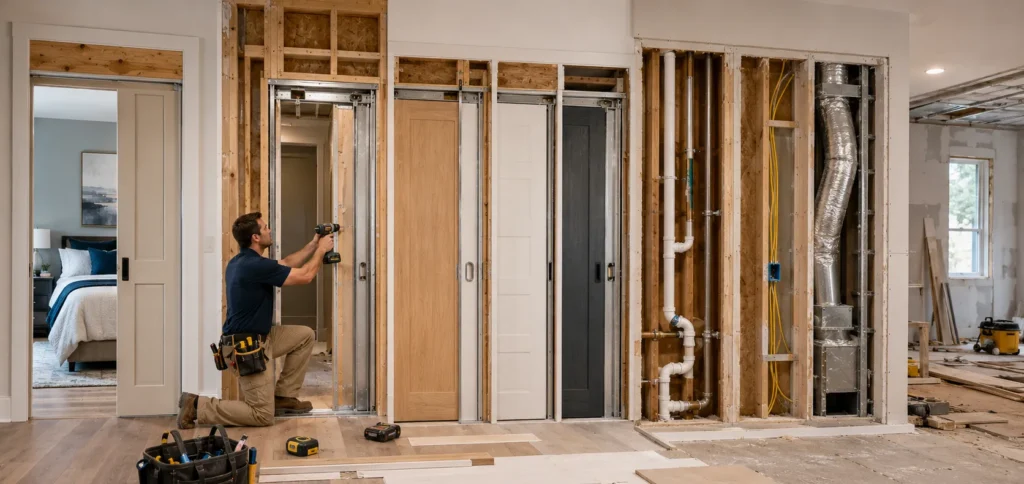
Several variables influence the final installation price. Understanding these factors before requesting contractor quotes makes it much easier to compare estimates fairly.
Installation Method
Installing a pocket door during new construction is usually the least expensive option because the wall framing is already open. Retrofitting an existing wall requires demolition, drywall repair, repainting, and additional labor.
Wall Structure
Whether the wall is load-bearing has one of the biggest impacts on pricing. Structural walls require temporary support, engineered headers, inspections, and additional framing, increasing both labor and material costs.
Door Material
A lightweight hollow core slab costs far less than a solid wood, aluminum, or decorative glass door. Heavier doors also require stronger track systems and premium hardware.
Door Design
Single pocket doors are the most economical option. Double, bi parting, and French pocket doors require larger openings, extra framing, additional tracks, and more installation time.
Hardware Quality
Soft close rollers, heavy duty track systems, concealed handles, synchronized closing kits, and premium hardware improve operation but also increase the total project cost.
Site Conditions
Hidden plumbing lines, electrical wiring, HVAC ducts, or unexpected framing issues behind the drywall often require additional trades, increasing both labor hours and overall cost.
Geographic Location
Labor rates vary considerably by region. Contractors in metropolitan areas generally charge more than those working in smaller cities or rural markets.
Pro Tip: Many homeowners compare quotes based only on the door price, but the largest cost differences usually come from labor, structural modifications, drywall restoration, and utility relocation. Always request an itemized estimate so you can see exactly where your money is going.
Pocket Door Cost by Door Material
The material you choose affects more than appearance. It influences durability, maintenance, sound insulation, weight, hardware requirements, and installation costs.
| Door Material | Average Installed Cost | Best For |
| Hollow-core | $500–$800 | Budget-friendly interior spaces |
| Fiberglass | $600–$1,000 | Moisture resistance and durability |
| Solid wood | $600–$2,200 | Premium finish and better sound insulation |
| Glass / Aluminum | $550–$2,300 | Contemporary interiors and natural light |
Hollow-core doors remain the most economical option for bedrooms and closets. Fiberglass performs well in humid environments, while solid wood offers better privacy and noise reduction. Glass and aluminum pocket doors create a modern appearance but often require premium hardware to support their design and weight.
Pocket Door Cost by Door Type
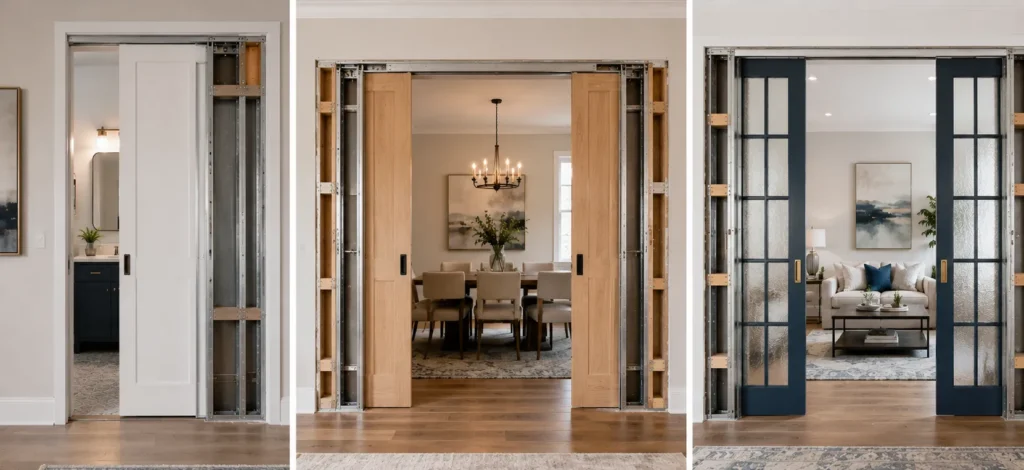
The design of the pocket door system has a noticeable effect on both material and labor costs.
Single pocket doors remain the most common choice for bathrooms, bedrooms, and closets because they require less framing and hardware.
| Door Type | Average Installed Cost (Per Door) |
| Single Pocket Door | $500–$2,200 |
| Bi-Parting Pocket Door | $1,000–$4,000 |
| French Pocket Door | $600–$2,200 |
Bi-parting systems use two sliding panels that disappear into opposite walls, making them ideal for larger openings. French pocket doors combine decorative glass panels with heavier framing and premium hardware, which increases both material and installation costs.
Pocket Door Installation Cost by Room
Installation costs often vary depending on where the pocket door is installed because wall construction, utilities, and opening sizes differ throughout the home.
| Room | Average Installed Cost (Per Door) | Typical Considerations |
| Closet | $750–$2,500 | Smaller openings and minimal framing changes |
| Bathroom | $900–$4,000 | Plumbing, electrical wiring, waterproofing |
| Bedroom / Living Room | $1,200–$4,500+ | Larger openings and improved sound privacy |
| Home Office | $800–$3,000 | Acoustic performance, ADA clearance, larger door sizes |
Closet installations are often the simplest because they involve narrower openings. Bathrooms frequently cost more due to nearby plumbing and electrical systems. Bedrooms and living areas typically require wider openings and improved sound isolation, while home offices may include accessibility requirements and higher acoustic expectations.
Pocket Door Installation Cost Breakdown
Understanding where your money goes helps you build a more realistic budget before starting the project. The largest price differences usually come from wall modifications rather than the door itself.
| Cost Item | Typical Cost |
| New Construction Installation | $500–$1,500 |
| Retrofit (Non-Load-Bearing Wall) | $1,200–$3,500 |
| Retrofit (Load-Bearing Wall) | $2,500–$4,500+ |
| Door Slab | $60–$1,500 |
| Pocket Frame Kit | $120–$400 |
| Heavy-Duty Hardware | $50–$500 |
| Trim & Casing | $75–$400 |
| Basic Carpentry Labor | $40–$90/hour |
| Drywall Demolition & Patching | $1,200–$2,500 |
| Electrical Relocation | $50–$130/hour |
| Plumbing Relocation | $300–$1,200+ |
| HVAC Modifications | $400–$2,200 |
| Structural Engineering | $500–$1,500 |
| Building Permit | $50–$200 |
Retrofitting an existing wall often requires demolition, framing adjustments, drywall repairs, painting, and relocating utilities before the new pocket door system can be installed. For projects involving several interconnected scopes, Construction Estimating Services can help contractors account for labor, materials, structural modifications, and trade-specific work before construction begins.
Hidden Costs of Installing a Pocket Door
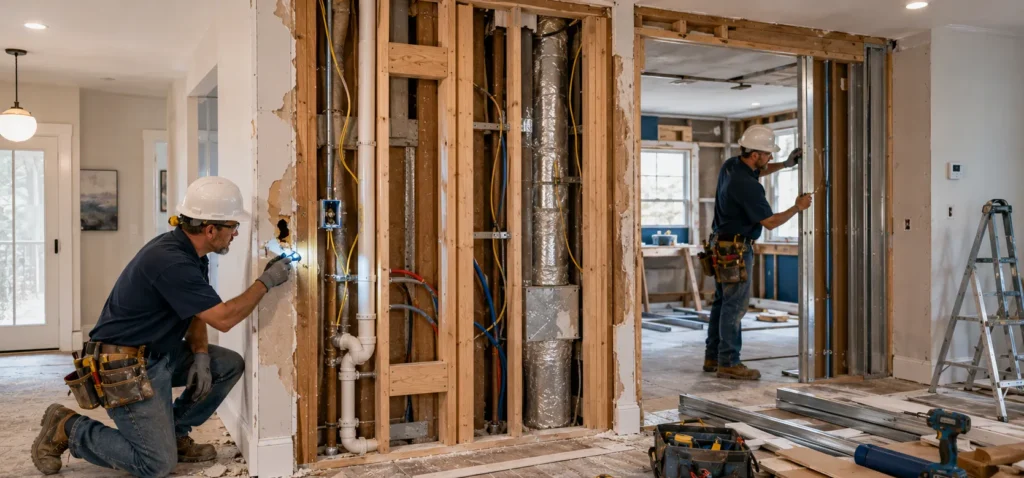
Many homeowners budget for the door and labor but overlook the smaller expenses that often appear once the wall is opened. Planning for these costs early helps avoid surprises during the installation.
Electrical wiring, light switches, plumbing pipes, or HVAC ducts hidden inside the wall may need to be relocated, adding $500 to $1,500 or more depending on the trade involved. When electrical components must be relocated, Electrical Estimating Services can help contractors quantify the wiring, devices, labor, and related materials required for the modification.
Drywall demolition, debris disposal, plaster repairs, painting, trim replacement, and multiple contractor visits also increase the final bill. Demolition Estimating Services can help contractors account for removal work, debris handling, labor, and disposal costs when an existing wall must be opened for a pocket door retrofit. These secondary expenses are common in retrofit projects and should always be included when planning your overall budget.
DIY vs. Hiring a Professional
Installing a pocket door may seem like a manageable weekend project, but the work involves far more than mounting a sliding track. The condition of the wall usually determines whether DIY is practical or professional installation is the better investment.
A DIY installation can reduce labor costs and gives you full control over scheduling, making it suitable for experienced homeowners working on a simple, non load bearing wall. However, even a small framing error can leave the door rubbing, sticking, or failing to close properly.
Hidden wiring, plumbing lines, uneven floors, and inaccurate measurements often turn a simple project into an expensive repair. A licensed contractor brings the tools, framing experience, and code knowledge needed to install the system safely while avoiding structural or utility related problems.
How Long Does Pocket Door Installation Take?
Project duration depends on whether you’re working with new construction or modifying an existing wall. Additional structural work or utility relocation can significantly extend the schedule.
Installing a pocket door during new construction generally takes 6 to 12 hours, since the wall framing is already exposed. A standard retrofit usually requires 1 to 3 days to complete demolition, framing, track installation, drywall repairs, and finishing work. When a pocket door is part of a larger home improvement project, Renovation Estimating Services can help contractors account for the combined costs of demolition, framing, drywall, finishing, and other renovation work.
More complex projects involving load-bearing walls, electrical rewiring, plumbing relocation, or HVAC modifications may take five to seven days. HVAC Estimating Services can help contractors account for ductwork relocation, associated materials, labor, and equipment costs when existing HVAC systems interfere with the pocket door installation. Proper planning before demolition helps minimize delays and keeps the installation moving efficiently.
Pocket Door vs. Other Door Types
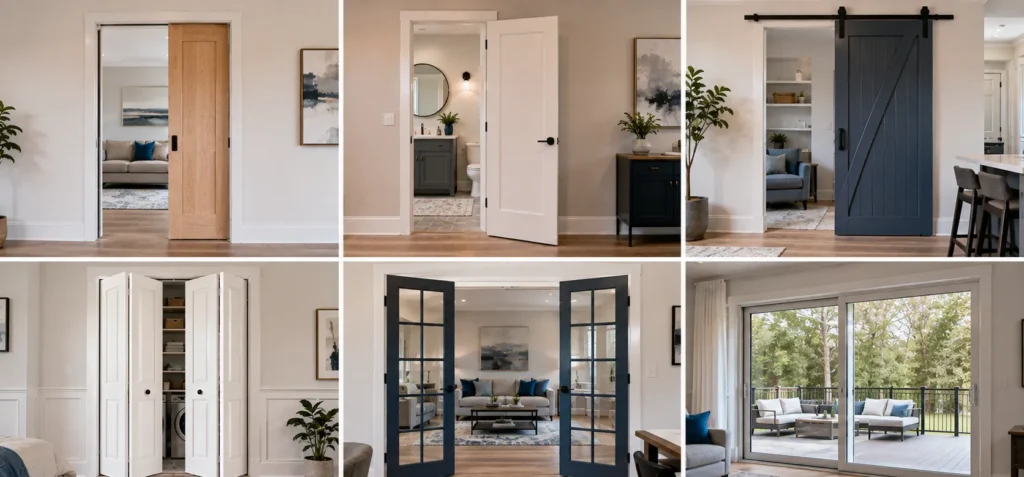
In some rooms, a traditional hinged door makes more sense, while in others, a barn door or bi-fold system may be the better fit. The best option depends on the available space, level of privacy, and how the room is used.
- Pocket Door: Slides into the wall to free up floor space. It’s a practical choice for bathrooms, closets, laundry rooms, and smaller bedrooms where a swinging door would get in the way.
- Swing Door: Opens on side hinges and is the most common interior door. It’s less expensive to install and provides better sound separation, but it requires enough clearance to swing open.
- Barn Door: Slides across the face of the wall on an exposed track. Installation is simpler because the wall doesn’t need to be opened, though privacy and sound control are generally lower than with a pocket door.
- Bi Fold Door: Opens by folding into panels, making it a popular option for closets, pantries, and utility spaces. It saves space while remaining affordable and easy to install.
- French Door: Uses one or two glass-panel doors to create a wider opening and bring more natural light into the room. It’s often used between living areas or home offices but requires additional floor space.
- Sliding Glass Door: Designed primarily for patios, balconies, and backyard access. It provides expansive views and daylight but isn’t intended to replace a standard interior pocket door.
How to Save Money on Pocket Door Installation
Most homeowners save money by planning, selecting the right materials, and avoiding unnecessary labor rather than cutting corners on quality.
- Compare contractor quotes: Request estimates from at least three licensed installers to compare pricing, scope of work, warranties, and turnaround times.
- Choose standard door sizes: Standard-sized doors and frame kits are easier to source and usually cost much less than custom-built systems.
- Select materials wisely: Hollow core or fiberglass doors are excellent budget-friendly choices for rooms where maximum sound insulation isn’t required.
- Schedule during the off season: Contractors may offer better pricing during slower months when demand for remodeling work is lower.
- Bundle renovation work: Completing drywall, painting, trim, or electrical work during the same remodel often reduces overall labor costs.
- Plan with an estimate: A detailed construction estimate helps identify labor, material, and hidden costs before work begins, reducing expensive surprises later.
How to Choose the Right Pocket Door
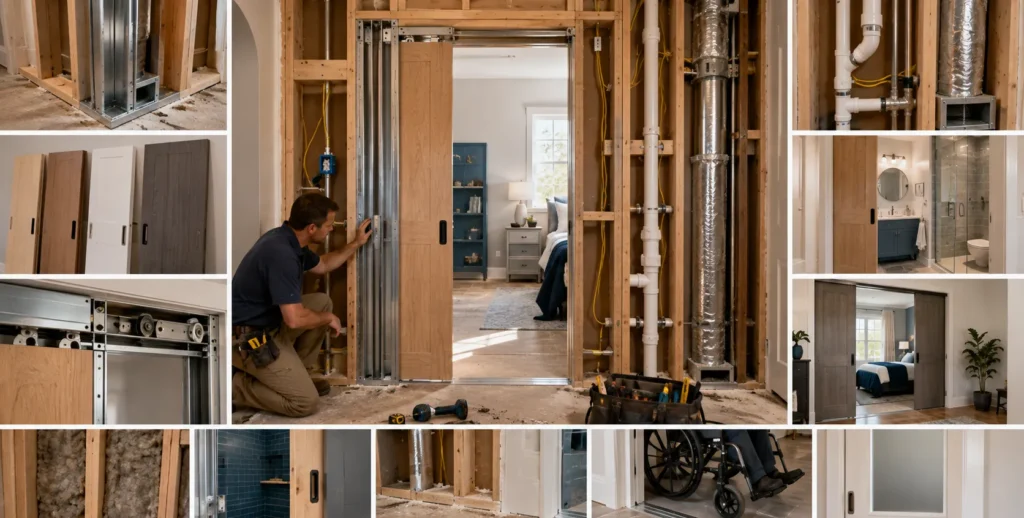
The right pocket door should complement your room while matching the wall structure, hardware requirements, and level of daily use. Looking beyond appearance helps prevent maintenance issues after installation.
- Wall thickness: Make sure the wall cavity is deep enough to accommodate the pocket frame and door slab without interfering with utilities.
- Door material: You can select hollow core for affordability, fiberglass for moisture resistance, solid wood for durability, or glass for a contemporary appearance.
- Frame quality: Steel pocket door frames offer greater long-term stability than lightweight alternatives, especially for heavier doors.
- Track system: High quality rollers and soft-close hardware create smoother operation and reduce wear over years of daily use.
- Hidden utilities: Confirm there are no plumbing lines, electrical wiring, HVAC ducts, or structural members inside the pocket wall.
- Room application: Match the door to the room’s privacy, moisture exposure, accessibility, and sound insulation requirements.
Frequently Asked Questions
Is installing a pocket door more expensive than a regular interior door?
Yes. Pocket doors require wall framing, a sliding track system, specialized hardware, and additional labor, making them more expensive than standard hinged doors.
Can a pocket door be installed in a load bearing wall?
Yes, but the wall must be structurally reinforced with an appropriate header. Because structural modifications are involved, installation costs are usually much higher than for a non load bearing wall.
Do pocket doors increase home value?
Pocket doors generally improve functionality rather than significantly increasing resale value. They’re most beneficial in smaller homes where maximizing usable floor space is important.
Which pocket door material lasts the longest?
Solid wood and fiberglass doors are typically the most durable. The best choice depends on your budget, moisture exposure, maintenance preferences, and desired appearance.
How much wall space is required for a pocket door?
The wall must provide enough unobstructed cavity space to accommodate the entire door slab when it’s fully open. Plumbing, wiring, HVAC ducts, or structural framing inside the wall can limit installation options.
Can existing electrical wiring or plumbing affect installation costs?
Yes. Relocating electrical wiring, plumbing pipes, HVAC ducts, or other utilities hidden inside the wall is one of the most common reasons retrofit installations become more expensive.
Should I hire a contractor or install a pocket door myself?
DIY installation is generally suitable only for experienced homeowners working on simple, non load bearing walls. Most pocket door projects benefit from a licensed professional, especially when framing, structural work, or utility relocation is involved.
Final Thoughts
Pocket doors are an excellent solution when floor space is limited, and a traditional swinging door isn’t practical. While the average installation costs between $500 and $2,500, your final price depends on factors such as the wall structure, door material, hardware quality, labor rates, and any structural or utility modifications required during installation.
Planning the project carefully, selecting quality hardware, and working with an experienced installer can help you achieve a smoother installation and avoid unexpected costs later.

Tim C. is a construction estimating expert and Director at ACON Engineering, specializing in construction cost estimating, quantity takeoffs, and preconstruction planning. He has led thousands of successful project bids and helps contractors make informed, profitable decisions.