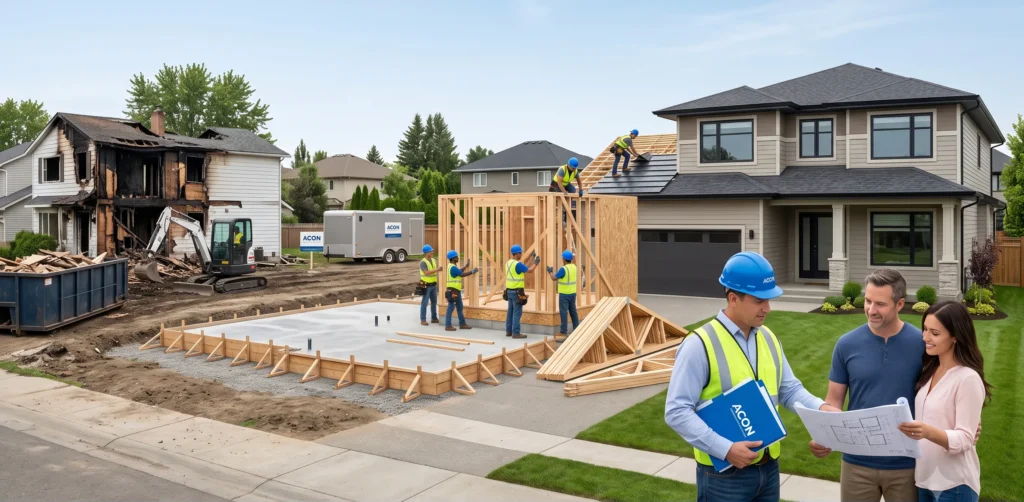
Rebuilding a house costs $150 to $350 per square foot in 2026, or about $135,000 to $525,000 for most homes. The final number depends on the size, the location, and the condition of what is left standing.
Rebuilding is not the same as building new. It means replacing an existing home, often after a fire, a storm, or years of damage, so the work starts with clearing the old structure before anything new goes up. That extra step, along with matching the footprint and meeting current code, is why a rebuild can cost more per square foot than a fresh build on an empty lot.
This guide breaks down the cost by size, region, and component, covers what is included, and shows how to estimate your own rebuild from start to finish.
How Much Does It Cost to Rebuild a House?
On average, rebuilding a house costs $135,000 to $525,000, or about $300 per square foot. A 2,000-square-foot home at the mid-range runs close to $300,000 on a prepared lot. That figure covers the structure itself, not the land it sits on.
The range is wide because the cost moves with several things. Location sets the labor and material rates. Build quality decides the finishes and the materials. Demolition and debris removal add cost that a new build never carries. Soft costs like permits and architectural fees stack on top, and labor and material prices shift the total further. Depending on these, the same size home can cost far more in one place than another.
Cost to Rebuild a House by Size
Size is the biggest driver of a rebuild. A larger home needs more material, more labor, and more time, so the cost climbs with the square footage. The table below shows the rebuild cost across common home sizes, based on the structure alone.
| Home Size | Rebuild Cost |
| 1,000 sq ft | $170,000 – $250,000 |
| 1,500 sq ft | $260,000 – $375,000 |
| 2,000 sq ft | $346,000 – $500,000 |
| 2,500 sq ft | $433,000 – $625,000 |
| 3,000 sq ft | $519,000 – $750,000 |
| 4,000 sq ft | $692,000 – $1,000,000 |
Find your home size and read across to the range. These cover the rebuild itself, not the demolition of the old structure. If you include demolition and debris removal, add $20,000 to $40,000, depending on the size of the home and how much has to come out.
Cost to Rebuild a House by Region

Where you build changes the number as much as the size does. Labor rates, material costs, and local codes vary across the country, so the same home costs more in some regions than others. The table below shows the rebuild cost per square foot by region.
| Region | Cost Per Square Foot |
| Midwest | $100 – $200 |
| Southeast | $120 – $250 |
| Southwest | $150 – $300 |
| West Coast | $220 – $400 |
| Northeast | $200 – $400 |
In the highest-cost markets, the range climbs further. A rebuild in New York can run $300 to $600 per square foot, and California can pass $500. On top of the build, plan for demolition at $4 to $10 per square foot, along with site preparation, contractor fees, and the finishes you choose.
What’s Included in the Cost to Rebuild
A rebuild covers more than the new structure, since the old one has to come down first. The cost includes the demolition, the debris removal, the architectural design, the building permits, the labor, the construction materials, and the contractor’s overhead. It does not include the price of the land, which you already own.
The main components break down like this:
- Site preparation: Clearing the old structure and the debris, and getting the lot ready to build.
- Professional fees: Architects and engineers, especially if you redesign the home rather than rebuild it as it was.
- Permits: The government fees and inspections needed to pull the building permits.
- Labor: The electricians, plumbers, carpenters and other trades who do the work.
- Materials: The concrete, framing and finishes, from builder-grade up to custom hardwoods.
- Code upgrades: Rebuilding to the current building code often means new electrical, plumbing and structural work to meet today’s standards, which an older home may not have had.
Detailed Cost Breakdown of Rebuilding a House
Rebuilding a house splits roughly 40 percent to labor and 60 percent to materials. The table below breaks the cost down by phase, from the site work through the final landscaping, so you can see where the money is being spent.
| Phase | Cost | What It Covers |
| Site work and demolition | $15,000 – $35,000 | Clearing the old structure, debris removal, grading |
| Foundation and concrete | $30,000 – $60,000 | Trenching, pouring concrete, slab, basement or crawl space |
| Framing | $50,000 – $100,000 | The structural skeleton, walls and roof frame |
| Exterior finishes | $45,000 – $85,000 | Windows, exterior doors, siding, weatherproofing |
| Major systems | $62,000 – $120,000 | Roof, HVAC, plumbing and electrical |
| Interior finishes | $70,000 – $180,000 | Drywall, flooring, paint, kitchen cabinets, countertops |
| Final items and landscaping | $25,000 – $60,000 | Landscaping, driveways, final concrete and paving |
Read the table by phase to see how the total builds up. The framing, the major systems and the interior finishes carry the largest share because they involve the highest material volumes, making an accurate quantity takeoff essential for reliable budgeting.
Why a Rebuild Costs More Than a New Build
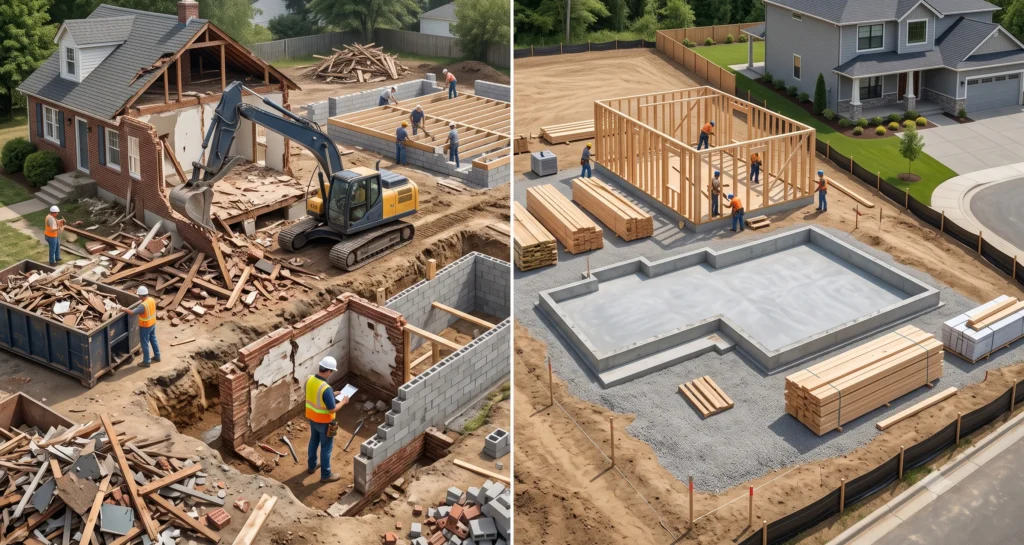
A rebuild usually costs more per square foot than building the same home new on an empty lot. The reason is the work that comes before construction starts. A new build begins on clear, prepared land. A rebuild begins with an existing structure that has to be torn down and hauled away, which adds demolition and debris costs a new build never sees.
The site often needs cleanup and repair after a fire or storm. And rebuilding an older home to the current code can mean upgrading the electrical, plumbing, and structure beyond what was there before. Those steps are why two identical homes can carry different price tags, one which is built fresh and one which is rebuilt.
What Affects the Cost to Rebuild
The cost to rebuild moves with several factors, and most projects stack a few together. Here is what changes the number.
- Square footage. Size is the biggest driver. A larger home needs more material, more labor, and more time, so the total rises with the floor area.
- Location. Labor rates, material costs, and local codes vary by region. The same home costs more in a high-cost metro than in a rural market.
- Materials. The material grade sets a large part of the cost. Standard builder-grade finishes sit at the low end, while premium and custom materials like hardwood flooring or stone can push the price far higher.
- Foundation. The foundation type and the framing material, whether wood, steel, or concrete, each carry a different cost and affect the structure below and above ground.
- Building code upgrades. Rebuilding an older home to the current code often means new electrical, plumbing, and structural work. Local law may require these upgrades on any rebuilt home, which adds cost the original never had.
- Site complexity. Demolition, debris removal, poor site access and cleanup after a disaster all add cost before construction starts.
- Home style and age. A custom or architectural home needs specialized labor to rebuild, which costs more than a simple, standard design.
- Labor availability. Where skilled trades are in short supply, wages run higher, and that shows up directly in the rebuild cost.
Permits and Soft Costs
Permits and soft costs add roughly 20 to 25 percent on top of the construction cost, so plan for them from the start. These are the fees and services that surround the build, not the physical work itself.
Here is what the common permits run:
| Permit | Cost |
| New house construction permit | $1,000 – $3,000 |
| Demolition permit | $50 – $2,000 |
| Electrical permit | $50 – $350 |
| Plumbing permit | $30 – $500 |
| Certificate of occupancy | $150 – $300 |
| Expedited handling fee | $200 – $1,000 |
Building permits run about 3 percent of the total cost, and a rebuild can need eight or nine of them across the trades. On top of the permits, the soft costs cover architectural and engineering fees, which run $4,000 to $50,000, along with inspections at $300 to $500, financing and interest, insurance and bonds, legal and accounting work, and utility connections. Together the soft costs run close to 20 percent of the total.
The final number depends on the location, the project value and any compliance issues that come up. Site preparation and cleanup can eat into the budget fast, so keep a contingency of about 20 percent for what comes up during the rebuild.
Signs Your House Needs a Rebuild
A rebuild makes sense when the damage runs too deep for a renovation to fix. Some problems can be repaired, but others point to starting over. Here are the signs that a full rebuild is the better choice.
- Structural failure: Wide diagonal cracks, leaning or bowing walls, and a foundation that has shifted are signs the structure itself is failing. When the frame or foundation is compromised, a rebuild is safer and often cheaper than patching it.
- Widespread rot: When rot, mold, or water damage has spread through the house and reached the framing, a repair rarely reaches all of it. A rebuild clears the damage and the health risk that comes with it.
- Failed major systems: When the plumbing, electrical, and HVAC are all severely damaged or badly outdated, replacing them during a rebuild lets you meet current code and modern standards at once, rather than patching each one.
- Hazardous materials: Older homes may have lead paint, asbestos, or poor ventilation that pose real health risks. A rebuild removes these hazards and replaces them with safe, current materials.
- Outgrowing the home: When the house no longer fits your family, and the layout cannot be expanded, tearing it down and rebuilding can give you the space and design a renovation cannot.
To decide, ask two questions: how old is the house, and what problem are you facing? If the issues are minor and easy to fix, a renovation may be enough. Comparing typical home renovation costs with rebuilding expenses can help you choose the better option. If the damage is serious, structural, or spread across the home, a rebuild from scratch is usually the better long-term choice.
How to Estimate Your Rebuild Cost
You can estimate a rebuild in a few steps, from the square footage to the final number. Here is how to work it out.
Step 1: Measure the square footage. Add up the total heated living space of the home.
Step 2: Apply the local cost per square foot. Get the current per-square-foot rate from local builders, then multiply it by your square footage for the base construction cost.
Step 3: Add for special features. Account for anything above a standard build, like high-end flooring, a specific roof type, an attached garage, or upgraded HVAC.
Step 4: Add demolition and cleanup. Clearing a destroyed home runs about $20,000, so add roughly 15 percent to cover demolition and debris removal.
Step 5: Add permits and soft costs. Factor in the building permits and the soft costs like design and project management.
A cost per square foot can give you a general idea, but it does not include everything involved in a rebuild. Demolition, code upgrades, foundation repairs, and permit costs can all affect the final price. ACON Engineering’s Construction Estimating Services provide detailed rebuild estimates based on your project and local construction costs, giving you a clear estimate for planning, budgeting, and insurance.
Rebuild Cost vs Market Value vs New Build
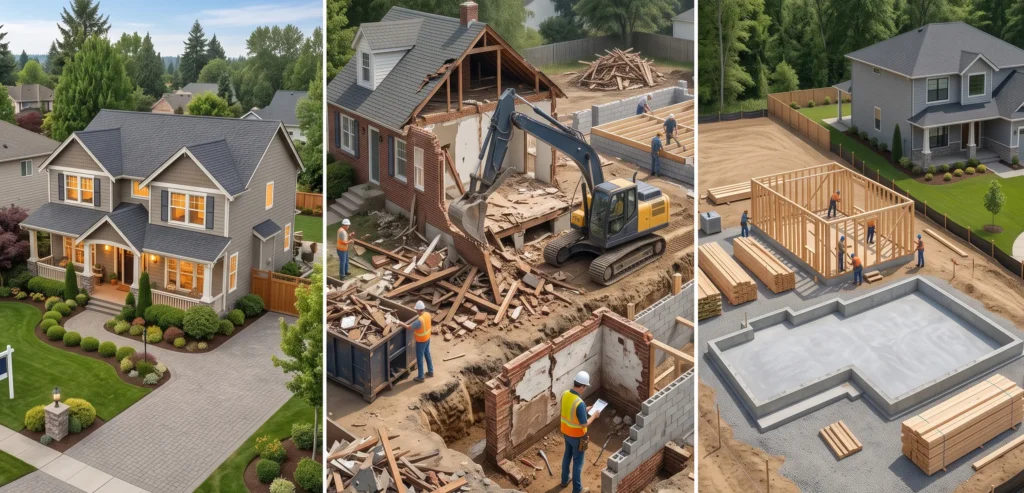
These three numbers measure different things, and mixing them up leads to bad budgeting or the wrong insurance coverage. Here is what each one covers.
Rebuild cost is the expense to clear the site and reconstruct your home using current local material and labor rates. It covers the structure only, not the land.
Market value is what your property would sell for on the real estate market. It includes both the structure and the land, and it depends heavily on the location, the neighborhood, and current demand. Market value can sit above or below the rebuild cost.
New build cost is the price to build a home from scratch on an empty lot. It usually costs less than a rebuild, since there is no existing structure to demolish and no debris to clear.
The key point is that rebuild cost and market value are not the same. Your insurance should cover the cost to rebuild the structure, which has nothing to do with the land or the resale value.
Does Insurance Cover the Cost to Rebuild?
Insurance can cover the cost to rebuild, but the amount depends on the type of coverage you carry. The part of a homeowners policy that pays for the structure is called dwelling coverage, and it comes in three levels.
Guaranteed replacement cost covers the full cost to rebuild your home to its original standard, even if that cost runs above your policy limit. It is the most complete protection.
Replacement cost covers the cost to repair or rebuild your home at today’s prices, but it is
capped at your policy’s maximum dwelling limit. If the rebuild costs more than the limit, you pay the difference. Actual cash value pays the value of the home minus depreciation. This usually results in a lower payout that will not cover the full cost to rebuild.
A few things are worth knowing. Dwelling coverage pays for the structure, not the land or the resale value, so it will not match your home’s market value. Standard policies also exclude certain disasters, like floods and earthquakes, which need separate coverage.
It is worth checking that your dwelling limit reflects the current cost to rebuild, since material and labor prices rise over time and an old limit can leave you underinsured.
How to Lower Your Rebuild Cost
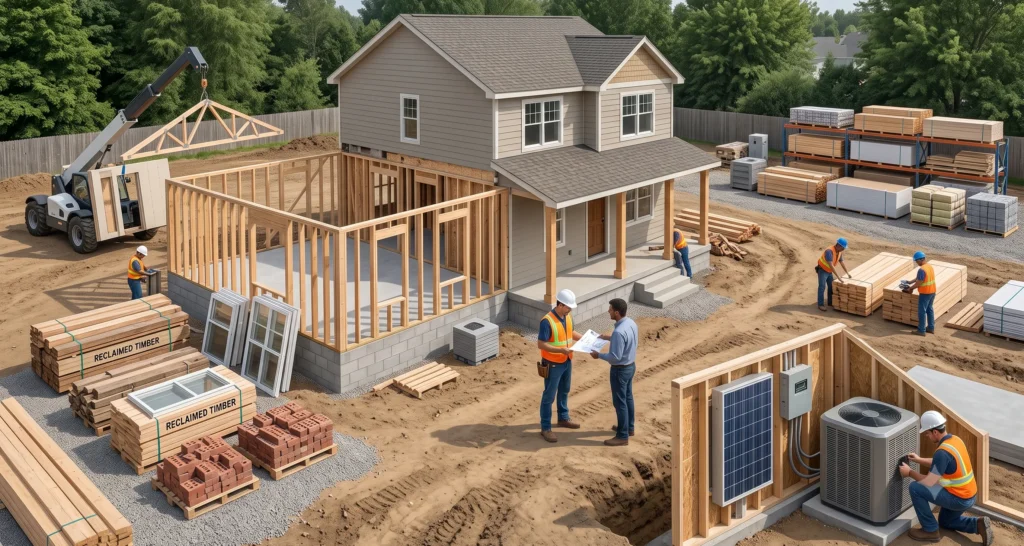
You can cut the cost of a rebuild with careful planning and the right choices early on. The savings come from the design, the materials, and the way you manage the work. Here is where to find them.
- Simplify the design. Complex rooflines, custom windows, and steep or precast features drive up material and labor costs. A simple, straightforward design costs far less to build.
- Use standard materials. Standard, readily available materials cost less than high-end custom options. Buy from a local supplier to get the best package price.
- Choose an open floor plan. Every wall needs framing, drywall, and electrical. An open layout uses fewer interior walls, which lowers the cost, improves airflow, and opens up the space.
- Consider modular units. Factory-built kitchen and bathroom units cut on-site labor and material waste, since the work is done off-site and installed in one piece.
- Update the building systems. Installing efficient electrical, plumbing, and HVAC systems the right way keeps you compliant with code and saves money over the long term through lower utility bills.
- Reuse what you can. Demolition often leaves materials that are still sound. Reusing what survives instead of hauling it away lowers both material and disposal costs.
- Hire licensed professionals. Get multiple quotes, check licenses, and negotiate. A qualified contractor costs less in the long run by avoiding the mistakes and overruns that cheap labor brings.
- Use energy efficient materials. Efficient windows, insulation, and appliances add value and cut utility bills over the life of the home.
Get an Accurate Rebuild Estimate
A per square foot figure gives you a starting point, but a rebuild carries costs that a rough number misses, the demolition, the code upgrades, and the condition of the foundation. An accurate estimate accounts for all of it.
ACON Engineering provides residential estimating services that account for demolition, materials, labor, permits, and local pricing to deliver an accurate rebuild budget. Whether you are planning a rebuild or checking your insurance coverage, you get a clear number you can budget and build from.
Frequently Asked Questions
How much does it cost to rebuild a 1,500-square-foot home?
Rebuilding a 1,500-square-foot home costs about $260,000 to $375,000, depending on the location and the finishes. Add $20,000 to $50,000 if demolition of the old structure is included.
Is rebuilding a house cheaper than building new?
No. A rebuild usually costs more per square foot than a new build, since it starts with demolishing the old structure and clearing the debris. A new build begins on a clear lot with none of that.
Does the rebuild cost include demolition?
Not always. Many per-square-foot figures cover the new structure only. Demolition and debris removal add $20,000 to $50,000, or about $4 to $10 per square foot, so confirm whether a quote includes it.
How long does it take to rebuild a house?
A full rebuild usually takes 9 to 18 months, depending on the size, the design and the permitting. Demolition, site cleanup and inspections add time before construction starts.
Is the rebuild cost the same as my home’s market value?
No. Rebuild cost covers the structure at current construction rates. Market value includes the land and reflects the real estate market, so the two are rarely the same.
Do I need permits to rebuild after a disaster?
Yes. Rebuilding requires full permits, even when you reconstruct to the original design. Some areas speed up disaster rebuilds, but the building, demolition, and trade permits are still required.
Can I reuse my old foundation when rebuilding?
Sometimes. If the foundation survived the damage and passes inspection, reusing it saves money. A structural engineer has to check it first, since a compromised foundation has to be replaced.

Tim C. is a construction estimating expert and Director at ACON Engineering, specializing in construction cost estimating, quantity takeoffs, and preconstruction planning. He has led thousands of successful project bids and helps contractors make informed, profitable decisions.