
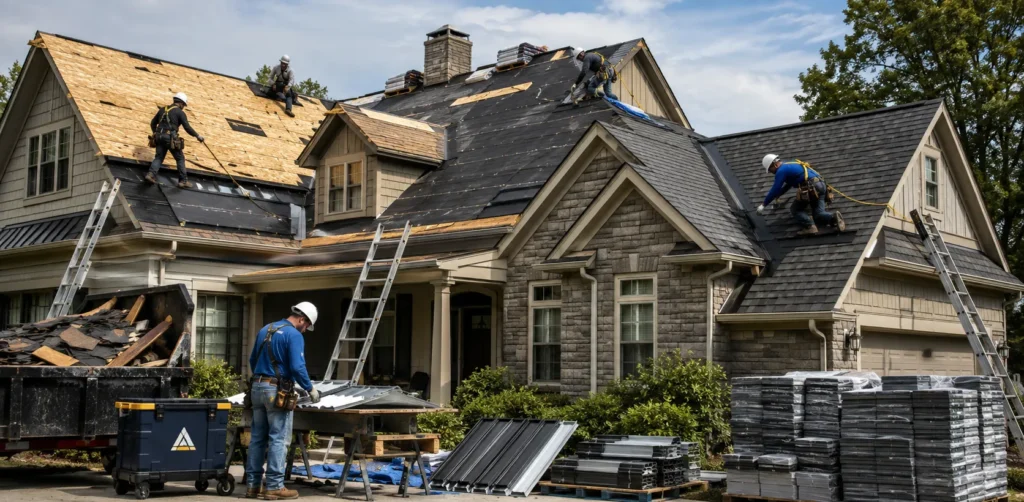
Replacing the roof on a 1,200-square foot house typically costs between $6,000 and $16,000, with most homeowners spending around $7,000 to $8,000 for a standard asphalt shingle roof. Premium materials like metal, tile, or slate, along with a complex roof design or higher labor rates, can push the final price well beyond this range.
A roof replacement involves much more than installing new shingles. Labor, tear off, underlayment, flashing, permits, roof pitch, and structural repairs all affect the final estimate. This guide breaks down every major cost factor, compares roofing materials, explains labor and installation costs, and shows how roof size changes your overall budget so you can estimate your project easily.
How Much Does It Cost to Replace a Roof on a 1,200 Sq Ft House?
Replacing the roof on a 1,200 square foot house generally costs between $6,000 and $16,000, while most homeowners pay around $7,000 to $8,000 for a complete asphalt shingle roof replacement. On average, that works out to about $4 to $8 per square foot, including both materials and professional installation. Roofing Estimating Services can help contractors accurately calculate material quantities, labor costs, installation requirements, and other project-specific expenses when preparing a detailed roof replacement estimate.
Keep in mind that roofers don’t price projects based on your home’s floor area. Instead, they measure the actual roof surface, which is usually larger than the home’s footprint because of roof pitch, overhangs, valleys, and waste during installation. A 1,200 square foot home typically has around 1,300 to 1,500 square feet of roofing area, depending on the roof design.
How to Estimate Roof Replacement Cost?
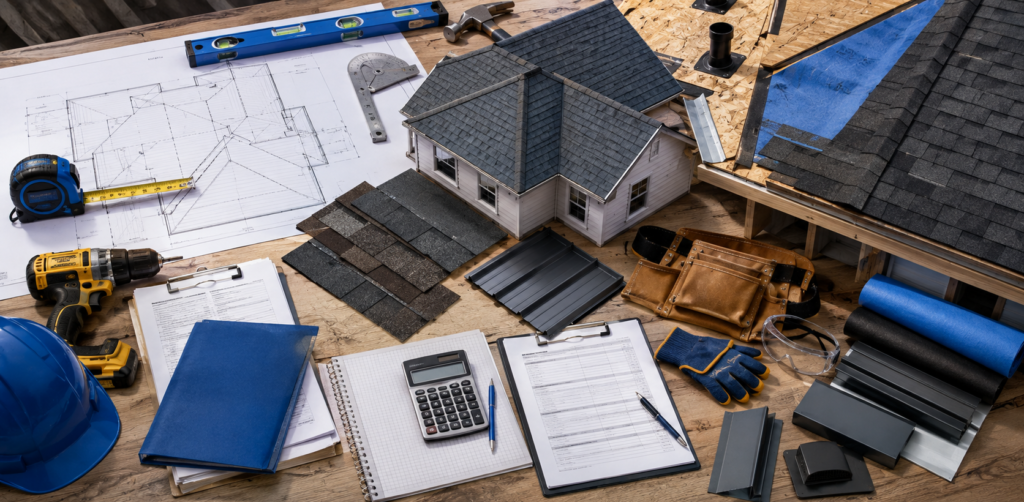
You can estimate the cost of replacing your roof with a few simple calculations before requesting contractor quotes. While every project is different, this method provides a realistic starting point for budgeting. For a more detailed project budget that accounts for materials, labor, and other construction costs, Construction Estimating Services can provide a complete estimate based on the specific project scope.
Start by measuring the actual roof area, not just the size of your home. Because of roof pitch and overhangs, a 1,200 square foot house often has 1,300 to 1,500 square feet of roofing surface. Accurate measurements and material quantities are essential when preparing a roofing budget, which is where Construction Takeoff Services can help contractors quantify the roofing materials required before requesting or preparing bids.
Next, choose the roofing material you plan to install. Basic asphalt shingles are usually the most affordable option, while metal, tile, cedar shake, and slate roofs cost considerably more due to higher material and installation requirements.
Once you’ve determined your roof size and selected a material, multiply the roofing area by the estimated installed cost per square foot. Most residential roof replacements range between $4 and $8 per square foot, although premium roofing systems can exceed this range.
When calculating your budget, don’t forget to include additional project costs such as:
- Roof tear off and debris disposal: Approximately $1–$3 per square foot
- Steep roof pitch or complex roof designs: Higher labor costs due to additional installation time and safety requirements
- Local labor rates: Labor pricing varies significantly by region and contractor availability
- Permits, inspections, flashing replacement, underlayment, and roof deck repairs: These items can increase the total project cost if they’re required
Roof Replacement Cost by House Size
Although this guide focuses on a 1,200 square foot house, roofing costs generally increase as roof size grows. Larger roofs require more materials, longer installation times, and higher labor costs. For residential projects where roofing is part of a broader construction scope, Residential Estimating Services can help contractors develop accurate budgets based on material quantities, labor requirements, and project-specific conditions.
| House Size | Estimated Cost |
| 1,000 sq ft | $4,000–$9,000 |
| 1,100 sq ft | $5,000–$10,000 |
| 1,200 sq ft | $5,500–$11,000 |
| 1,300 sq ft | $6,000–$12,000 |
| 1,400 sq ft | $6,500–$13,000 |
| 1,600 sq ft | $7,400–$14,000 |
| 1,700 sq ft | $8,000–$15,500 |
| 1,800 sq ft | $8,400–$16,500 |
| 1,900 sq ft | $9,000–$17,600 |
| 2,000 sq ft | $9,500–$18,200 |
| 2,500 sq ft | $11,300–$20,000 |
| 3,000 sq ft | $13,000–$23,000 |
Note: These estimates assume a standard roof replacement with asphalt shingles. Your final cost can vary based on the roofing material you choose, roof pitch, structural complexity, local labor rates, tear-off requirements, permit fees, and any repairs needed to the roof decking or framing before the new roof is installed.
Roof Replacement Cost by Roofing Material
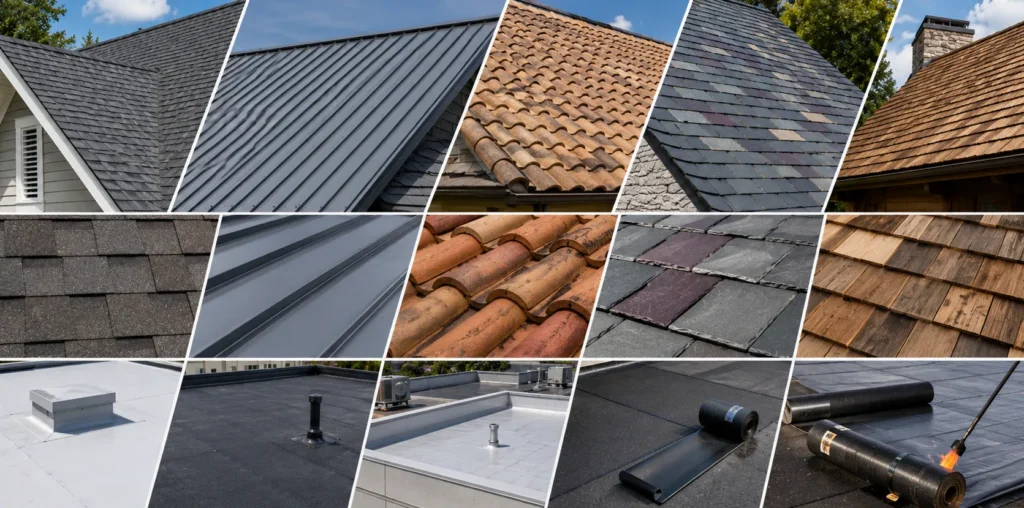
The roofing material you choose has the biggest impact on the total replacement cost. Budget friendly options like 3 tab asphalt shingles keep installation costs low, while premium materials such as slate, copper, or clay tile can increase the overall project cost several times over. Beyond price, each material offers a different lifespan, maintenance requirement, appearance, and level of weather resistance, making it important to balance your budget with your long-term goals.
| Roofing Material | Installed Cost (Per Sq. Ft.) |
| 3 tab asphalt shingles | $3.50 – $5.00 |
| Architectural shingles | $4.00 – $8.50 |
| Luxury asphalt shingles | $6.50 – $16.00 |
| Corrugated steel | $5.00 – $12.00 |
| Aluminum roofing | $7.00 – $17.00 |
| Standing seam metal | $10.00 – $35.00 |
| Copper roofing | $15.00 – $40.00 |
| Concrete tile | $10.70 – $27.50 |
| Clay tile | $11.00 – $25.00 |
| Natural slate | $10.00 – $35.00 |
| Synthetic slate | $8.00 – $16.00 |
| Cedar shake | $8.00 – $30.00 |
| Wood shingles | $6.00 – $15.00 |
| TPO membrane | $4.00 – $12.00 |
| EPDM rubber | $7.00 – $15.00 |
| PVC membrane | $5.00 – $15.00 |
| Modified bitumen | $4.00 – $10.00 |
What Affects Roof Replacement Cost?
Roof replacement costs vary because every roof is different. The total price depends on the size of the roof, the material you select, the amount of labor involved, and whether additional repairs are needed before the new roof can be installed.
The biggest cost factors include:
- Roof size: Larger roofs require more shingles, underlayment, flashing, fasteners, and labor, increasing the overall project cost.
- Roofing material: Asphalt shingles are generally the most affordable, while metal, tile, cedar, and slate roofing cost considerably more.
- Roof pitch and slope: Steeper roofs require additional safety equipment, slower installation, and more labor hours, increasing labor costs.
- Roof accessibility: Multi story homes, limited property access, or roofs with difficult layouts take longer to complete and typically cost more.
- Existing roof removal: Removing old shingles, underlayment, flashing, and disposing of construction debris adds both labor and disposal costs.
- Roof decking repairs: Rotten or damaged roof decking must be repaired before installing the new roofing system.
- Geographic location: Local labor rates, material pricing, permit fees, and regional building codes all affect the final cost.
- Permits and inspections: Most municipalities require permits for roof replacement, and inspection fees vary by location.
- Architectural complexity: Dormers, skylights, valleys, hips, chimneys, and multiple roof sections increase material waste and installation time.
Roof Replacement Cost Breakdown
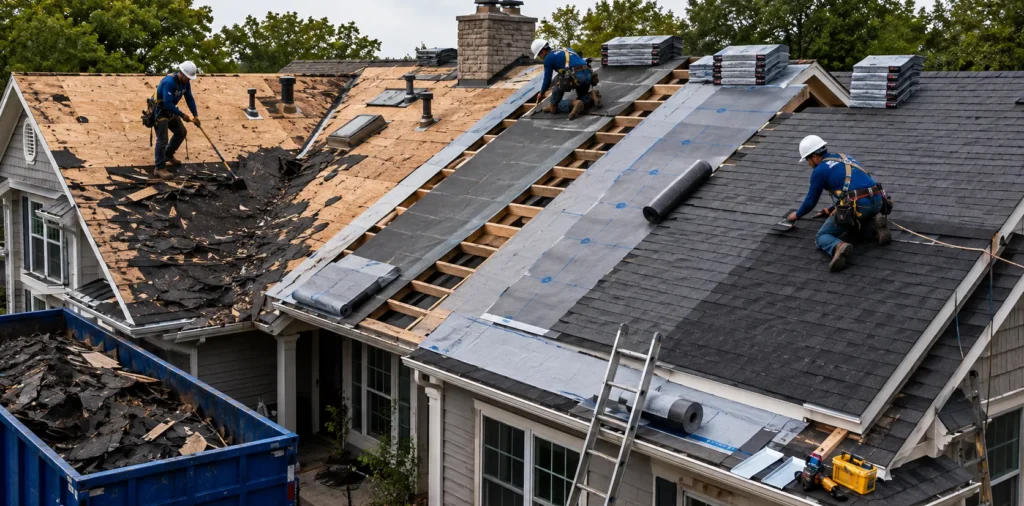
The total cost of replacing a roof includes much more than shingles. Materials, labor, tear-off, roof preparation, permits, and repairs all contribute to the final project price.
Material Cost
| Material | Installed Cost (Per Sq. Ft.) |
| 3 tab asphalt shingles | $3.50 – $5.00 |
| Architectural shingles | $4.00-$8.50 |
| Premium materials (metal, tile, slate) | Higher depending on product |
Labor & Project Components
| Cost Component | Typical Cost |
| Installation labor | $2.00 – $6.00 per sq. ft. |
| Old roof removal & disposal | $0.40 – $2.00 per sq. ft. |
| Roof decking repairs | $2.00 – $5.00 per sq. ft. |
| Water shield | $1.50 – $2.50 per sq. ft. |
| Permits | Around $100 – $800+ |
For most roof replacement projects, labor typically accounts for 50% to 55% of the total cost, while roofing materials make up roughly 45% to 50%. Any hidden structural repairs, damaged decking, or upgrades discovered after removing the old roof will increase the final price.
Roofing Labor Cost
Labor is one of the largest expenses in any roof replacement project because it covers far more than simply installing shingles. Contractors must remove the existing roof, prepare the surface, install the roofing system, complete flashing and waterproofing details, and clean the site once the work is finished.
Most homeowners can expect roofing labor costs to range between $2 and $6 per square foot, although this varies by roof complexity, location, and material. On an hourly basis, roofing labor generally averages around $32 per hour, with higher rates in areas where labor costs are above the national average.
Several factors can increase labor costs, including:
- Roof tear off: Removing old roofing materials and hauling away debris typically adds $0.40 to $2.00 per square foot.
- Preparation and cleanup: Site preparation, debris removal, and final cleanup often add $600 to $700 to the project.
- Permits and inspections: Permit costs generally range from $100 to $500, although some municipalities charge more for larger or more complex projects.
- Roof height and accessibility: Multi-story homes or roofs with limited access require additional equipment and more labor time.
- Roofing material: Heavy materials such as tile, slate, and standing seam metal require specialized installation techniques, increasing labor costs.
- Roof pitch: Steeper roofs slow installation and require additional safety equipment, leading to higher labor charges.
Roof Pitch and Roof Design Impact on Pricing
Roof pitch and roof design play a major role in determining replacement costs because they affect both the amount of material required and the time needed to complete the installation.
A steeper roof creates more roofing surface than a flat or low-slope roof, which means contractors need additional materials to cover the same home’s footprint. Roofs with pitches around 10:12 to 12:12 can require up to 50% more roofing material than a low pitch roof of the same house size.
Steep roofs also increase labor costs because crews must work more carefully, use additional fall protection equipment, and move more slowly during installation.
Flat roofs present their own challenges. While they are easier to access, they require specialized waterproofing systems such as TPO, PVC, EPDM, or modified bitumen, which can increase material costs depending on the system selected.
Roof design also affects pricing. Features that commonly increase replacement costs include:
- Dormers: Add extra valleys, flashing, and cutting, increasing labor and material waste.
- Valleys and hips: Require additional waterproofing and more precise installation.
- Multiple gables: Increase cutting waste and installation time.
- Chimneys and skylights: Require additional flashing and leak protection.
- Complex rooflines: More corners, intersections, and transitions lead to longer installation times and higher labor costs.
The simpler the roof layout, the lower the installation cost tends to be. A basic gable roof usually costs less to replace than a roof with multiple slopes, dormers, valleys, and architectural features because it requires fewer materials, less cutting, and fewer labor hours.
Hidden Roof Replacement Costs
When planning a roof replacement, many homeowners focus only on the price of shingles and installation. However, once the old roof is removed, contractors may discover issues that weren’t visible during the initial inspection. These additional repairs and services can increase your final bill, so it’s important to leave some room in your budget for unexpected expenses. Demolition Estimating Services can help contractors account for roof removal, debris disposal, labor, and related demolition costs when preparing a detailed replacement budget.
Some of the most common hidden roof replacement costs include:
- Structural repairs: Rotten roof decking, damaged rafters, deteriorated trusses, or water-damaged sheathing must be repaired before the new roof can be installed safely.
- Roof system upgrades: Replacing chimney flashing, drip edges, roof vents, ridge vents, pipe boots, or bringing the roof up to current building code requirements can add to the total cost.
- Permit and inspection fees: Most cities require permits for a full roof replacement. Inspection fees vary by municipality and are usually added to the project cost.
- Higher labor costs: Steep roofs, limited access, multi-story homes, and complex roof designs require more labor hours and additional safety equipment, increasing labor expenses.
- Material removal and disposal: Removing old shingles, underlayment, nails, and construction debris often comes with disposal fees that aren’t always included in basic estimates.
Budget Tip: Setting aside an additional 10% to 15% of your estimated roofing budget can help cover unexpected repairs without delaying the project.
Roof Replacement Cost by Location
Roof replacement costs vary across the country because labor rates, material prices, permit fees, weather conditions, and local building codes differ from state to state. The same roof can cost several thousand dollars more in one location than another.
Lower Cost States
Southern and Midwest states generally have lower labor rates and operating costs.
| State | Average Roof Replacement Cost |
| Mississippi | $5,800 – $9,000 |
| Alabama | $6,000 – $9,000 |
| Arkansas | $6,000 – $9,200 |
| West Virginia | $6,000 – $9,500 |
| Oklahoma | $6,200 – $9,500 |
Mid Range States
These states typically fall near the national average.
| State | Average Roof Replacement Cost |
| Texas | $8,000 – $13,000 |
| Florida | $8,000 – $13,000 |
| Ohio | $8,000 – $13,500 |
| Colorado | $8,500 – $14,000 |
| Washington | $8,500 – $14,000 |
Higher Cost States
Labor costs, permit fees, and material prices are generally higher in these areas.
| State | Average Roof Replacement Cost |
| Hawaii | $12,000 – $17,500 |
| California | $12,000 – $16,000 |
| New York | $11,000 – $15,000 |
| Massachusetts | $10,000 – $15,000 |
| Connecticut | $10,000 – $15,000 |
Keep in mind that these are average installed costs. Your final price will still depend on roof size, roofing material, roof complexity, labor rates, and whether additional repairs are required.
Should You Repair or Replace Your Roof?
Not every roofing problem requires a complete replacement. In many cases, a repair is enough if the roof is relatively new and the damage is limited to a small area. However, older roofs with widespread damage usually make replacement the more practical and cost-effective choice.
Choose roof repair if:
- The roof is relatively new.
- Damage is limited to one area.
- There are a few missing shingles.
- Leaks are localized.
- The repair cost is much lower than replacement.
Choose roof replacement if:
- The roof has reached the end of its expected lifespan.
- Damage is spread across multiple areas.
- The roof deck or structure is sagging.
- Water damage is extensive.
- Repair costs continue to add up year after year.
If more than one major section of the roof is failing, replacing the entire roof is often the better long term investment.
Signs Your Roof Needs Replacement
Most roofs usually show warning signs well before major problems develop. Recognizing these signs early can help you avoid costly structural damage.
Common signs include:
- Roof is 20 years old or older (depending on the roofing material).
- Missing, cracked, curled, or broken shingles.
- Large amounts of shingle granules collecting in gutters.
- Frequent leaks or water stains inside the home.
- Soft or sagging areas on the roof.
- Visible mold, rot, or moisture damage.
- Flashing around chimneys or vents is failing.
- Storm damage affecting multiple sections of the roof.
If your roof shows several of these signs, it’s worth having it professionally inspected before deciding on repairs.
How Long Does Roof Replacement Take?
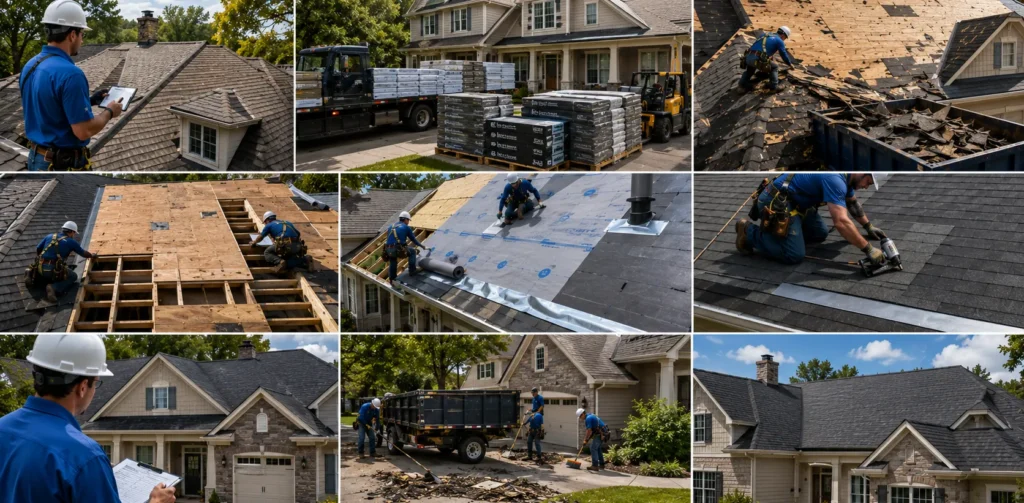
Most roof replacement projects are completed fairly quickly once construction begins. However, the entire process, from inspection to the final cleanup, usually takes longer because of scheduling, permitting, material delivery, and weather conditions.
A typical timeline looks like this:
- On site roof installation: 1 to 3 days
- Projects requiring structural repairs: Several additional days
- Complete project timeline: Around 2 to 4 weeks from scheduling to completion
The following factors can extend the schedule:
- Large roof size
- Steep roof pitch
- Complex roof design
- Premium roofing materials such as slate or tile
- Hidden structural damage
- Rain, snow, or high winds
- Permit approvals or inspection delays
While unusual situations can stretch a project over several weeks, the actual installation of most residential roofs is completed within a few days.
Roof Replacement vs. Roof Overlay
Homeowners sometimes consider installing a new roof over the existing one to reduce costs. While this approach can work in certain situations, it isn’t always the best long term solution.
| Roof Replacement | Roof Overlay |
| Old roofing is completely removed | New shingles are installed over existing shingles |
| Higher upfront cost | Lower upfront cost |
| Longer installation | Faster installation |
| Allows full roof inspection | Existing problems remain hidden |
| Longer lifespan | Shorter lifespan |
| Better manufacturer warranties | More warranty limitations |
Many local building codes limit homes to a maximum of two layers of shingles, meaning an overlay may not always be permitted. If the existing roof has significant damage or multiple layers already installed, a full replacement is usually the better option.
Best Roofing Material for Your Home
The best roofing material depends on your budget, climate, expected lifespan, and maintenance preferences. While asphalt shingles remain the most common choice, metal and tile roofing offer longer service lives for homeowners willing to invest more upfront.
- Asphalt shingles: Affordable, widely available, and easy to install. They typically last 15 to 30 years, making them a popular choice for most homes.
- Metal roofing: Offers a lifespan of 40 to 80 years with excellent fire resistance, durability, and energy efficiency. Although it costs more initially, it requires very little maintenance.
- Clay and concrete tile: Often last 50 years or more and perform especially well in warm climates. Their biggest drawbacks are higher installation costs and additional structural weight.
Each material has its strengths, so choosing the right one depends on balancing upfront cost with long term value.
Ways to Reduce Roof Replacement Costs
Replacing a roof is a major investment, but careful planning can help lower the total cost without sacrificing quality.
- Choose materials wisely: Select roofing materials that fit both your budget and the expected lifespan you want.
- Avoid unnecessary upgrades: Only pay for premium products or accessories if they provide value for your home and climate.
- Get multiple quotes: Compare detailed estimates from several licensed roofing contractors before making a decision.
- Schedule during the off season: Roofing companies often have greater availability outside their busiest months, which may result in better pricing.
- Purchase materials locally: Buying from nearby suppliers or purchasing materials in larger quantities may reduce delivery costs and qualify for discounts.
- Plan: Replacing a roof before severe damage develops usually costs less than waiting until structural repairs become necessary.
Questions to Ask a Roofing Contractor
Hiring the right contractor is just as important as choosing the right roofing material. Before signing a contract, make sure you understand exactly what is included in the project.
Ask questions such as:
- Are you licensed, insured, and bonded?
- How many years of roofing experience do you have?
- Can you provide references from recent projects?
- What is included in the written estimate?
- Will you remove the old roof completely?
- Who will supervise the installation?
- Will you obtain the required permits?
- What warranties do you provide for materials and workmanship?
- How long will the project take?
- How will you protect my landscaping and property?
- Is cleanup and debris removal included in the price?
Final Thoughts
Replacing the roof on a 1,200 square foot house typically costs between $6,000 and $16,000, but the final price depends on much more than the size of your home. Roofing material, labor rates, roof pitch, structural repairs, permits, and your location all influence the total cost.
Before choosing a contractor, request a detailed written quote that breaks down materials, labor, tear off, permits, and any potential repairs. A transparent estimate helps you avoid unexpected costs and ensures you’re comparing bids on an equal basis.
Frequently Asked Questions
How much does it cost to replace a roof on a 1,200 square foot house?
Most homeowners spend between $6,000 and $16,000, with asphalt shingle roofs typically averaging $7,000 to $8,000. Material choice, labor rates, and roof complexity have the biggest impact on the final cost.
How much does roof replacement cost per square foot?
A complete roof replacement generally costs $4 to $8 per square foot for standard asphalt roofing, while premium materials such as metal, tile, and slate cost significantly more.
What is the cheapest roofing material?
Three tab asphalt shingles are usually the most affordable roofing material while still providing reliable protection for residential homes.
How long does a new roof last?
Roof lifespan depends on the material. Asphalt shingles typically last 15 to 30 years, metal roofs 40 to 80 years, and clay or slate roofs can last 50 years or more with proper maintenance.
Does homeowners insurance cover roof replacement?
Insurance generally covers roof replacement when damage is caused by storms, fire, hail, or other covered events. Normal aging and wear are usually not covered.
Can I install a new roof over my existing roof?
In some cases, yes. However, many building codes only allow two layers of shingles, and an overlay doesn’t address hidden structural problems underneath.
How long does roof replacement take?
Most residential roofs are installed within 1 to 3 days, although the complete process, including scheduling and inspections, often takes 2 to 4 weeks.
What increases roof replacement costs the most?
Premium roofing materials, steep roof pitches, structural repairs, complex roof designs, and high local labor rates typically have the greatest impact on pricing.
Should I repair or replace my roof?
If the roof is relatively new and the damage is limited, repairs are usually the better option. Older roofs with widespread damage are generally more economical to replace.
Does a new roof increase home value?
Yes. A new roof improves curb appeal, reassures potential buyers, and can increase resale value while reducing the likelihood of future repair costs.

Tim C. is a construction estimating expert and Director at ACON Engineering, specializing in construction cost estimating, quantity takeoffs, and preconstruction planning. He has led thousands of successful project bids and helps contractors make informed, profitable decisions.