
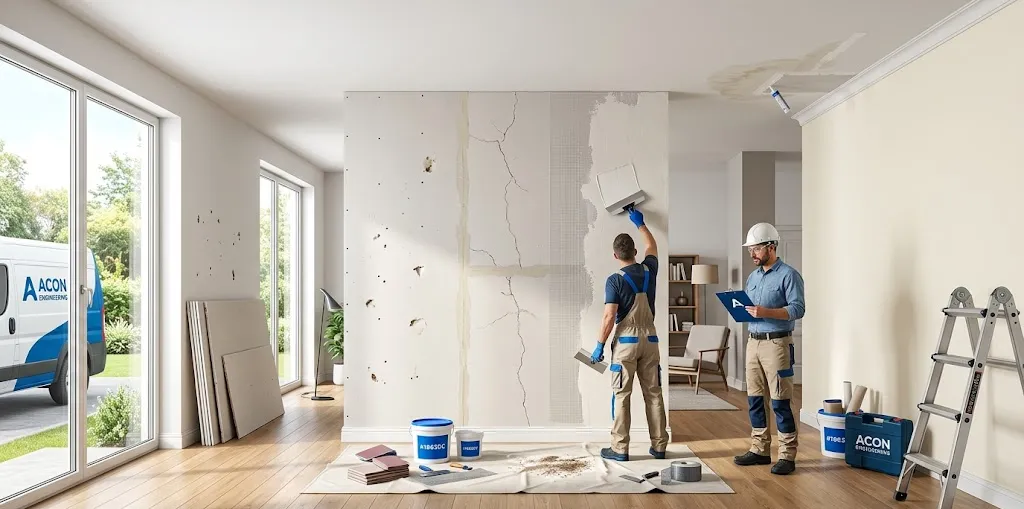
Drywall repair usually costs between $50 and $1,500. Fixing a small dent or a nail hole is a quick job that typically costs $50 to $150. For larger issues, like major water damage or repairing large wall sections, prices generally range from $500 to $1,500. Most professionals charge an hourly rate between $50 and $150 to manage these repairs.
Your final price depends on whether you are fixing a wall or a ceiling, how hard it is to match your existing texture, and the cost of the paint. Complex ceiling repairs are more difficult and can sometimes push the total cost above $1,500. This blog provides a comprehensive breakdown of these costs to help you understand what you are paying for.
Average Drywall Repair Cost Per Square Foot
The cost for drywall repair typically ranges from $50 to $75 per square foot for very small patches. For larger repairs, the price usually drops to between $2 and $10 per square foot. This happens because contractors often charge a minimum fee to cover their travel and setup time, regardless of the hole size.
Small damage up to 2 square feet generally carries a flat rate between $50 and $100. For medium-sized damage covering 2 to 5 square feet, you can expect to pay between $100 and $300. If you are replacing a large section of 10 square feet or more, the cost typically falls between $3 and $10 per square foot. Labor accounts for roughly 70% of your total bill, so your local market rates will be the biggest factor in your final estimate.
Drywall Repair Cost by Damage Type
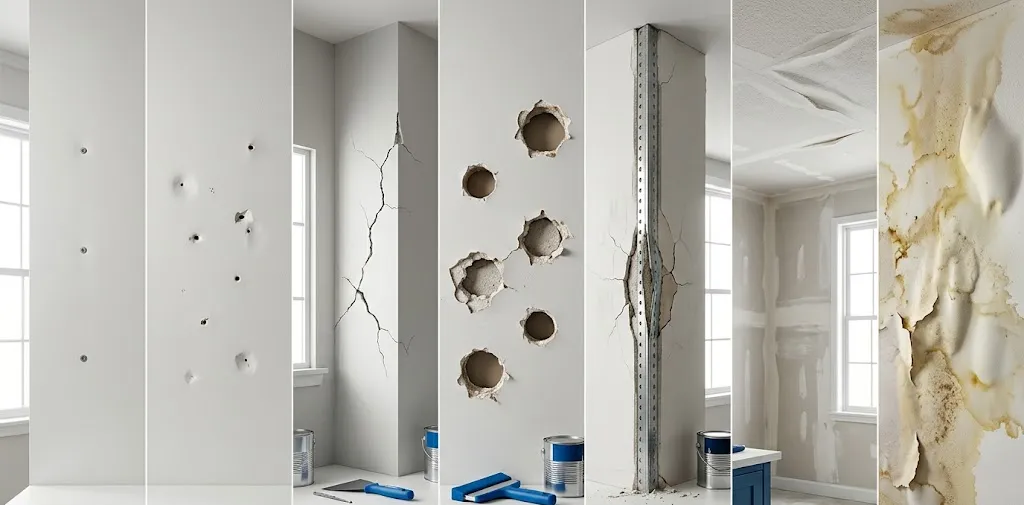
Drywall repair prices range from $50 for minor dents to $1,500 for extensive structural damage. The specific issue determines how much joint compound, tape, and labor your project requires. While small fixes are often quick, larger holes or corner damage need more time and material to look right.
| Damage Type | Estimated Cost |
| Screw Pops | $10 – $50 |
| Small Holes & Dents | $50 – $200 |
| Cracks | $100 – $350 |
| Medium to Large Holes | $200 – $600 |
| Corner Bead Repair | $150 – $300 |
| Ceiling Repairs | $200 – $1,300 |
| Water Damage | $500 – $2,000+ |
Screw Pops
Screw pops happen when a house settles and pushes the drywall screw head through the surface. Fixing this yourself is cheap, usually costing between $10 and $50 for new screws and a small tub of mud. If you hire a professional to drive new screws and refinish the area to match the wall, expect to pay between $200 and $400.
Small Holes and Dents
Damage from doorknobs or furniture impacts generally costs $50 to $150 to repair. You can buy a DIY patch kit for under $20 to handle this yourself. However, getting a smooth, invisible finish is difficult for most homeowners. A professional repair costs more because of the labor needed to sand, prime, and match the paint exactly.
Cracks
The cost to fix wall cracks depends on their length. Small cracks under five feet usually cost around $100. For cracks between five and ten feet, you can expect to pay about $200. Large cracks caused by structural shifts often cost $300 or more. These repairs require several coats of mud and tape to prevent the crack from appearing again.
Medium to Large Holes
Holes around 12 inches cost about $200 to repair. If the hole is larger than 12 inches, the price typically rises to $300 or $400. These jobs often require new wooden framing to support the patch. This extra work, combined with the time needed for texturing and painting, increases the total labor bill. For large-scale repairs across multiple rooms, contractors often use ACON Engineering to get precise material counts and labor hours, which is an essential step if you want to learn how to win construction bids.
Corner Bead Repair
Fixing a crushed or dented corner costs between $150 and $300. The contractor must cut out the old metal or plastic bead and install a new corner piece. This task requires several coats of joint compound and careful sanding to create a sharp edge. If the damage is extensive, the cost can easily exceed $500.
Ceiling Drywall Repairs
Ceiling repairs generally cost between $200 and $1,300. Working overhead is physically harder and takes more time than fixing a standard wall. These projects often require specialized equipment, such as drywall lifts or high ladders, which pushes the labor price up. While a minor crack or a nail pop is relatively simple, large holes or structural ceiling damage require extensive skill to match the existing texture and finish perfectly.
Water Damage Repairs
Water damage is usually the most expensive repair, averaging between $500 and $2,000. If the leak is widespread and requires mold remediation, new structural framing, or insulation replacement, costs can climb as high as $7,000.
The high price for water damage comes from the extra steps involved. Contractors have to cut out the soggy drywall, treat the area for mold, and replace the wet insulation behind the boards. Because these projects are complex, the best move is to get multiple bids from different contractors to ensure the remediation is managed correctly.
Drywall Repair Cost by Solution Type
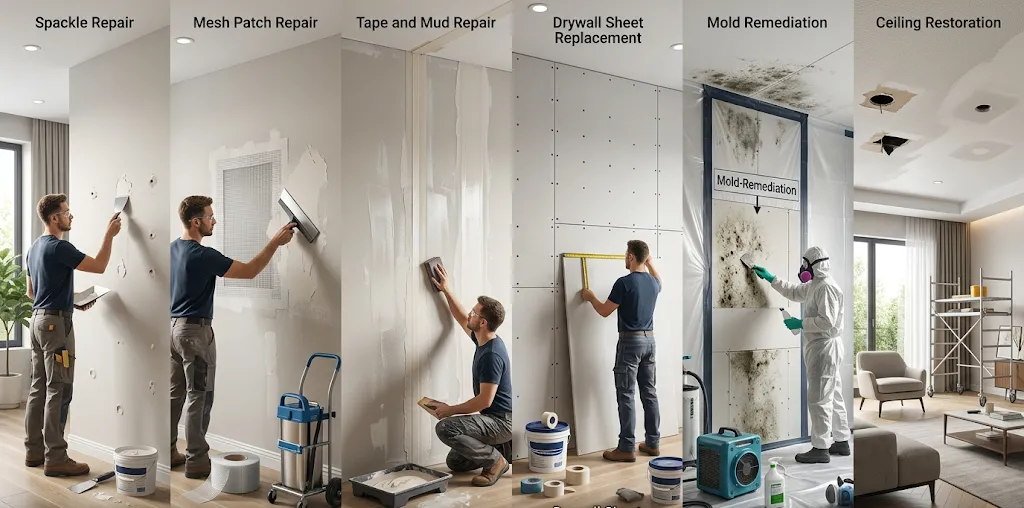
Drywall repair costs shift significantly based on the fix being used. Small fixes using joint compound typically cost $50 to $250, depending on the size of the damage. However, prices increase when the project requires structural replacement or specialty mold restoration.
| Solution Type | Estimated Cost |
| Spackle & Mud | $20 – $120 |
| Patch Kits | $25 – $200 |
| Tape & Mud | $100 – $350 |
| Sheet Replacement | $200 – $600 |
| Mold Restoration | $500 – $1,500 |
| Ceiling Repair | $250 – $1,400 |
Spackling and Joint Compound
This is a straightforward DIY task that involves filling the damage, sanding it smooth, and applying a touch-up of paint. While the materials are cheap, repairing extensive cracks with this method can cost more if it requires a professional to spend extra time on the finish.
Patch Kits
Commercial patch kits are designed to cover small to medium holes quickly. Common products like the 3M Large Hole Repair Kit or the DAP DryDex Wall Repair Kit provide a mesh patch and specialized compound. While the kits are affordable, the total cost rises when you factor in the labor for sanding and the expense of matching your existing paint perfectly.
Drywall Tape and Mud
For longer cracks and larger seams, using drywall tape and joint compound is the standard solution. This method requires applying several coats of mud and sanding between each layer. Because this process is labor-intensive and requires drying time between coats, it carries a higher price than a simple spackle fix.
New Drywall Sheet Replacement
Before replacement begins, contractors typically perform a drywall material takeoff to calculate the exact amount of board, tape, screws, and joint compound required.
When a section of the wall is too damaged to patch, the contractor must cut it out and replace it with a new piece of drywall. This solution costs between $200 and $600. The total includes the new panel, fasteners, tape, and joint compound. The final quote will fluctuate based on the size of the new section and the complexity of the wall texture.
Mold Damage Restoration
Repairing drywall affected by mold is a complex task. This process involves setting up containment areas, using HEPA air filtration, and applying antimicrobial treatments to the wooden framing. If the damage is severe and requires professional testing or inspection, the price can increase by $200 to $300.
Ceiling Repairs
Ceiling fixes are consistently more expensive than wall repairs. The work is physically difficult and often requires specialized lifts or scaffolding. While small DIY patches are possible for minor ceiling cracks, severe damage usually requires a specialized contractor to ensure the repair is structural and blends in with the rest of the ceiling.
Drywall Repair Material Costs
The cost for repair materials usually ranges from $15 to $200, depending on the size of the damage. For a small nail pop or tiny hole, a basic patch kit from brands like 3M, Gorilla, or DAP DryDex costs between $10 and $20.
Larger repairs require individual supplies. A standard 4×8 drywall sheet costs $12 to $20, while a 1 to 3.5-gallon bucket of joint compound runs between $10 and $25. Essential accessories like drywall tape and screws typically cost $5 to $10 per roll or box. Finishing tools, such as sanding sponges, cost $3 to $10 each.
If you need to match textures or colors, texture spray cans cost $8 to $15, while a gallon of primer and paint will add another $35 to $60 to your total material bill.
Drywall Repair Labor Costs
Labor is the largest expense in drywall repair, typically ranging from $50 to $150 per hour. For major structural issues or complex ceiling work, labor costs can easily exceed $1,000.
The type of professional you hire directly impacts the hourly rate. A specialized drywall contractor often charges $200 or more per hour for high-end finishing. A general handyman typically ranges from $40 to $90 per hour, while a painter may charge $25 to $65 per hour for basic patching and touch-ups.
Many contractors also charge a minimum service fee of $100 to $200, even for very small jobs, to cover their travel and setup. You can reduce these costs by handling the site preparation and final cleanup yourself. Keep in mind that matching the texture and paint of an older wall is time-consuming and will increase the total labor hours required for a smooth finish.
Key Factors Influencing Drywall Repair Costs
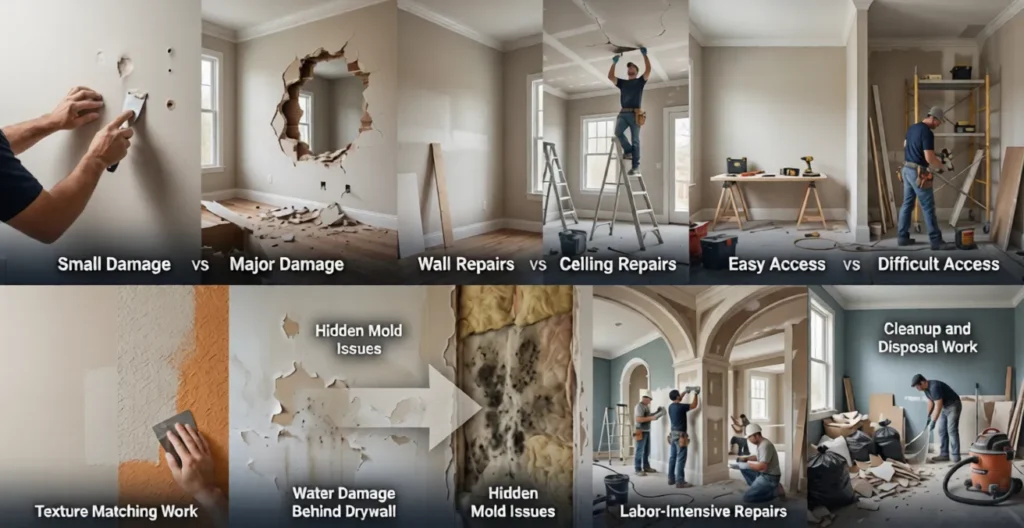
Drywall repair costs vary based on the size and severity of the damage. A small fix can cost as little as $50, while large structural repairs often range from $3,000 to $5,000. The scope of the work and how well you need the paint to match will determine your final bill.
- Size and Severity: This is the primary cost driver. A small patch for a nail hole is a quick job. However, fixing structural damage or large sections of a ceiling takes significantly more material and time.
- Location and Labor Rates: Your geographic area dictates the local labor rates and material costs. Professionals in large cities often charge more per hour to cover their own overhead compared to those in rural areas.
- Accessibility: If the damage is in a hard-to-reach spot, like a high stairwell or a vaulted ceiling, your costs will go up. Contractors charge more when they have to set up specialized ladders or scaffolding to reach the area.
- Texture and Paint Matching: Matching a complex wall texture like orange peel or knockdown is a skilled task. You will pay more for the specialized tools and labor hours needed to make the repair blend into the rest of the wall.
- Hidden Damage: Sometimes a small hole hides a deeper problem like mold or a leaky pipe. If a contractor finds water damage or rot once they cut into the wall, the price will increase to cover the remediation and repair of the underlying issue.
- Disposal and Cleanup: Getting rid of old, damaged materials often adds a disposal fee to your bill. The labor required to clean up fine drywall dust also adds to the total time spent on the job.
Common Causes of Drywall Damage
Water and moisture are the biggest threats to your drywall. Plumbing leaks, burst pipes, and high humidity in bathrooms weaken the panels and create the perfect environment for mold to grow. Beyond water, physical impact is another frequent culprit. Moving heavy furniture, swinging doors without stoppers, or children playing often leave behind accidental dents and holes. Sometimes, the damage happens when you try to update a room. Taking mirrors, shelves, or glued pictures off the wall usually tears the top layer of paper and leaves behind deep scratches or gouges.
Poor installation also leads to long-term structural issues. If a previous owner or inexperienced DIYer missed a wall stud, left improper spacing between the panels, or failed to finish the joints correctly, you will eventually see screw pops and loose boards. Natural house movement plays a major role, too. As a home’s foundation settles into the dirt, it places stress on the rigid walls, creating diagonal cracks around windows, doors, and room corners. Finally, hidden pests like termites live behind the walls and eat through the paper backing, destroying the drywall from the inside out.
Repairing vs. Replacing Drywall
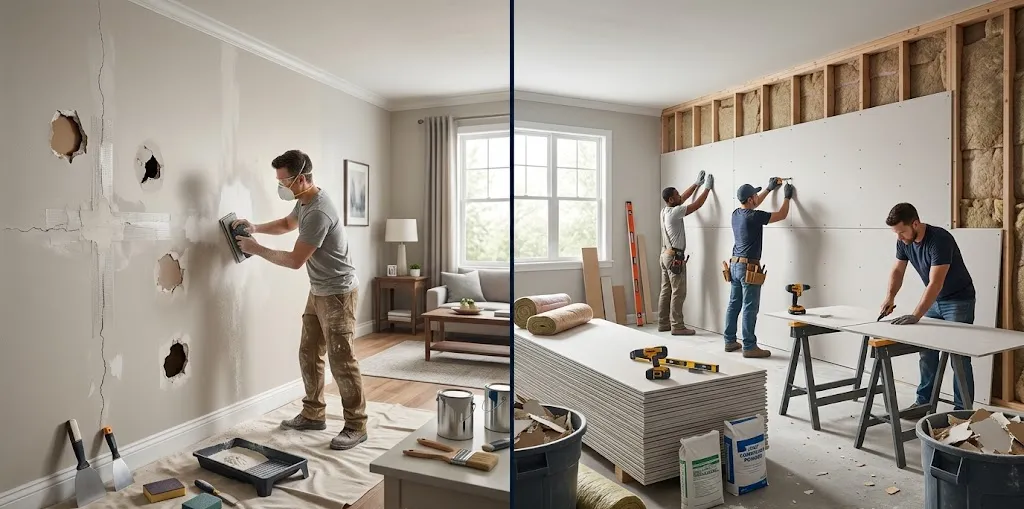
Minor issues like small to medium holes, doorknob dents, and surface scratches are easy to repair. You can handle these minor cracks and blemishes yourself with a basic patch kit and some joint compound. Fixing these small spots takes very little time and keeps your overall repair costs extremely low.
However, severe damage requires a full replacement. If your wall has deep water damage, extensive mold, or massive holes, patching it will not work. Waterlogged drywall completely loses its structural strength. When you deal with large-scale cracking or undertake a major room renovation, cutting out the ruined sections and installing brand new drywall sheets is the smartest option. Tearing down the old boards and starting fresh costs less in the long run than spending hours trying to fix a ruined wall that will eventually fail anyway.
DIY vs. Hiring a Drywall Repair Professional
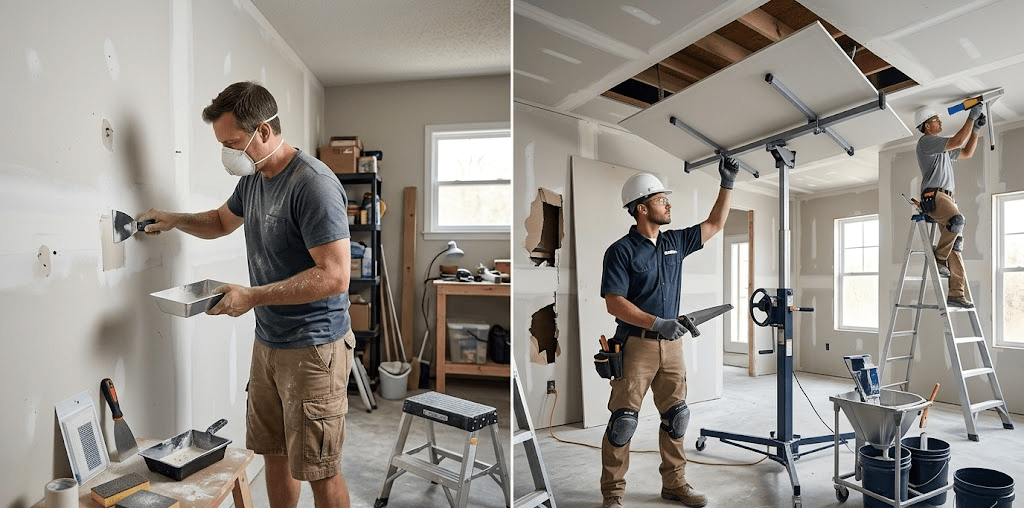
Small fixes like screw pops or minor holes are perfect for a DIY approach. Handling these yourself saves a significant amount of money and lets you work on your own schedule. You only need a basic toolkit and standard materials from a local shop to get these spots looking flat again. It is a great way to keep your home in good shape without spending a lot on labor.
For complex projects or large-scale damage, hiring a professional is the better choice. A smooth finish is hard to reach without the specialized tools and years of practice that a pro brings to the job. Hiring an expert guarantees the work and saves you the headache of multiple sanding rounds. A smart compromise is to handle the site preparation and debris disposal yourself while leaving the high-end finishing work to a specialist.
Smart Ways to Save on Drywall Repair Costs
You can keep your repair budget under control by staying ahead of minor issues and splitting the work with your contractor. Taking a few proactive steps prevents small cracks from turning into expensive structural problems.
- Build Basic DIY Skills: Keeping a small toolkit at home allows you to fix tiny dents before they grow. Learning to patch a nail hole yourself keeps those minimum service fees off your bill.
- Regular Maintenance Checks: Walk through your home every few months to check for new cracks or moisture spots. Catching a leak early prevents expensive mold issues later and keeps the material intact.
- Shop Local Hardware Stores: Get to know the staff at your local hardware shops. Neighborhood stores often offer better discounts on joint compound and tools than the big-box retailers.
- Handle Prep and Cleanup: Contractors charge for every hour they spend on your property. You can lower your quote by moving furniture, protecting floors, and hauling away the trash yourself.
- Get Multiple Quotes: Always talk to at least three different contractors. Comparing bids helps you understand the local market rate and prevents you from overpaying for a simple job.
- Book During the Off-Season: Drywall contractors are usually busiest in the spring and summer. Scheduling your repairs during the winter months can often lead to better rates and faster start times.
Tips to Maintain and Protect Your Drywall
Taking care of your walls now prevents expensive repairs later. A little bit of attention keeps your home looking fresh and protects your bank account from major structural bills. Catching a small issue early is always cheaper than fixing a ruined wall.
- Control Humidity: Drywall is not resistant to heavy moisture. High humidity leads to mold growth and weakens the entire structure. Use a dehumidifier in damp areas like basements and make sure your bathrooms have proper ventilation to clear out steam.
- Watch the Pipes: Regularly inspect the plumbing near your walls. A tiny leak in a hidden pipe can quickly rot a large section of drywall before you even notice a stain.
- Prevent Physical Damage: Do not lean heavy furniture directly against the wall; leave a small gap instead. Also, install doorstops on every door to prevent handles from slamming into the surface and creating holes.
- Clean Carefully: Keep your walls free of dust and debris to stop pests like termites from moving in. When cleaning, stay away from harsh chemicals. A simple mix of mild detergent and water is all you need to wipe away most spots.
- Regular Inspections: Check your walls once a month for new cracks or screw pops. If you see a tiny issue, do a quick DIY patch immediately. Solving small problems fast keeps them from growing into large, costly projects.
Get Accurate Drywall Estimates with ACON Engineering
ACON Engineering provides professional construction estimating services to help you stay on budget. We use your specific zip code to calculate local labor and material rates, so your bid stays as accurate as possible.
Our certified estimators rely on the best construction estimating software to deliver detailed reports within 24 to 72 hours. We focus on providing comprehensive, clear deliverables that make it easy to see exactly where your money is going. Our plans are affordable and designed to fit the needs of any project, whether you are a contractor or a homeowner. With our precise takeoffs, you can build with confidence and avoid unexpected fees.
Frequently Asked Questions (FAQs)
What does drywall repair include?
This starts with cutting out the ruined section and installing a new patch or drywall board. A contractor then applies tape to the seams and covers the area with several coats of joint compound. The final steps include sanding the surface until it is flat, applying primer, and adding a coat of matching paint so the fix is hidden.
How long should a drywall repair take?
Most repairs take two to three days to finish. While the actual manual work only takes a few hours, the joint compound needs time to dry completely between coats.
How much does it cost to replace Sheetrock?
Replacing sheetrock costs between $1.50 and $3.50 per square foot for a professional installation. If you are just buying the panels yourself, a standard 4×8 sheet costs between $12 and $20. For a full 12×12 room, you can expect a total bill between $1000 and $2,000.

Tim C. is a construction estimating expert and Director at ACON Engineering, specializing in construction cost estimating, quantity takeoffs, and preconstruction planning. He has led thousands of successful project bids and helps contractors make informed, profitable decisions.