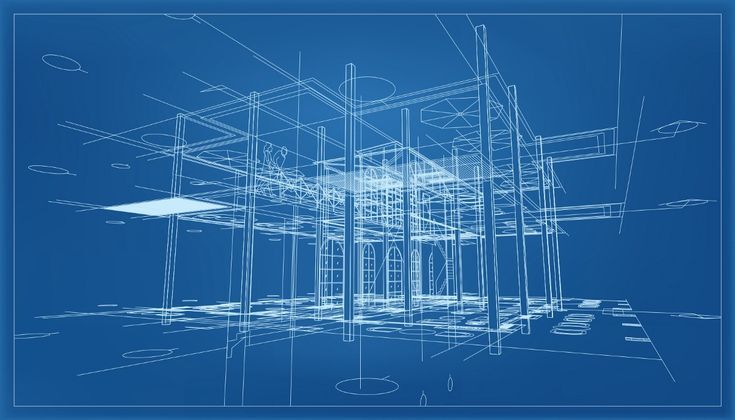
If you are pricing a project in the US, the quality of your estimate starts with how you read the blueprints. Residential and commercial plans look similar at a glance, yet the way we quantify work, apply unit costs, and package deliverables is very different. This guide walks through the differences, what accuracy you can expect, and the typical files a professional estimator will hand over.
To see what this looks like in practice, you can review ACON’s service pages for residential estimating, commercial estimating, and detailed quantity takeoff services. If you want zip code specific pricing powered by RSMeans, check out our overview of RSMeans zip code cost data, or start a project on our contact page.
Blueprint estimating is the process of measuring items from plans and converting those quantities into labor, material, and equipment costs. Estimators use digital tools to trace walls, count fixtures, and calculate areas and volumes. Those measured quantities are matched with cost databases and vendor quotes, then compiled into an estimate or bid.
Along the way, questions come up that affect price and scope. You will hear terms like blueprint dimensions, plan scale, detail callouts, alternates, and addenda. You may also see half-size sets and “blueprint half-length diagnostic” prints used for quick markup or troubleshooting, especially during value engineering reviews.
If you want this handled for you, ACON offers complete blueprint cost estimation services with fast turnarounds and city specific pricing.
Residential scope focuses on assemblies that are typical to homes and small multifamily projects. Think wood framing takeoffs, drywall and paint areas, roofing squares, windows and doors, finish schedules, casework counts, fixtures, and site items like driveways and fencing. One set of house plans can cover all trades, but the details vary by builder standards and local codes.
Commercial scope is broader and more specialized. You often see multiple plan sets per discipline and deeper specifications. Common inclusions are structural steel tonnage, metal studs and track, complex mechanical systems, switchgear and panel schedules, low voltage, fire suppression, site utilities, paving and striping, accessibility upgrades, and tenant improvement finishes. Divisions 21 through 28 and Division 32 frequently drive large portions of cost.
Because commercial drawings include more sheets and notes, the takeoff effort rises. It is common to use a formal request for information process and specification cross checks to avoid gaps.
Accuracy depends on the design phase and how complete the drawings are.
Local pricing matters. In the US, labor rates, material lead times, and taxes vary by state and even county. Using RSMeans city cost indexes and real vendor quotes is standard. If you prefer a done for you option, ACON’s estimating services apply RSMeans location factors and trade partner inputs to keep numbers current.
A professional estimate should be easy to audit. Here is what residential and commercial clients usually receive.
You can request samples of both packages on ACON’s commercial estimating page or the residential estimating page.
Digital takeoff has replaced most manual scaling. Estimators rely on trustworthy blueprint estimation tools to measure quickly and accurately. Common capabilities include:
If you manage your own takeoffs, look for software that exports to Excel and supports custom assemblies for your trade. If you would rather outsource, ACON provides blueprint estimation tools as part of its workflow so you receive clean exports that plug right into your bid.
Pick a team that lives in your world. A residential estimator knows how to handle builder options, finish upgrades, and rapid bid cycles. A commercial estimator knows how to read specs, coordinate multiple disciplines, and manage alternates. If your pipeline includes both, partner with a firm that staffs each side appropriately. ACON’s crews are split by project type so your plans land with the right specialist.
If you need a clear, auditable estimate with US focused pricing, start by sharing your plans and the bid date. Tell your estimator which trades you want covered, any alternates, and whether you need supplier ready material lists. For a quick quote or a sample deliverable, visit ACON’s pages for residential estimating, commercial estimating, or send a note through the contact form.