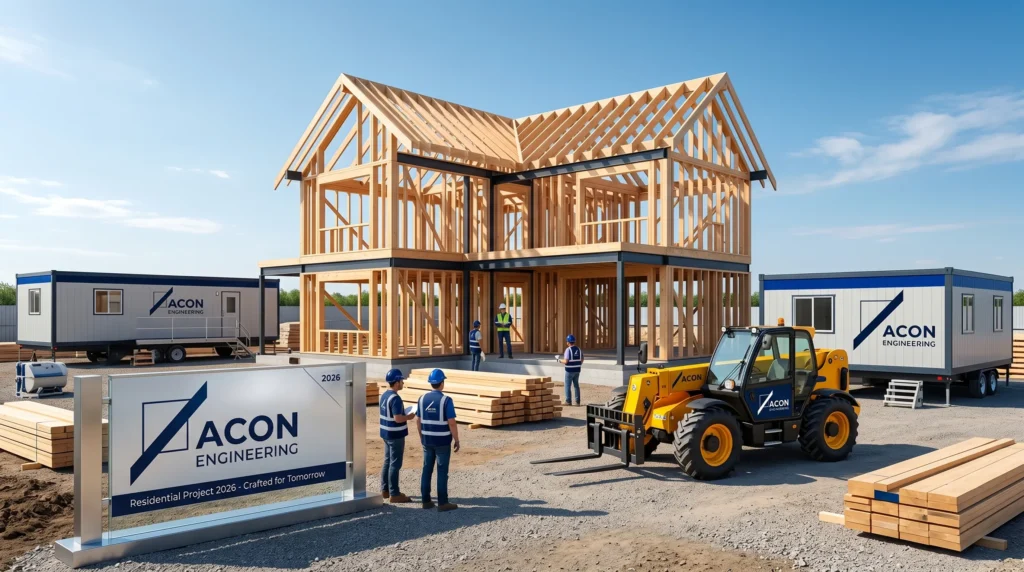
How much does it cost to build a house in 2026? Planning a new home starts with understanding the real financial commitment. National average prices give us a helpful starting baseline. However, localized geographic pricing quickly changes those numbers.
In this article, we are going to break down the exact cost per square foot for new home construction this year. You will see precise price expectations for common property sizes. These examples include standard 1600 and 2000 square foot floor plans. We will also clarify exactly what a builder charges. You will discover how specific zip codes heavily influence your final project expenses. These targeted data points will make accurate budgeting much easier for your new home.
Average Cost to Build a House: The Short Answer
Average cost to build a house currently fluctuates based on several national economic factors. As of now, you can expect the baseline price for a new home to land anywhere between $400,000 and $500,000 this year.
Analyzing 2026 data from three major organizations provides a highly realistic cost range. The U.S. Census Bureau lists the national average sales price for a new home at exactly $499,500. They also report the current median sales price sits slightly lower at $400,500. Zillow estimates a standard baseline new construction cost at roughly $439,000. The National Association of Home Builders tracks similar geographic pricing variations across different regional markets.
It is important to mention here that your exact budget will depend heavily on geographic pricing. Economic factors like local labor shortages also shift the final numbers. Your chosen property type ultimately dictates where you land within this broad spectrum.
Cost Per Square Foot to Build a House
Knowing exactly how much per square foot to build a house gives you a clear budget picture. The construction cost per square foot currently ranges from $100 to $500. This wide gap exists because every single project features different material requirements and labor standards.
But you likely want to know the average cost per square foot to build a house before buying land. According to the National Association of Home Builders (NAHB), the national median for a contractor-built home is currently $166 per square foot. This price will likely be different from your specific total based on your finishing needs. The U.S. Census Bureau identifies that median home sizes have settled at 2,146 square feet, making the national average PSF a helpful baseline for early planning. Premium materials and expensive geographic areas will quickly push that square foot price higher.
Reviewing the cost per sq ft across different tiers clarifies these financial metrics. The table below outlines the per square foot cost based on regional pricing and construction quality.
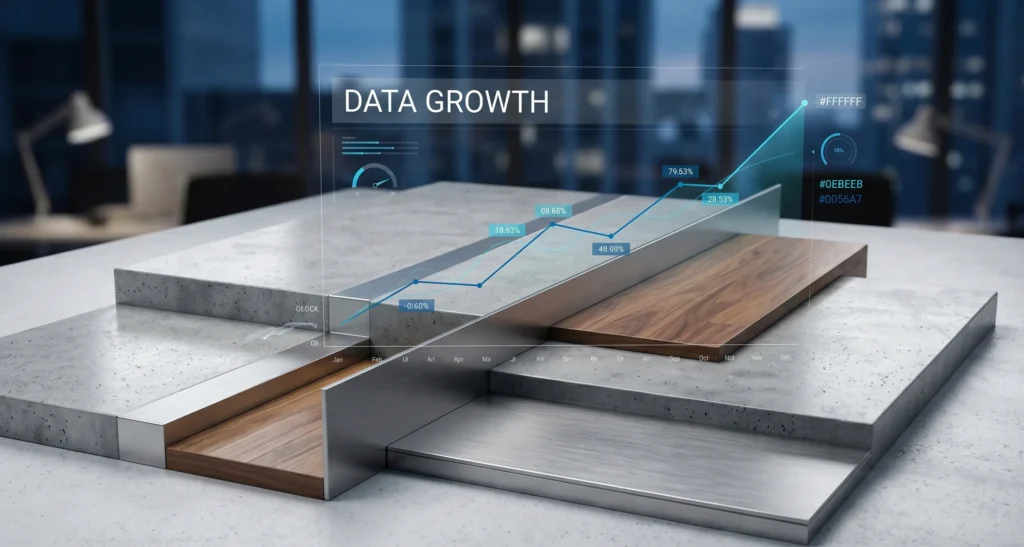
| Construction Quality Tier | South & Midwest Regions | West & Northeast Regions |
| Basic / Builder Grade | $100 to $130 | $130 to $160 |
| Standard Build | $130 to $180 | $160 to $220 |
| High-End Custom | $180 to $300 | $220 to $400 |
| Luxury / Ultra-Custom | $300 to $400+ | $400 to $500+ |
Cost to Build a House by Square Footage
The average cost to build a house changes dramatically based on the total footprint. If you want to determine a near-accurate total cost, you can multiply your expected price per square foot by your desired property size. This simple calculation brings your construction budget into sharp focus.
Remember, a massive custom build requires a completely different financial commitment than a modest starter home.
We will examine the most common property sizes next. You will see exact financial metrics for each standard floor plan. These practical examples help you estimate the overall investment required for your specific project.
Cost to Build a 1600 Sq Ft House
Determining the cost to build a 1600 sq ft house is a common starting point for many families. This specific property size offers comfortable living space without incurring large construction expenses. With a standard average cost per square foot, you can expect to spend between $240,000 and $480,000 for a home of this size. This estimate assumes standard building materials and typical geographic pricing. Upgrading to high-end finishes will easily push your total budget beyond that baseline.
A 1600 sq ft house generally accommodates three bedrooms and two bathrooms. This makes it a highly practical floor plan for new home construction. But you must budget carefully to secure the right financing early in the process. Focus on your must-have features first to keep your financial metrics within that $240,000 to $400,000 range.
Cost to Build a 2000 Sq Ft House
Moving up to a slightly larger property size directly impacts your financial metrics. The cost to build a 2000 sq ft house typically runs between $300,000 and $500,000. This calculation does rely on the standard average cost per square foot across normal regional pricing. But you have got to be more careful when budgeting for both materials and labor, as they would have a more significant impact on the final cost. This specific footprint remains incredibly popular for growing families needing extra space.
A standard 2000 square foot floor plan easily accommodates four bedrooms and three bathrooms. You must also account for higher foundational and roofing expenses with this larger layout. The final price tag will quickly increase if you choose luxury finishes like custom cabinets or premium flooring. To ensure your new home project stays comfortably within your expected cost range, it is best to secure precise quotes from local builders.
Cost to Build a 2500 Sq Ft House
The cost to build a 2500 sq ft house requires planning for a more significant financial commitment. This specific property size officially moves your project into the large home category. Families frequently ask how much to build a 2500 sq ft house when upgrading from smaller starter properties. You can expect standard construction estimates to land between $375,000 and $625,000. The exact cost will depend on the regional pricing model you choose.
This layout remains highly desirable due to the adequate square footage it provides for specialized rooms. A typical 2500 sq ft design easily fits four large bedrooms alongside a dedicated home office.
With this home size, you will find it tempting to select premium finishes. But that will quickly push your final home building cost toward the higher end of the spectrum. Therefore, it is best to secure multiple contractor bids early to keep your large home project on track financially.
Cost to Build a 3000 Sq Ft House
The cost to build a 3000 sq ft house firmly places your project into the luxury home category. This expansive property size requires a substantial financial commitment. Homeowners typically spend between $450,000 and $900,000 using standard construction estimates. Building at this scale almost always involves upgrading your materials to premium quality tiers. Custom architectural features and expensive finishes will rapidly increase your total baseline price.
A sprawling 3000 sq ft floor plan easily accommodates five bedrooms and dedicated entertainment spaces. Such a massive footprint makes it crucial to manage your budget effectively. You must monitor every single material choice carefully. And that’s not it. Even fixture selection across multiple large bathrooms can add to your total cost remarkably fast. Tracking these specific expenses prevents your luxury build from experiencing major budget overruns.
Price Per Square Foot by Zip Code and Location
Location serves as the primary driver for price per square foot variations across the country. You must evaluate specific regional data to understand your local market reality. According to Zillow research, the median price per square foot for single-family homes currently sits at approximately $205. However, this national figure hides extreme geographic disparities. Competitive urban centers regularly command prices between $339 and $992 per square foot. In contrast, affordable metropolitan areas like Jackson, Mississippi, maintain averages as low as $113 per square foot.
Analyzing price per square foot by zip code provides even more granular financial insights. Home values fluctuate significantly between neighboring towns or even adjacent streets. These specific local prices reflect unique factors like school district quality and proximity to major employment hubs. You can calculate the local average by dividing the final sale prices of ten comparable properties by their total finished square footage.
Land value remains a massive hidden component of these calculations. A small house on an expensive lot will often show a much higher price per square foot than a larger home on a similarly sized parcel. You must also account for the age and condition of the structure. Newer homes or properties with premium upgrades naturally command a higher premium in every zip code. Using the Zillow Home Value Index (ZHVI) allows you to track these specific neighborhood trends accurately before finalizing your budget.
What Factors Affect the Cost of Building a House?
Answering this question requires looking beyond the initial square footage math. The true cost of building a house depends entirely on the sequential phases of construction. Every single stage introduces new variables and specific expenses.
Still, people ask what it costs to build a house without realizing how many moving parts exist. To answer this, we must break down the entire building process from the ground up. The journey starts long before the first shovel hits the dirt. It involves securing the right paperwork and finalizing architectural designs.
Next comes pouring the base and erecting the structural skeleton. The subsequent stages focus on installing complex internal systems and adding visual finishes. Have a look at the following distinct phases to know how to control your budget effectively throughout the entire project.
Pre-Construction Costs: Plans and Permits
Pre-construction expenses often surprise new buyers. The first of those expenses is securing approved house plans. You cannot break ground without finalizing these vital blueprints. Architectural design fees consume a significant portion of this early budget. It often involves hiring a professional to draft custom layouts, which costs much more than buying pre-drawn templates.
Detailed floor plans directly dictate the exact amount of materials your builders will need. Local municipalities also require official approval before any physical work begins. Pulling building permits adds another mandatory expense to your baseline total. City officials charge varying rates based on your specific property size and location. Clearing these administrative steps ensures your project remains completely legal and stays on schedule.
Foundation Type and Costs
Breaking ground marks the official start of physical construction. This is immediately followed by pouring the base, which is your first major material expense. The cost of this step depends on the specific foundation type you select. But this selection is often not an option that you can choose from many. Regional soil conditions and local frost lines will have the most say in this regard.
A standard concrete slab generally offers the most affordable solution for flat plots of land. You may opt for a crawl space, which increases the initial budget, but it provides crucial access to plumbing and electrical systems later. And if you are planning on building a full basement foundation, that would require extensive excavation and significantly more materials. This deep underground option easily doubles or triples your baseline foundational expenses.
Securing accurate soil tests before finalizing blueprints prevents unexpected excavation costs. Complex terrain or steep inclines will always require highly engineered structural supports. Planning for these specific foundational requirements keeps your early construction phase firmly within budget.
Framing and Structure
Framing represents the most visually dramatic phase of construction. It brings your house frame into a recognizable physical shape from mere blueprints. Not to mention, this stage requires massive amounts of raw materials, which cost a fortune. And cost can vary significantly based on current market prices for these specific building supplies.
A large portion of your structural budget goes into lumber costs. These costs are also not fixed. That’s because wood prices fluctuate constantly based on global supply chains and economic factors. A sudden spike in raw material rates can unexpectedly increase your baseline price. The best approach to mitigate such volatile market shifts is to secure your bulk timber orders early.
The final step in this phase involves wrapping the wooden skeleton. Builders install exterior sheathing to enclose the property completely. This crucial protective layer provides necessary structural integrity and basic weather resistance. Completing the structural framing moves your project directly into the critical internal installation stage.
Major Systems Installation
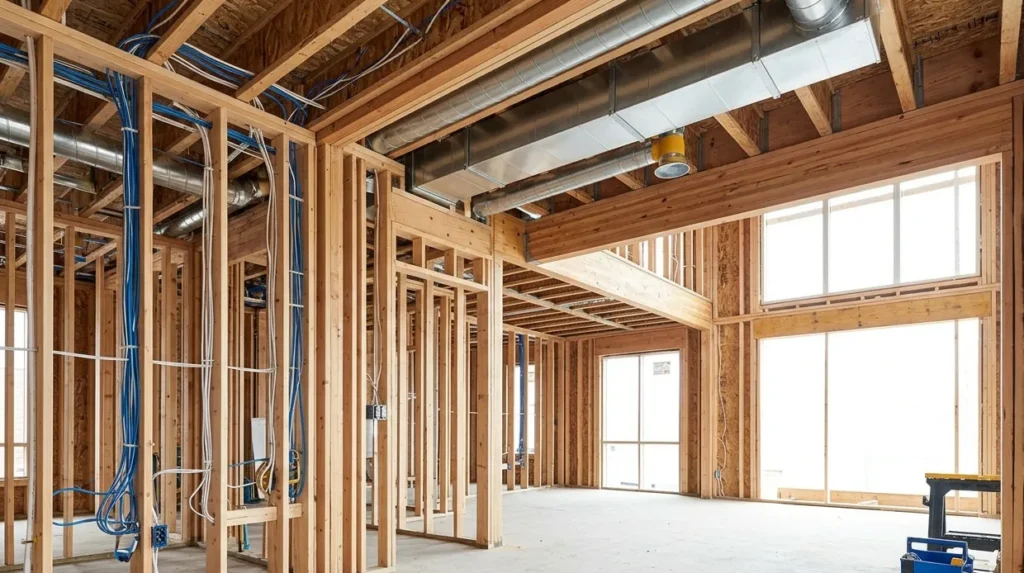
With the frame completed, the project moves internally. This involves installing major systems to bring the empty shell to life. This specific phase is often called the rough-in stage. Workers navigate directly through the exposed wooden studs. They run necessary wires and pipes before any walls get closed up.
The most significant internal system in this regard is the HVAC system to regulate indoor temperatures. The exact heating and cooling capacity you need will depend on the size of your floor plan.
Electrical setup also demands an expenditure. Electricians simultaneously pull hundreds of feet of wiring throughout the structure. They carefully map out every single outlet and overhead fixture.
Next comes the plumbing installation, which demands precise coordination with the other trades. Contractors route the necessary water supply lines. They also establish the main drainage network. Precise implementation of these core mechanical components ensures long-term home efficiency.
Another important expenditure in this phase is a smart-home system. A premium option will noticeably increase your baseline installation costs.
Interior Finishes and Materials
The interior transformation begins when you close up the walls. This defines the final individual rooms within the floor plan. Once the walls are sealed, the focus shifts entirely to aesthetics. Interior finishes usually consume a massive portion of the total budget. This specific phase turns a raw structural shell into a comfortable livable space.
Like most other phases, selecting your materials directly impacts your financial metrics here. Standard carpets or basic laminates help keep initial costs low. But if you want to upgrade to natural hardwood or premium tiles, that would require a much larger investment. Your kitchen serves as the primary focal point for these expensive design choices.
Custom kitchen cabinets eat up a major part of the budget during this stage. The cost inflates further when you pair those cabinets with stone countertops to enhance the overall design. So you are going to need to be careful with your design preferences.
You must also allocate funds for essential household appliances. Buying high-end stainless steel units will immediately push your total price tag higher. The best approach would be to select only what you absolutely need.
Exterior Finishes
Moving to the outside of the property introduces another significant set of expenses. Exterior finishes protect the delicate internal structure from harsh weather conditions. This critical phase completely transforms the visual curb appeal of your new home. But you are going to need to perform a very careful material selection to make that happen.
Exterior finishing starts with installing the roofing system, which comes to attention as soon as the wooden frame is up. Basic asphalt roofing shingles offer reliable protection at an incredibly affordable price point. And if you want to upgrade to metal panels or natural slate tiles, know that it pushes the cost to the larger side of the price range. Your local climate should directly influence this specific material choice.
Fitting the windows and exterior doors completely seals the thermal envelope. Energy-efficient glass panes cost more upfront but actively lower long-term utility bills. Solid wood entryways carry a premium price tag compared to standard fiberglass options. Balancing these aesthetic choices with strict weatherproofing requirements keeps this construction phase financially viable.
Outdoor Features and Landscaping
Construction doesn’t conclude with finishing the main structure. You must also develop your yard to bring your overall home landscape into a proper shape. For this, you will need to budget your outdoor features, which requires assessing your specific lifestyle needs.
A wooden deck or a stone patio is one of the most preferred outdoor finishing options for most homeowners. This provides an excellent area for entertaining guests. But it is never cost-effective. Add a fully equipped outdoor kitchen, and your cost will increase drastically.
Some people prefer installing a swimming pool, which always requires its own dedicated budget. The necessary excavation and specialized plumbing for aquatic features significantly inflate the baseline price.
On the other hand, you can choose basic landscaping to save costs. For instance, you can install mature trees and lay fresh sod to improve your overall curb appeal. This is not to say that these modifications are not costly; they do require an expenditure. But they are certainly not as expensive as setting up a luxurious patio or building a swimming pool.
Cost to Build vs. Buying an Existing Home
Is it cheaper to build or buy? This remains the most common question for future homeowners. Comparing new construction vs existing properties requires looking past the initial listing price. A direct price comparison often makes purchasing an older property look more attractive upfront.
The baseline estimate for a new build currently sits around $439,000. While the price per square foot for an existing home might be lower initially, you must factor in future maintenance costs. Older houses frequently require expensive roof replacements or outdated plumbing upgrades within the first few years of ownership.
New construction eliminates those unexpected repair bills entirely. It also offers massive customization value. You control exactly where every wall goes instead of compromising on a pre-existing floor plan. Choosing between buying vs building a house ultimately comes down to a simple tradeoff. You must balance the immediate upfront savings of an older property against long-term repair expenses and your desire for a truly personalized space.
How Much Does It Cost to Build Your Own House? (DIY vs. Builder)
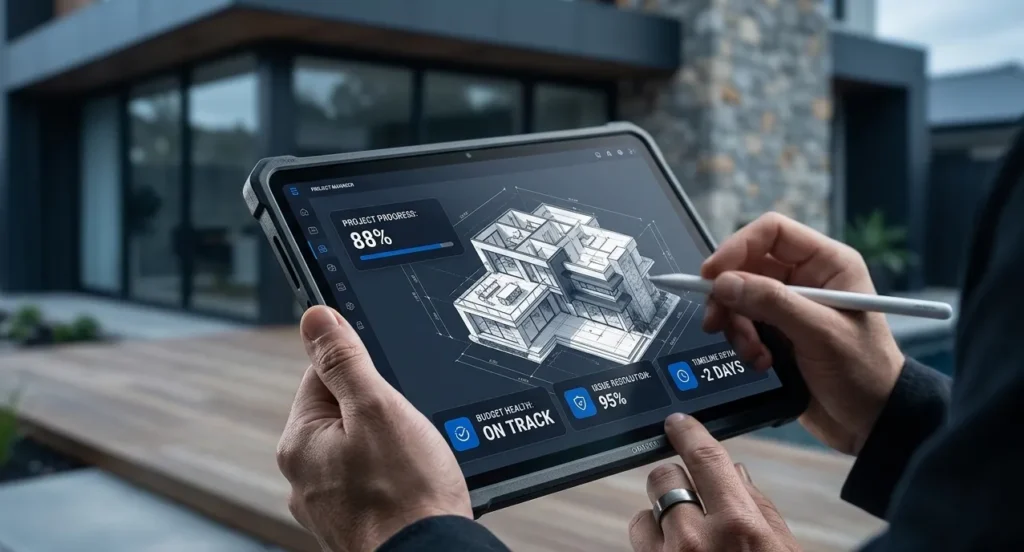
How much does it cost to build your own house? The answer changes completely based on who actually manages the construction site. Choosing to have a house built by a professional team offers incredible convenience. Taking the owner builder route requires massive personal effort instead. It basically comes down to the choice between paying for expertise or saving money through direct involvement.
The following sections explore the distinct financial paths available for your project. You must select the specific management strategy that fits your budget and timeline.
Hiring a General Contractor
Hiring a general contractor removes the daily stress of project management entirely. But how much does a builder charge to build a house? This is something you must get an answer of when planning your initial budget. A standard builder charge typically runs between 10% and 20% of the total project price.
This specific builder markup covers their expertise in coordinating multiple subcontractors. Paying this dedicated builder fee guarantees that professional crews handle complex structural work safely. Opting to hire a builder ensures your new home meets all local codes without requiring your constant supervision. You must account for these premium labor costs when finalizing your total financial plan.
Owner-Builder Route
Taking the owner builder route drastically changes your baseline financial metrics. It essentially eliminates the massive general contractor markup entirely.
Executing a true do it yourself project means you hire individual tradesmen directly. This is where your skill as a project manager becomes the real differentiator. You save substantial money managing the construction of your own house personally. However, this rigorous DIY approach demands serious time commitments and strong organizational skills to keep the job moving forward.
Modular and Prefab Home Costs
Modular construction is a highly efficient alternative to traditional site building. It allows you to control costs with incredible precision. And the best part, modular and prefab homes are manufactured inside climate-controlled factories before final delivery.
This home building option completely removes unpredictable weather delays from your timeline. The initial price tag for these systems often falls below standard stick-built estimates. You must still budget carefully for local land preparation and final utility connections. Choosing this specific build method frequently accelerates your total timeline while maintaining strict budget limits.
Hidden Costs and Budget Considerations
Your initial baseline estimate rarely covers every single financial requirement. The truth is there is always a hidden cost beneath the ground that you uncover when you strike the pickax.
Preparing for these unlisted expenses prevents massive budget blowouts. You must look beyond basic material and labor rates. The following sections highlight specific financial traps that often surprise new home builders. Reviewing these exact factors helps you protect your total construction fund effectively.
Land Acquisition Costs
Land acquisition costs often shock first-time builders. That’s because finding the perfect plot of land introduces massive financial unpredictability. Your baseline land cost fluctuates wildly based on location and current market demand. Developers also frequently attach massive lot premiums to highly desirable parcels. These specific surcharges drastically inflate the starting price of your new property.
Land costs can vary when you just cross county lines. Purchasing raw dirt avoids those developer markups completely. However, undeveloped acreage demands expensive utility trenching before physical construction starts.
Financing and Construction Loans
Securing a construction loan works entirely differently than buying a finished property. You cannot use a traditional mortgage to fund a new house from scratch. Lenders view raw land and unbuilt structures as massive financial risks. Banks usually require a much larger down payment for these specialized build projects. You must also prepare for significantly higher interest rates during the active building phase.
These temporary loans operate on a strict draw schedule. The bank releases funds in specific stages as your builders complete major milestones. You only pay interest on the money actually drawn during the construction process. You will eventually convert this short-term debt into a standard permanent mortgage after passing final inspections. So, if you are planning to go with the new construction, be sure to take these factors into account to keep your expectations realistic.
Delays and Cost Overruns
Most new home builds experience unpredictable timeline extensions. The most frequent one is the severe weather impact, which can halt critical exterior framing or roofing progress. And in some cases, scheduling conflicts among specialized subcontractors push your completion date back by several weeks.
These specific setbacks create compounding financial penalties. For instance, extending your active builder contract immediately increases your total labor expenses. Zillow data indicates that average delay costs can add roughly $60,000 to a standard new build budget. Also, paying rent on a temporary apartment during these unexpected extensions drains your reserve cash incredibly fast. You must build significant buffer time into your initial expectations.
Upgrades and Change Orders
Budgeting for upgrades and change orders requires strict financial discipline. Homeowners frequently request unexpected modifications during the active building phase. Builders process all these revisions through an official document. These spontaneous decisions force your contractor to recalculate labor hours at premium rates.
Adding custom features mid-project seems a logical step. But it drastically inflates your baseline estimate. Selecting high end interior finishes often consumes roughly 25% of your total construction budget alone. You must finalize your exact design choices before breaking ground to avoid these massive financial penalties.
The Bottom Line
Stop guessing and start numbers-crunching before you sign a single builder contract. Vague estimates are the primary reason new construction budgets fail so spectacularly. You likely want to know exactly how much money do you need to build a house in today’s volatile market. Finding that true bottom line requires more than just looking at a price tag.
You must take those baseline material estimates and immediately add your specific land acquisition fees. These initial figures will still climb once you factor in mandatory utility connection costs. Failing to account for these hidden line items creates a recipe for sudden financial panic. To stay safe, lock down a strict 20% contingency fund before the first shovel hits the dirt. This specific cash reserve acts as your insurance against unpredictable weather or sudden supply shortages. Your immediate next step is gathering aggressive, itemized bids from local general contractors. Mastering these exact data points is the only way to turn a vacant lot into your actual finished home.