You have the design ideas saved and know exactly how you want your new space to look. But before you tear down any walls, you hit a massive roadblock. You need to know what this will actually cost.
Relying on a generic online calculator or a contractor’s quick guess is a huge financial risk. A bad budget is the main reason homeowners run out of cash mid-project. You do not want to be stuck with torn-up floors and a half-finished kitchen just because an estimate was twenty percent off.
The good news is you do not have to guess. You can get real numbers before a single hammer swings. Homeowners and contractors often rely on professional Renovation Estimating Services to develop accurate budgets before remodeling work begins. This guide will show you exactly what drives remodeling costs, the hidden expenses to avoid, and how to calculate a realistic budget that holds up.
What Factors Affect Home Renovation Costs?
Your total renovation cost ultimately comes down to the project’s overall scale, the quality of your selected materials, and the specific labor rates in your local area. Two homes can have the same floor plan, but their remodel budgets will look completely different based on the specific choices made during the planning phase.
Here is a breakdown of what exactly drives your final number:
- Project scale and depth: A surface-level cosmetic update requires a relatively small budget. Taking a room down to the bare studs demands heavy demolition, more labor hours, and higher waste disposal fees.
- Fixture and material grades: Your selections for flooring, countertops, and cabinetry make up a massive portion of the budget. There is a steep price difference between standard builder-grade options and high-end custom finishes.
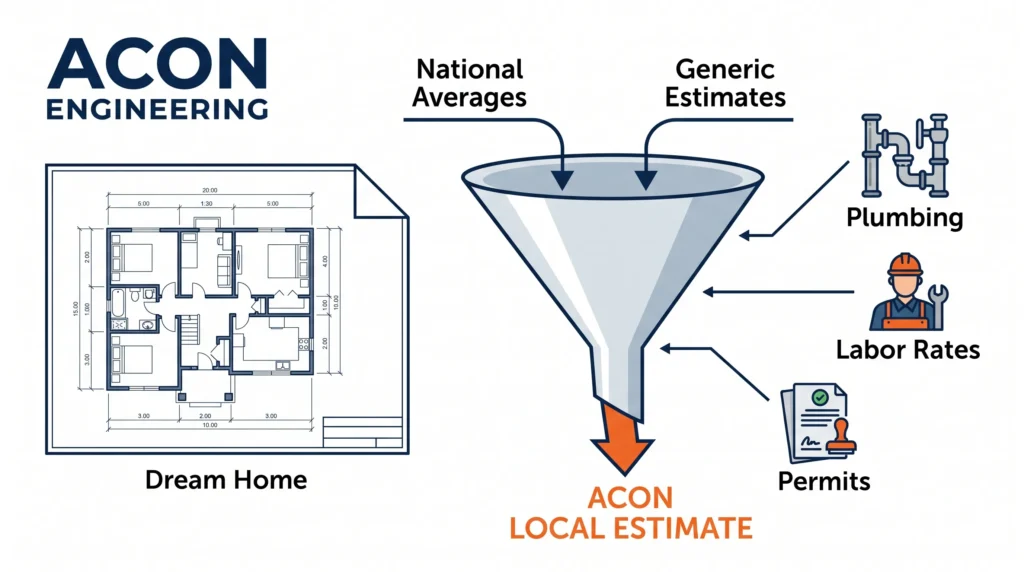
- Local labor charges: Construction wages vary heavily by location. A crew in a major metropolitan area will charge significantly more than one in a rural town, which is why relying on national average costs often leads to underfunded projects.
- Existing property conditions: Older homes frequently hide expensive problems. Opening up walls can reveal water damage, dry rot, or outdated electrical work that you are legally required to bring up to code.
- Load-bearing and structural modifications: Removing a standard partition wall is straightforward. Taking out a load-bearing wall requires hiring a structural engineer and installing heavy support beams, which quickly increases your costs.
- Utility relocations: Moving a toilet to the opposite wall or upgrading your main electrical panel adds thousands of dollars to the bill. Keeping your plumbing lines and electrical wiring in their original layout saves a significant amount of money.
- Permitting and inspection fees: Major structural or utility changes require approval from your local building department. You must factor in the upfront cost of the permit itself, plus the fees for mandatory city inspections.
- Alternative housing costs: If you are facing a massive, whole-house remodel, you might not be able to live there during the mess. Renting a temporary apartment or booking a hotel for three months is a very real expense you must add to your overall budget.
- Your location: If you are renovating a house in an expensive metropolitan city like New York, your costs will absolutely go up due to high local labor rates, expensive permits, and heavy delivery fees. On the flip side, if your home is in a quieter rural area, your total costs will drop significantly.
How to Estimate Renovation Costs?
When figuring out how to estimate construction costs for a remodel, you need to apply a specific pricing method to your project size, then adjust those numbers for material quality, structural needs, and an emergency fund.
Professional estimators like ACON Engineering use complex software to measure digital blueprints and count every single nail and board. As a homeowner planning a budget, you can start by choosing the right mathematical approach for your specific project.
The Square Footage Method
This is the fastest way to get a rough baseline. You take the total area you want to remodel and multiply it by the average construction cost per square foot in your city. You can usually find this local average by talking to real estate agents or calling a few general contractors. Just keep in mind that this method has a blind spot; it treats every room the same, which means it is a broad guess rather than an exact science.
Example: You are remodeling a 2,000-square-foot house. If the going rate for a standard, mid-range remodel in your specific zip code is $120 per square foot, your rough starting estimate is $240,000.
The Room-by-Room Method
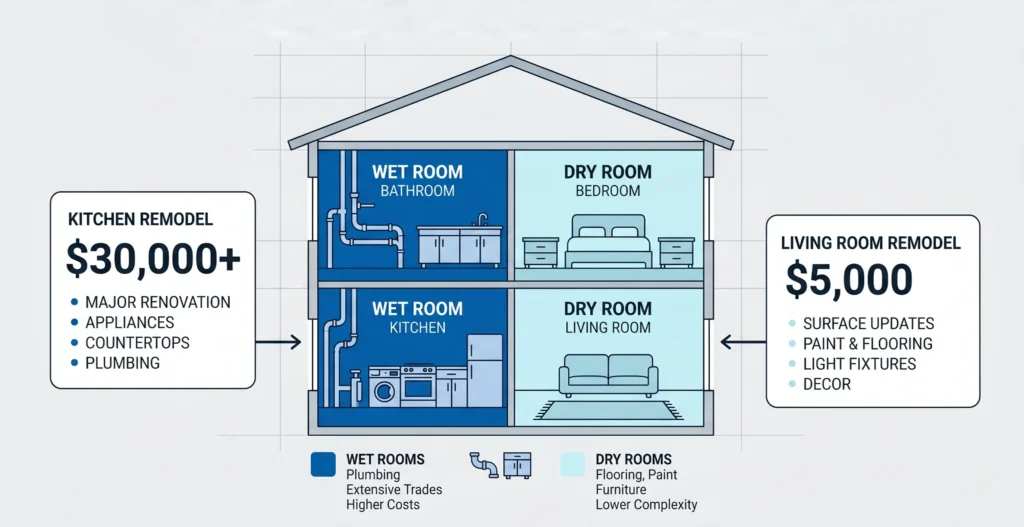
“Wet rooms” like kitchens and bathrooms are packed with expensive plumbing, heavy appliances, custom cabinets, and tile. “Dry rooms” like bedrooms and living rooms are mostly just paint, drywall, and flooring. This method breaks your house down and prices each space based on exactly what goes inside it. Professional Furnishing Estimating Services help homeowners accurately budget cabinetry, built-in furniture, millwork, fixtures, and other interior furnishing components for each room before renovation begins. It takes more time than the square footage method, but it forces you to think about the actual materials you need to buy.
Example: You price out the cabinets and appliances to set a $30,000 budget for the kitchen. You budget $18,000 for the master bathroom plumbing and tile, and $5,000 for fresh paint and floors in the living room. Your total estimate comes to $53,000.
The Comparable Method
This approach looks at what other people in your exact neighborhood recently spent on very similar projects. Because local labor rates, material delivery fees, and housing styles stay consistent on the same street, this gives you a highly realistic price range. You can gather this data by talking to neighbors who recently renovated or checking recent home sales online to see what a new addition actually costs in your area.
Example: You want to gut your bathroom. If three of your neighbors recently completely remodeled their similar-sized bathrooms and spent between $25,000 and $30,000, you should expect your own project to land right in that same bracket.
These three methods give you a great starting point, but they are still just rough estimates. Your final cost depends on the exact scope of work and the physical materials required.
Home Renovation Costs
The cost of a home renovation depends heavily on your total square footage, your specific city, and the depth of the work you plan to do. While remodeling is usually more affordable than the total cost to build a house from the ground up, a major gut remodel in a very expensive area can still easily push past $700 per square foot.
Your final bill is also tied directly to the scope of your project. Doing a few minor cosmetic updates is much cheaper than doing a major upgrade that involves tearing down walls or installing new cabinets. The same applies to larger renovation projects, such as garage conversions and full garage remodels, where professional Garage Estimating Services help homeowners accurately budget materials, labor, and project costs before construction begins. You also have to prepare for the unexpected. Finding a damaged pipeline or needing sudden electrical repairs during the project will quickly push your total cost even higher.
To give you a realistic starting point, here are the average price ranges for the most common home renovation projects:
- Whole-home remodel: $100,000+
- Kitchen renovations: $11,000 – $60,000
- Bathroom renovations: $6,000 – $30,000
- Bedroom updates: $1,500 – $20,000
- Living room updates: $5,000 – $15,000
- Garage remodels: $6,000 – $35,000
- Roofing: $8,000 – $15,000
- Windows: $3,000 – $10,000
- Exterior siding: $10,000 – $20,000
- Home additions: $20,000 – $100,000+
Hidden Costs of Renovating a House
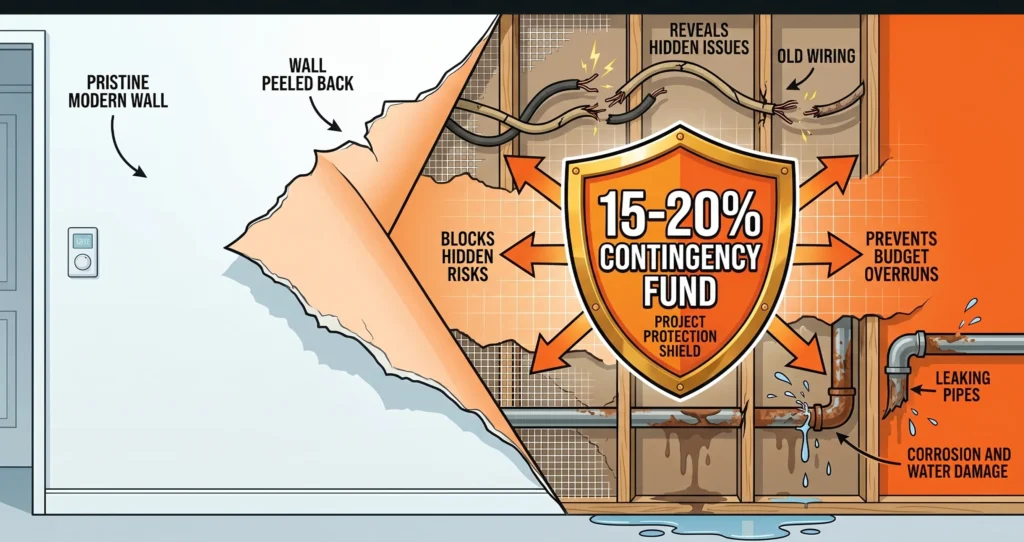
The hidden costs of a home renovation are the inevitable expenses that do not show up on a standard material list, such as structural surprises hidden behind your walls, mid-project design swaps, heavy debris disposal fees, and outdoor additions that are often planned after the initial renovation budget. Professional Deck Estimating Services help homeowners accurately budget for new decks and exterior living spaces before construction begins.
If you only budget for the exact items you want to build, you will run out of money. Here are the unexpected expenses you need to watch out for:
- The “Behind the Walls” Surprises
You never truly know what an older house is hiding until the drywall comes down. Once a contractor opens up a wall, they might uncover severe termite damage, outdated knob-and-tube wiring, or a slow plumbing leak that has rotted the floorboards. Fixing these issues is not optional. City building inspectors will halt your entire project until these hidden safety hazards are brought up to modern code.
- Change Orders and Mind Changes
Changing your mind mid-project is incredibly expensive. If you decide to swap your standard ceramic floor tile for custom hardwood after the initial materials have already been delivered, you pay for the new materials, the restocking fees for the old ones, and the extra labor hours to install it.
- Debris Disposal and Dumpster Fees
Tearing out an old kitchen or bathroom generates thousands of pounds of waste. Renting heavy-duty roll-off dumpsters, paying environmental disposal fees for old appliances or paint, and covering the labor to haul it all away adds hundreds, if not thousands, of dollars to your final bill.
- The Property Tax Bump
A successful renovation increases the market value of your home. While that is great for your equity, it impacts your annual tax bill. Once the city approves the final permits and records the upgraded square footage or luxury additions, your local property taxes will likely increase the following year.
Pro Tip: Always set aside a strict contingency fund of 15 to 20 percent of your total budget. If your project goes perfectly, you have money left over. If you find bad wiring, the contingency fund saves your project from coming to a dead stop.
Do’s and Don’ts of Home Renovation
A solid plan saves your money, and guessing wastes it. To keep your budget safe, you need to follow a few basic rules before you even buy a piece of wood.
Here is exactly what you should and shouldn’t do.
The Do’s
- Do know exactly what you want: Know exactly what you are building, moving, or trashing. Changing your mind later costs a lot of money.
- Do expect hidden surprises: Always assume you’ll find something messy behind the walls, like bad pipes or old wiring.
- Do get a few different quotes: Don’t just go with the first contractor you talk to. Get at least three prices to see what the job should actually cost.
- Do check local prices yourself: Take a little time to see what materials and labor cost in your own city, so nobody can overcharge you.
- Do save a backup fund: Always keep an extra 15 to 20 percent of your budget set aside just for emergencies.
The Don’ts
- Don’t blow your cash on trendy stuff: It is easy to spend all your money on fancy fixtures. Focus on good, solid materials instead of what just looks cool right now.
- Don’t think it will be fast: Remodels almost always take longer than you think. If you are renting a temporary place while the work happens, delays mean you pay more rent.
- Don’t go cheap on the bones of the house: Never buy the cheapest wood, roofing, or concrete. You can change a cheap sink later, but fixing a bad roof is a nightmare.
- Don’t just guess the numbers: Don’t let a contractor just throw out a random price, and don’t trust cheap overseas estimating companies that don’t know your local prices. Instead of risking your savings on rough math, get help from the pros. ACON Engineering has over 15 years of experience doing exactly this.
DIY vs Professional Cost Estimation Services
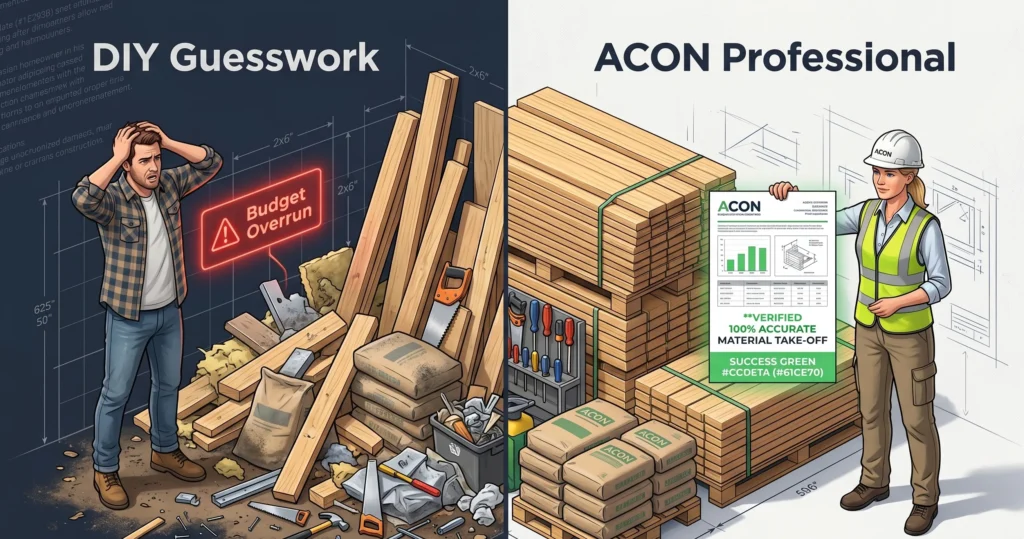
The short answer is that doing it yourself makes sense for small weekend projects, but hiring a professional construction manager is the only way to guarantee efficiency, quality, and accurate upfront costs on major renovations.
If you are just painting a guest room or swapping out kitchen faucet handles, the DIY route works perfectly. You only pay for the raw materials, and the risk of making an expensive mistake is incredibly low.
But the second a project involves tearing down walls, moving plumbing, or ordering bulk materials, guessing the numbers yourself becomes a major financial hazard. Projects involving structural removal or interior strip-outs often require professional Demolition Estimating Services to accurately budget demolition labor, debris removal, and disposal costs before renovation begins. Professional Renovation Estimating Services help property owners quantify materials, labor, and hidden costs before construction begins.
If you are managing the remodel yourself or just want to double-check that your contractor’s bid is honest, you need a professional to calculate those costs for you. Instead of risking your budget on cheap offshore estimating sites that guess using bad national averages, you can send your plans to trusted US-based construction estimating services like ACON Engineering.
They provide highly accurate, local pricing based entirely on your specific US zip code. Getting that professional-level detail gives you the speed to start your project quickly and saves you thousands of dollars in wasted materials before the work even begins.
How to Outsource Your Cost Estimation
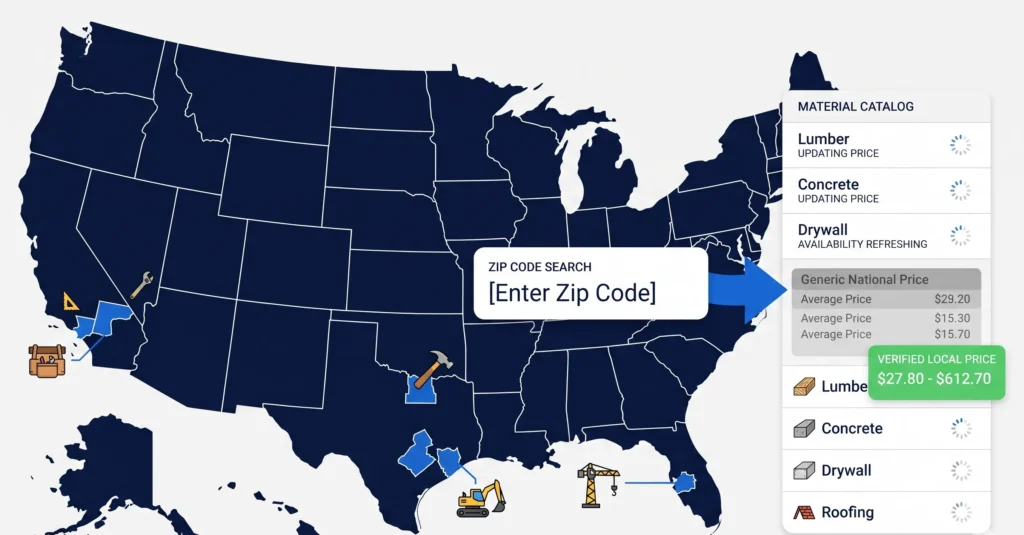
The simplest way to take the stress out of your remodel is to rely on expert construction cost estimation services to calculate the exact costs for you. ACON Engineering gives you a highly accurate, zip-code-specific material list and budget so you know exactly what you will spend before you start building.
Instead of dealing with the headache of doing the math yourself, you can simply hand the hard work over to our team. Here is exactly how we protect your project and your wallet:
- Real local prices: We never use random national averages. We price your home renovation using the exact labor and material costs according to your specific zip code.
- Fast delivery: You do not have to wait weeks for an answer. Once you send us your drawings, you get your complete estimate back in just 24 to 72 hours.
- No hidden surprises: With over 15 years of construction experience, our team catches the small details that cheap overseas companies completely miss.
- Massive savings: Getting a professional takeoff prevents you from buying too much wood, tile, or paint. It also gives you solid proof of what things should cost, which stops contractors from overcharging you.
How to Save Money when Renovating a House?
The most effective way to save money on a renovation is to finalize your entire plan before demolition begins, shop aggressively for material discounts, and secure a professional cost estimate so you know exactly what to buy.
You can keep thousands of dollars in your pocket just by making smarter decisions during the planning phase. Here are the best strategies to protect your budget:
- Get a professional estimate upfront: This is the absolute backbone of a budget-friendly project. Guessing how much lumber or drywall you need almost always leads to over-ordering materials or paying massive rush-delivery fees when you run short. Before you buy anything, get a professional material takeoff.
- Plan and phase the work: Do not tear up your entire house all at once. Prioritize the urgent updates first and break the rest of the project into manageable phases. Finalize every single design decision to avoid expensive mid-project changes.
- Shop smart for materials: Compare market prices across different suppliers, look for seasonal sales, and hunt down overstock warehouse deals. You can often find premium fixtures for a fraction of the cost just by taking the time to look around.
- Choose cost-effective alternatives: You can get a high-end look without the luxury price tag. For instance, instead of paying a premium for a lavish custom iron door, a well-finished solid wood door provides excellent security and style for much less.
- Manage time and hire smartly: Keep a tight schedule and hire contractors who have a proven track record of finishing on time. Delays mean you pay more in labor and potential temporary living expenses.
Sending your plans to ACON Engineering gives you the exact material quantities and zip-code-specific costs you need. Spending a small amount on an accurate estimate upfront prevents you from wasting thousands of dollars on the wrong materials later.
Frequently Asked Questions (FAQs)
What is the 30% rule for renovations?
The 30% rule is a real estate guideline that says you should not spend more than 30% of your home’s current market value on a whole-house renovation. For example, if your house is worth $500,000, your total remodeling budget should stay under $150,000
What is the most expensive part of a house renovation?
Kitchens and bathrooms are consistently the most expensive rooms to remodel. These “wet rooms” require costly plumbing work, specialized electrical upgrades, expensive appliances, and custom cabinets.
What devalues a house the most?
Unpermitted work and bad DIY projects are the fastest ways to drop your home’s value. Buyers and home inspectors spot cheap work done immediately, which often kills a sale. Removing a bedroom to create a bigger closet or adding highly unusual, overly personalized designs also hurts your resale value because the house will appeal to far fewer future buyers.
Is it better to renovate all at once or in phases?
Doing the entire house all at once is cheaper on paper because you only pay contractors to set up, pull permits, and rent dumpsters one time. However, it requires a massive amount of cash upfront and usually forces you to move out of the house. Renovating in phases is much easier on your wallet. It allows you to pay for the work over time and keep living in the house, even though it takes longer to finish.

Tim C. is a construction estimating expert and Director at ACON Engineering, specializing in construction cost estimating, quantity takeoffs, and preconstruction planning. He has led thousands of successful project bids and helps contractors make informed, profitable decisions.