Your construction business lives and dies by the bids you submit. Winning a project feels great, but winning a project with a bad estimate is a financial nightmare. The hard truth is that most contractors do not lose their profit at the bidding stage.
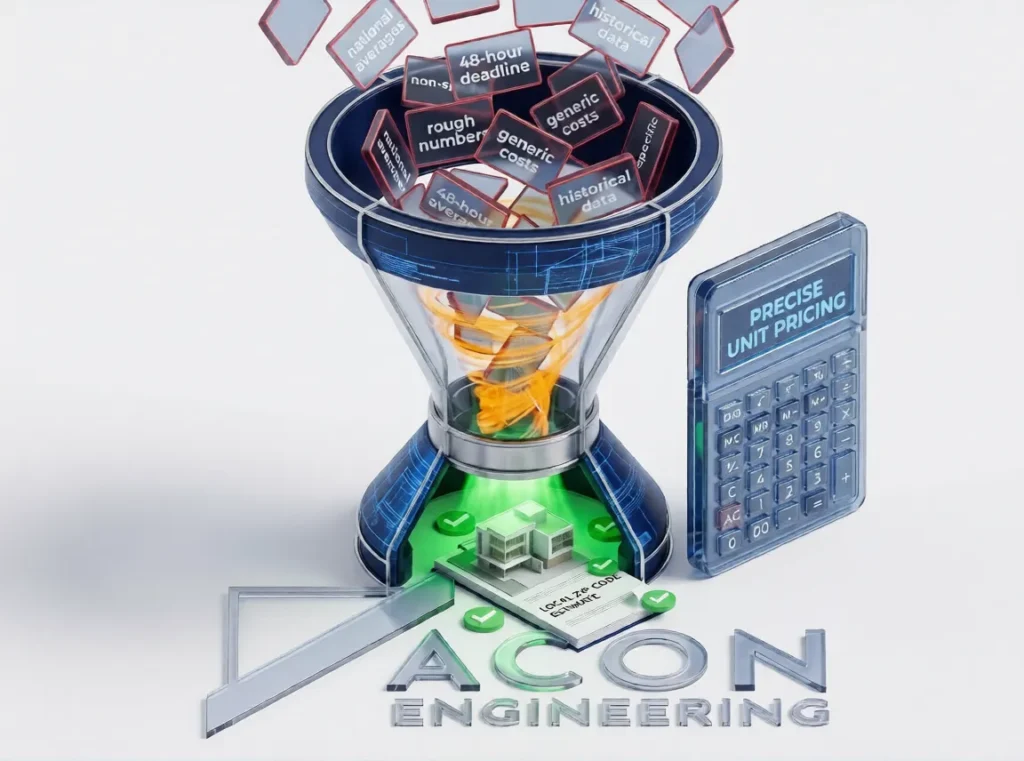
There might be some scenarios where you are throwing out rough numbers just to meet a 48-hour deadline or hoping your lump-sum price covers the hidden costs, but guessing is a guaranteed way to bleed cash. A single mistake on a bid can mean working for free or paying out of pocket to finish a job.
To grow your business and protect your margins, you need a reliable system. You need to know exactly how to price a job so you can win the contract easily. In this guide, we break down everything you need to know about construction bidding. We will walk through the exact steps to build a bulletproof bid, where to find high-quality projects, and how to fix the common bidding mistakes that are costing you jobs right now.
Key Takeaways
- Accuracy protects your profits: Guessing on materials or labor is the fastest way to lose money. A winning bid must be built on exact, localized numbers, not rough estimates.
- Compliance is non-negotiable: Missing a submission deadline or skipping a single requested document will almost always get your bid instantly disqualified.
- Relationships win contracts: While commercial bidding platforms and government portals are great for finding work, the most profitable jobs usually come from directly networking with local general contractors who already trust you.
- Follow up with actual value: After submitting your paperwork, wait a few days before reaching out. When you do follow up, offer a helpful insight or relevant case study rather than just asking if they made a decision.
- Outsourcing saves time: Building dead-accurate estimates takes dozens of hours. Passing this work to professional estimators protects your margins and gives you the time back to focus on actually running your business.
What is a Construction Bid?
A construction bid is a formal offer submitted by a contractor to a client that details the exact cost and timeline required to complete a specific project.
When you hand over a bid, you are committing to finish the work outlined in the blueprints for that exact price. A successful bid is built on highly accurate material takeoffs, up-to-date local labor rates, and a complete understanding of the project’s scope.
People often mix up the words “bid” and “proposal,” but they serve different purposes. A bid is strictly focused on the hard numbers. The client already knows exactly what they want to build, and they just need to know your price and schedule. A proposal goes a step further. It includes the price, but it also pitches your company’s experience, your specific strategy for managing the build, and why your team is the best fit for the job.
6 Steps to Bid on a Construction Project
Bidding on a construction project is a structured workflow that moves from the client’s initial project announcement to your cost estimation, proposal submission, and final contract signing. To win a job without losing money, you must strictly follow each phase of this process.
Step 1: Bid Solicitation (The Invitation Phase)
During bid solicitation, the property owner, developer, or general contractor announces a project and invites you to submit a bid. They will provide a package of documents detailing exactly what they want built.
To bid correctly, you need to know exactly what type of document the client is using to ask for your services:
- IFB (Invitation for Bid) or ITT (Invitation to Tender): These are used when the project design is finished. The client does not need design ideas; they just want your best price to build exactly what is on the blueprints.
- RFP (Request for Proposal): This is used when the client has a concept, but the exact design isn’t finalized. They want you to propose both a building strategy and a price.
- RFQ (Request for Quotation): A highly specific request asking for the exact price of certain materials or specific labor tasks, rather than a whole project.
- RFQ (Request for Qualifications): Before asking for a price, the client wants to see your track record. They use this to filter out inexperienced contractors by checking past projects, financial stability, and safety records.
- SOW (Statement of Work): This is the most important document in the package. It defines your exact responsibilities, timelines, and the strict physical limits of what you are expected to do on the job site.
Step 2: Prequalification
Before a client accepts a full bid, they often run a screening process to make sure you can actually handle the work. During this stage, they use a Pre-Qualification Questionnaire (PQQ) to test your basic capabilities. They look closely at your past projects, safety records, and specific expertise. Think of it as a comprehensive background check to prove you are fully qualified before moving forward.
Step 3: Bid Submission
This phase is where contractors either win the project or set themselves up for a financial loss. You must submit every response document exactly as the client requested. Deadlines are absolute; submitting your bid even a few minutes late almost always leads to immediate disqualification.
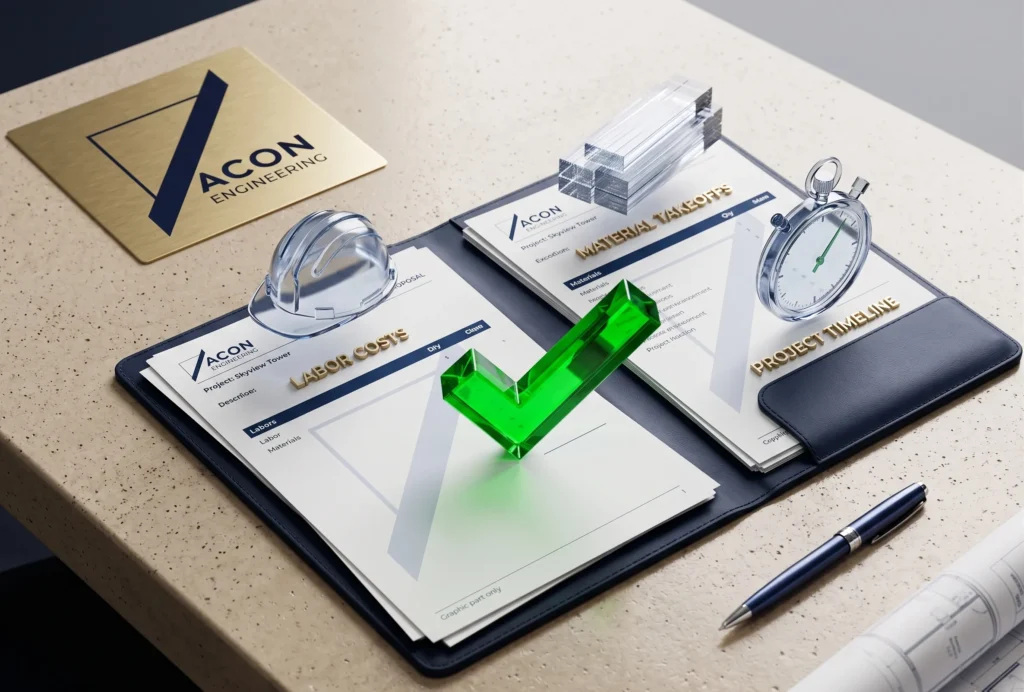
Before you start filling out the final paperwork, you have to know exactly how to estimate construction costs. You need to review the blueprints and thoroughly build a complete financial sheet. While this involves tracking dozens of specific project details, these four main costs are the most important to get right:
- Material costs: The exact quantity of concrete, framing lumber, drywall, and finishes required for the job.
- Labor costs: The total hours required by your crew and subcontractors, priced accurately at local city wage rates.
- Equipment costs: Daily or monthly rentals for heavy machinery, dumpsters, or scaffolding.
- Overhead costs: Your office expenses, insurance, fuel, and the profit margin you need to keep your business alive.
Pricing a project accurately takes days, which is why many successful contractors choose to outsource it. Sending your blueprints to a US-based estimating service like Acon Engineering gets the entire process off your desk. You receive an accurate, zip-code-specific breakdown, giving you the hard numbers you need to put together a solid proposal and submit it on time.
Step 4: Bid Selection
After you submit your bid, the client reviews and compares all the offers. They do not always just pick the lowest price. The client evaluates each contractor by looking at the proposed costs, project timelines, and the exact services offered. They also factor in your company’s reputation and past performance. In this stage, the client analyzes every detail from a business perspective to find the safest and most reliable fit for their project.
Step 5: Contract Negotiation
Once the client selects your bid, both sides sit down to finalize the agreement. You will discuss the final terms, set Key Performance Indicators (KPIs), and plan out risk mitigation strategies to handle any future problems. This step builds the working relationship and locks in exactly how you will get paid.
During this phase, you will agree on a specific construction contract. The most common types include:
- Lump sum contract: A single, fixed price for the entire scope of work.
- Cost-plus contract: The client pays for all your actual project expenses, plus a set fee or percentage to cover your profit.
- Unit price contract: The project is broken down into smaller units, and the client pays based on the exact quantities of work completed.
- Guaranteed maximum price (GMP) contract: The total project cost is capped at a maximum limit based on estimated rates, meaning the client will not pay more than that set amount.
- Design-build contract: A single company takes full responsibility for both designing the project and building it.
- Integrated project delivery (IPD) contract: A highly collaborative agreement where the client, main contractors, and subcontractors share the risks, expertise, and responsibilities.
Step 6: Project Delivery and Execution
After signing the contract, the planning stage ends, and the actual work begins. The client will issue a Notice to Proceed (NTP), which gives you the official green light to initiate construction. During this final handover, you will confirm the project timeline, outline the execution process, and agree on the completion date. With the legal details out of the way, your team can finally move onto the job site and start building.
Common Types of Construction Bids
The construction bidding process dictates exactly how contractors are selected and how project prices are finalized. There are four primary methods used in the industry: open bidding allows anyone to compete, restricted bidding relies on an invite-only shortlist, negotiated bidding involves direct collaboration with a single contractor, and two-stage bidding separates the selection of expertise from the final pricing.
Here is how each method works:
- Open Bidding
Open bidding allows any interested contractor to submit a proposal. Government agencies rely heavily on this method for public projects because it maintains complete transparency and encourages maximum competition. While the competition pool is massive, the selection process is highly structured and objective.
- Selective Bidding
Also known as restrictive bidding, this method is strictly invite-only. The project owner reaches out to a short list of pre-qualified or highly trusted contractors who have a proven track record. Competing in a restricted bid significantly increases your chances of winning because the competition is limited to a small, select group.
- Negotiated Bidding
This approach skips the traditional bidding war entirely. The project owner selects a single contractor right from the start to directly define the project scope, timeline, and a fair price. Landing a negotiated bid requires a strong history of excellent work and a solid, existing relationship with the client.
- Two-Stage Bidding
This method breaks the process into two distinct parts. In the first stage, the owner selects a contractor based entirely on their expertise, past work, and general fee structure to help finalize the project design. During the second stage, both sides review the finished plans and agree on the final, exact price for the actual construction.
Where to Find Construction Projects for Bidding?

To find construction projects to bid on, you need to actively monitor commercial bidding platforms, register for local and federal government portals, subscribe to early-stage lead services, and build direct relationships with local general contractors.
If you are trying to figure out how to get clients as a contractor, you cannot just wait for the phone to ring. To keep a steady pipeline of work, you need to know exactly where the jobs are posted. Here are the four best places to source your next project:
Commercial bidding platforms
These are the main hubs for private and commercial construction jobs. Platforms like Dodge Data & Analytics, BidClerk, and ConstructionConnect host thousands of active projects. They allow you to filter searches by your specific trade, zip code, and project size. While these platforms charge subscription fees, they give you direct access to the actual blueprints and contact information for the project owners.
Government tenders and public works
Public infrastructure is a massive, reliable source of income. For federal projects in the US, you need to create a profile on SAM.gov. For local work, check your specific city, county, and state municipal websites. Government jobs often require strict compliance, paperwork, and specific certifications (like Minority or Women-Owned Business Enterprise status), but the major upside is that payment is guaranteed by the government.
Construction lead sites
If you want to get ahead of your competition, use services like ConstructionWire. Instead of just listing projects that are already actively taking bids, these sites provide data on projects that are still in the early planning or pre-construction phases. This gives you the chance to reach out to developers and pitch your services before the bidding war officially starts.
Direct networking and GC lists
The most profitable projects rarely make it to public message boards. General contractors almost always prefer to hire subcontractors they already know and trust. You need to actively introduce yourself to the heavy-hitting GCs in your area and ask to be placed on their preferred vendor lists. Attend regional trade association meetings, shake hands, and build real relationships so you are the first person they call when a new project lands on their desk.
What Winning Bid Looks Like?
A winning construction bid must include a professional cover letter, an executive summary, a detailed project management plan, evidence of past work, an itemized pricing structure, and all requested compliance documents. It is a highly structured package that proves you understand the client’s goals and backs up your costs with hard evidence.
To deliver real value, your proposal needs to show that you understand the big picture. For example, if a client is building a retail space that must open before the holiday season, your bid needs to acknowledge that strict deadline. You provide immediate value when you offer smart material alternatives or point out potential site issues before ground even breaks.
Next, you have to follow the rules. Compliant parameters are non-negotiable. If the client asks for specific insurance limits, safety records, or a certain formatting style, you must provide exactly what they requested. Missing a single required form often leads to immediate disqualification.
You also need to validate your numbers. Modern developers and general contractors analyze bids closely. They often use software and data analysis to check if your labor hours and material costs align with the current market. If your numbers look like rough guesses, the client will assume your actual project management will be just as sloppy. Your pricing must be backed by accurate, authorized documentation.
To make sure your next submission hits every mark, use this essential checklist before handing it over:
- Cover letter
- Executive summary
- Project management plan
- Execution plan
- Evidence of past work
- Detailed pricing structure
- Compliance documents
What are the Different Types of Construction Procurement?
The five main types of construction procurement are Design-Build, Design-Bid-Build, Construction Management at Risk, Job Order Contracting, and Management Contracting. Each method changes how the owner, designer, and builder work together and dictates who takes on the project’s financial risk.
Before you place a bid, you need to understand exactly how the client is buying your services. Here is a breakdown of the most common procurement methods used in the industry:
- Design-Build: The client signs a single contract with one company to handle both the design and the actual construction. This keeps everything under one roof and significantly speeds up the project delivery time.
- Design-Bid-Build (DBB): This is the traditional approach. The client hires an architect or engineer to finish the design first. Only after the blueprints are 100% complete do the contractors step in to bid on the physical construction.
- Construction Management at Risk (CMAR): The contractor gets involved early as a consultant and works closely with the architect while the project is still being designed. The contractor agrees to a guaranteed maximum price upfront, which gives the client much stronger cost control over the entire project.
- Job Order Contracting (JOC): This method is used for smaller, repeatable repair or maintenance work. Instead of bidding on every single minor job, a contractor is hired to handle a large number of tasks over a set period.
- Management Contracting: The property owner hires a construction manager to oversee the actual building process. The manager organizes the schedule and hires the subcontractors directly, which gives the owner much more flexibility to adjust the project as it moves forward.
Tips for the Construction Bidding Process
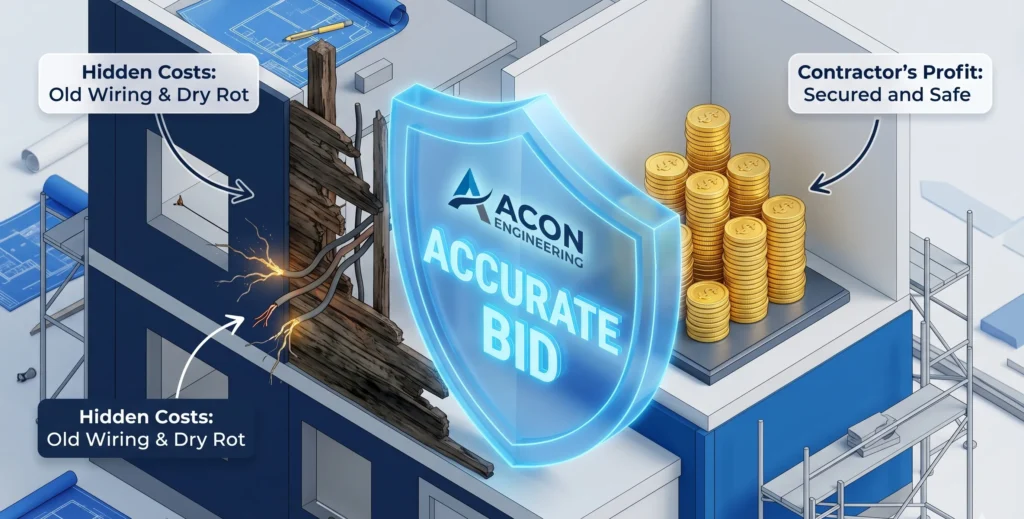
Figuring out how to win construction bids comes down to minimizing your risk and maximizing your clarity. The best practices in construction bidding revolve around understanding the exact scope of work, submitting dead-accurate numbers, and building real relationships before the paperwork is even signed.
To protect your margins and consistently win better jobs, follow these core habits:
- Lock down accurate cost estimates: Your estimate is the backbone of your bid. Guessing numbers or missing a small material takeoff will bleed your money out fast. To secure a high profit, your numbers must be exact. This is why smart contractors pass this step to trusted cost estimators like Acon Engineering.
- Define a clear scope of work: Read every single page of the client’s documents. You need a comprehensive understanding of what is expected. If a requirement looks vague, ask the client for clarification before you put a price on it.
- Submit a well-organized bid: Present your bid clearly and logically. A messy document with confusing pricing structures frustrates the client. Make it incredibly easy for them to read your numbers and say yes.
- Provide realistic timelines: Do not overpromise on your schedule just to win the job. Provide a construction timeline you can actually meet, factoring in potential material delays or bad weather.
- Network and build relationships: Contracts often go to the contractors that clients already know and trust. Attend industry meetings, talk to general contractors, and build a solid local network so you are a familiar face.
- Develop strong negotiation skills: You have to be ready to sit down at the table, defend your pricing with hard data, and confidently negotiate terms that protect your business.
- Analyze your win/loss record: Look back at the bids you lost and figure out exactly why. Did you price your labor too high? Did you miss a compliance document? Analyzing your past performance is the fastest way to refine your strategy for the next project.
The Right Way to Follow Up on a Submitted Bid
Following up on a bid shows you are serious about the work, but you have to walk a fine line between being proactive and being annoying. The best approach is to wait a few days, keep your communication highly personalized, and always offer extra value instead of just asking if they have made a decision yet.
Here are the best strategies to handle your follow-up correctly:
- Give It Five Days
Do not follow up again and again. Annoying the project owner will only hurt your chances. Give them time to actually review the proposals. Waiting about five days before you reach out shows that you respect their time and their process.
- Always Add Value
Never send a message just to say you are checking in on your bid. You need to provide something helpful. Share a quick thought on how to handle a specific challenge in the project or attach a relevant case study. Give them a reason to want to talk to you.
- Keep Emails Short and Personal
If you choose to send an email, get straight to the point. Write a very short, highly personalized message. Mention a specific detail you discussed during the bidding phase so they know you are paying attention.
- Pick Up the Phone
Emails get lost in busy inboxes all the time. Using a different method, like a quick phone call, often works much better. Hearing a real human voice helps build a personal connection and proves you are genuinely invested in winning the job.
How Outsourcing to ACON Engineering Helps You Win More Construction Bids
The main reason contractors struggle to grow is the sheer amount of time it takes to build a reliable estimate. When you spend your evenings guessing labor rates or manually counting materials on a blueprint, you miss out on other profitable jobs. A single mistake in your math can easily wipe out your entire profit margin on a build. Outsourcing this step solves the problem immediately. When you pass the construction estimating work to ACON Engineering, you get your time back and protect your cash flow from dangerous underbidding.
Unlike cheap overseas services that guess with broad national averages, our US-based team provides exact, zip-code-specific pricing. We use our deep industry experience to catch the hidden details that others miss. Whether you need a detailed construction takeoff, highly specialized MEP estimating, or a preliminary estimating report for a new project, we deliver highly accurate material and labor breakdowns.
From residential estimating for local builds to large-scale industrial estimating, we provide real, localized numbers that allow you to build winning proposals with total confidence. Beyond just the math, our estimating, consulting, and bid management support helps you understand the entire process with ease. By partnering with us for your cost estimating, you can secure more contracts and consistently increase your overall profit.
Frequently Asked Questions (FAQs)
What is the process for bidding on commercial construction jobs?
To bid on commercial jobs, you first need to find open projects on commercial platforms like BidClerk or Dodge Data. Once you find a good match, review the scope of work, calculate your labor and material costs accurately, and submit a complete package with your price, timeline, and company qualifications before the deadline.
Is a letter of credit acceptable for bid security?
Yes, many project owners accept a letter of credit from your bank as bid security. It acts as a financial guarantee that you have the funds to take on the project if you win the contract. Always check the specific project documents first, as some clients strictly require a traditional bid bond instead.
How does a construction bid differ from a proposal?
A bid is strictly about the numbers. It gives the client your exact price and timeline to build the project. A proposal goes deeper by pitching your company. It includes the final price, but it also explains your project strategy, experience, and why your team is the best choice for the job.
Which estimating method gives the most accurate construction costs?
The unit pricing method is the most accurate way to estimate a project. Instead of working on a total sum, you break the entire job down into specific units, like square feet of drywall or cubic yards of concrete. You then multiply the exact quantity of each material by the current local market rate.
What should you include in a construction bid?
A complete construction bid should include a highly detailed scope of work, an itemized cost breakdown (covering materials, labor, equipment, and overhead), a realistic project schedule, your company’s qualifications (such as licenses and insurance), and a clear list of exclusions detailing exactly what is not covered in your price.