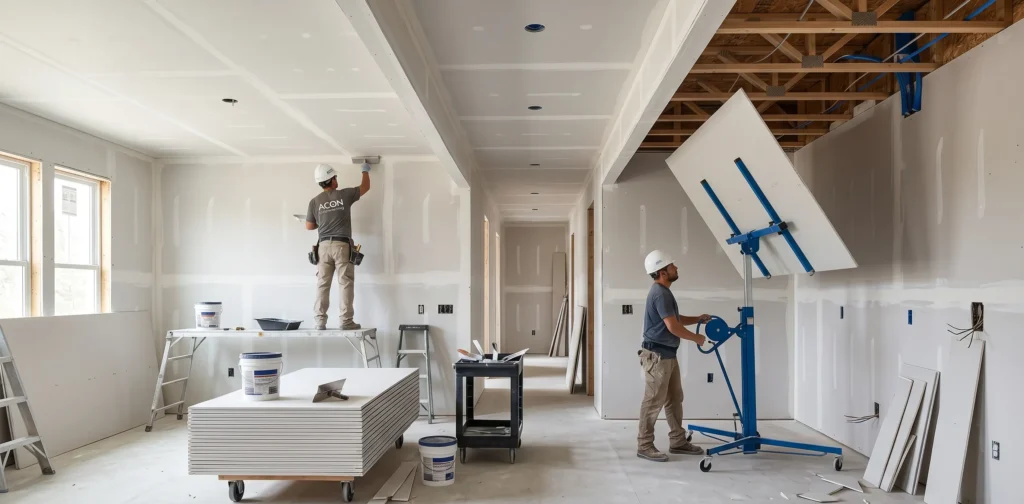
Installing drywall usually costs between $1.50 and $3.50 per square foot. Most homeowners pay around $2,000 for a standard project. Your final price depends on your location, the material type you choose, and the thickness of the panels.
This guide breaks down the total drywall installation cost by room type, board type, and finish level. We will show you exactly how square foot pricing and the complexity of your interior walls drive your final quote. You will learn what to expect so you can budget accurately and avoid unexpected fees.
Average Drywall Installation Cost Per Square Foot
The average drywall installation cost sits at about $2.50 per square foot for a standard home project. While the price per square foot ranges from $1.50 to $3.50, most homeowners spend between $950 and $3,200 for a professional installation.
This base price covers hanging standard 1/2-inch drywall panels, basic taping, and applying joint compound. Your actual costs might fluctuate based on your region and the specific finishing method you choose. Labor rates vary significantly between cities. A project with a high scope, like vaulted ceilings or multiple corners, will push the price higher. Factors like project complexity and the total square footage being covered directly dictate your final labor and material breakdown.
Drywall Material Cost Breakdown
Drywall material costs usually fall between $0.40 and $0.80 per square foot. This price covers the drywall sheets, joint compound, tape, screws, and corner beads.
The thickness of the board dictates the base material price. A standard 1/2-inch drywall panel costs about $0.25 to $0.40 per square foot, averaging around $0.35. Thicker 5/8-inch drywall costs between $0.36 and $0.70 per square foot. Specialty materials cost more upfront. For example, moisture-resistant drywall panels used in bathrooms generally cost $15 to $25 per sheet.
Beyond the panels, joint compound adds $0.05 to $0.15 per square foot. Tape, screws, and corner beads add another $0.05 to $0.10 per square foot. Your total material price will go up or down depending on the sheet sizes you buy and the number of corner beads your specific room layout requires.
Drywall Labor Cost Breakdown
Labor makes up roughly 70% of your total project bill. On average, drywall labor costs between $1.00 and $2.70 per square foot.
Contractors separate the work into hanging and finishing. Hanging the bare boards costs about $0.85 per square foot. Taping and finishing those boards costs between $1.00 and $2.50 per square foot. When you combine both phases, you can expect to pay $1.75 to $3.75 per square foot for a complete job.
To hang and finish a standard room, the labor portion runs between $600 and $800. For an entire 1,500-square-foot home, expect labor costs to range from $2,500 to $5,600. Your exact quote depends on the specific finish level you want, the project capacity, and the overall job size. Many contractors use ACON Engineering’s professional construction estimating services to run precise quantity takeoffs on these variables. This helps them calculate exact labor hours and material counts so their final bids stay accurate and profitable.
Drywall Installation Cost Estimates by Room
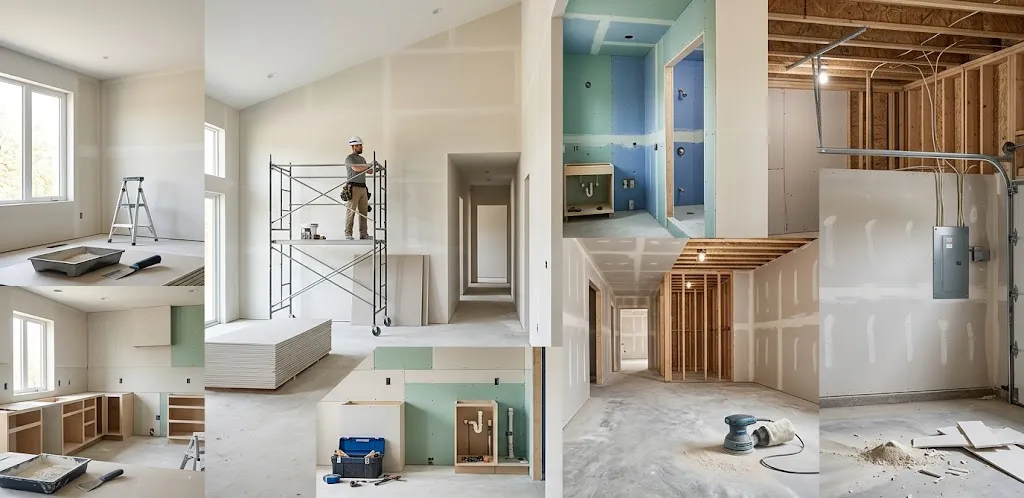
Drywalling a specific room usually costs between $400 and $3,000 based on the total project size. The final bill depends on the finish level, material choices, local labor rates, and the project scope. Higher quality finishes and complex room layouts naturally increase the total cost.
| Room Type | Area (Square Feet) | Estimated Cost |
| Bathroom | 100 – 200 sq. ft. | $500 – $1,500 |
| Kitchen | 100 – 300 sq. ft. | $600 – $1,200 |
| Bedroom | 144 sq. ft. | $600 – $1,800 |
| Living Room | 500 sq. ft. | $1,400 – $2,800 |
| Garage | 360 – 480 sq. ft. | $540 – $1,700 |
| Basement | 1,000 sq. ft. | $1,500 – $7,000 |
Bedroom
Drywalling a standard bedroom costs $500 to $1,000. A small 200-square-foot room ranges from $500 to $1,500. A large 300-square-foot bedroom runs between $900 and $1,500. Ceiling height, the specific drywall type, and the final finish determine the exact price.
Living Room
A standard living room costs $1,500 to $3,000, averaging around $2.50 per square foot. Small living rooms run $1,100 to $2,200. A large 500-square-foot living room costs $1,500 to $2,800. High ceilings, specific material choices, and complex room layouts push the price up.
Basement
A standard 1,000-square-foot basement costs between $1,500 and $4,500. For complex basement layouts, the rate can climb to $7 per square foot. Small 500-square-foot basements cost $800 to $2,500. Large 1,500-square-foot basements range from $5,000 to $10,000. Poor site access and the required finish quality drive these numbers.
Kitchen
Standard kitchens cost $1,000 to $3,000, with an average price of $2,000. Kitchens need moisture-resistant panels. These specialty panels cost about $1.50 to $1.75 per square foot installed. Small kitchens cost $700 to $900. Large kitchen layouts often exceed $3,000. You can lower this expense by prepping the area yourself before getting multiple quotes.
Bathroom
Standard bathrooms cost $300 to $1,000. You must use moisture-resistant materials in this space. These panels run $0.50 to $0.65 per square foot raw and approximately $1.25 per square foot installed. Small bathrooms generally cost between $400 and $600.
Garage
The average drywall project for a garage costs $1,000 to $1,500. A one-car garage ranges from $200 to $1,400. A two-car garage costs $1,500 to $2,500. Three-car garages cost from $1,000 to $1,500. The final quote depends on the necessary wall insulation, the requested finish level, neighborhood labor rates, and the materials used.
Installation Pricing by Drywall Board Type
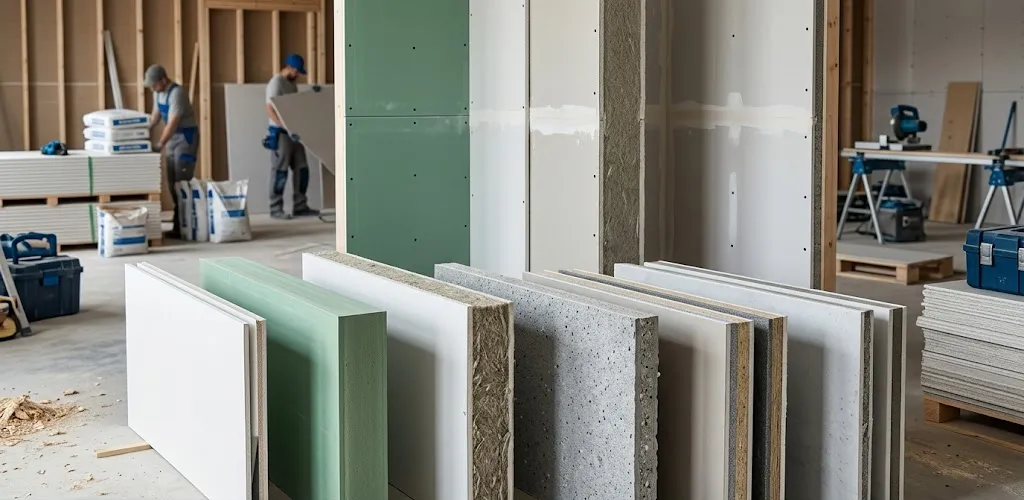
Specialty boards push the total price higher than standard drywall. The final quote shifts based on the specific material, panel thickness, and whether you need sound dampening or moisture resistance. Upgrading from a basic board to a premium option increases both your material costs and the labor required to finish it.
| Board Type | Installed Cost (Per Sq. Ft.) | Material Cost / Notes |
| Standard | $1.50 – $3.00 | $60 – $90 per installed board |
| Cement Board | $1.50 – $3.50 | ~$20 per 4×8 sheet |
| Fire-Resistant | $1.60 – $3.70 | $0.50 – $0.97 per sq. ft. (only material cost) |
| Moisture-Resistant | $1.75 – $2.95 | $20 – $30 per 4×8 sheet |
| Mold-Resistant | $1.50 – $3.00 | Premium pricing over standard |
| Eco-Friendly | $1.50 – $3.50 | $22 – $29 per 4×8 sheet |
| Paperless | $1.75 – $4.00 | Requires an expensive Level 5 finish |
| Soundproof | $3.75 – $8.00 | $42 – $80 per panel |
Standard Drywall
Installing standard half-inch drywall runs between $1.50 and $3.00 per square foot. This is the most popular choice for residential spaces. The installed price per board ranges from $60 to $90. Room size and total square footage directly affect your final bill.
Cement Board
Cement board installation ranges from $1.50 to $3.50 per square foot. A basic 4×8 sheet costs around $20. Builders use it in high-moisture areas instead of standard gypsum drywall. It often carries higher per-square-foot labor costs because the material demands a more difficult finishing process.
Fire-Resistant Drywall (Type X)
If you are calculating how much does fireproofing cost for your building’s safety codes, expect fire-resistant drywall installation to range between $1.60 and $3.70 per square foot.. A standard 144 square foot room costs between $600 and $1,500 to finish. The raw 5/8-inch fire-resistant boards run $0.50 to $0.97 per square foot. Local labor rates and site accessibility dictate where your quote falls within that range.
Moisture-Resistant Drywall (Green Board)
Green board installation ranges from $1.75 to $2.95 per square foot. A single 4×8 sheet alone costs $20 to $30. The final installation price depends entirely on the room capacity and the level of finish you request from your contractor.
Mold-Resistant Drywall (Purple Board)
Purple board costs $1.50 to $3.00 per square foot for delivery and complete installation. These premium panels cost slightly more than standard boards because production is more complex. Builders use them in bathrooms and basements to stop mold growth.
Eco-Friendly Drywall
Eco-friendly drywall contains high recycled content and costs $1.50 to $3.50 per square foot installed. A single 4×8 sheet runs $22 to $29. These panels offer better durability but often require more intensive labor, which drives up the overall price. Panel thickness and the requested finish level also change the cost.
Paperless Drywall
Installing paperless drywall costs $1.75 to $4.00 per square foot. The price climbs quickly because the material usually requires a Level 5 finish to look smooth. That premium finish step alone adds $2.00 to $4.00 per square foot to your total project.
Soundproof Drywall
Soundproof drywall is very expensive, ranging from $3.75 to $8.00 per square foot installed. A single panel costs $42 to $80, making it three to four times more expensive than standard drywall. Adding specialized acoustic sealants and ceiling channels blocks out more sound but adds $100 to $350 per wall.
Drywall Prices by Thickness
The thickness of your sheetrock panels directly impacts the total cost and the structural strength of your walls. While thinner boards are cheaper and easier to handle for basic repairs, ceilings and fire-rated walls require thicker, heavier panels to prevent sagging or meet safety codes.
| Thickness | Price Per Sheet | Common Use Case |
| 1/4-inch | $15 – $20 | Remodeling existing walls |
| 3/8-inch | $13 – $18 | Patching and repairs |
| 1/2-inch | $13 – $23 | Standard residential walls |
| 5/8-inch | $19 – $25 | Fire resistance & ceilings |
- 1/4-Inch Drywall: This thin board costs between $15 and $20 per sheet. It is lightweight and flexible, making it the best choice for remodeling existing walls or covering curved surfaces.
- 3/8-Inch Drywall: Priced at $13 to $18 per sheet, this thickness is commonly used for basic carpentry and patching small holes in older homes.
- 1/2-Inch Drywall: This is the standard for most residential walls and ceilings, costing between $13 and $23 per sheet. It offers a good balance between weight and strength.
- 5/8-Inch Drywall: You will pay $19 to $25 per sheet for this heavy-duty board. It is the go-to choice for fire-resistant walls and ceilings because the extra thickness prevents the material from sagging over time.
How Finishing Levels Affect Drywall Installation Costs
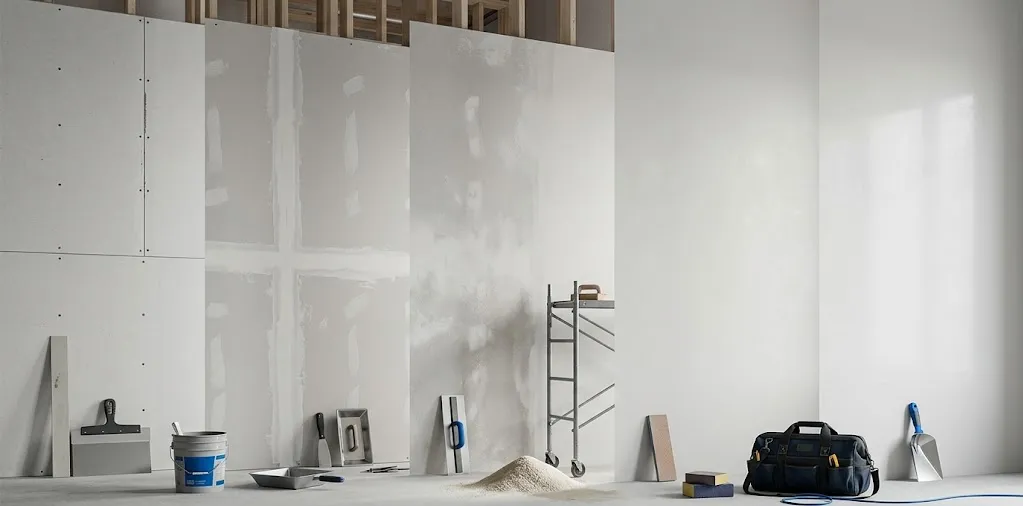
Higher finish levels require more joint compound, more sanding, and more hours of skilled labor. As you move from a basic structural hang to a smooth, high-gloss surface, your square-foot price will climb significantly to cover the extra work.
| Finish Level | Cost Per Sq. Ft. | Best For |
| Level 0 | $0.30 – $1.00 | Temporary walls (No tape or mud) |
| Level 1 | $1.00 – $1.50 | Garages and unfinished spaces |
| Level 2 | $1.30 – $2.60 | Storage areas and closets |
| Level 3 | $1.50 – $2.75 | Walls with heavy texture |
| Level 4 | $1.70 – $3.20 | Standard residential homes |
| Level 5 | $2.00 – $4.00 | High-gloss paint and premium rooms |
- Level 0: This is a basic “hang only” job with no tape or mud. It costs between $0.30 and $1.00 per square foot. It is mostly used for temporary structures or unfinished storage.
- Level 1: At $1.50 to $2.00 per square foot, this level includes taped joints and a single coat of mud. It is the standard for garages and other unfinished areas where aesthetics do not matter.
- Level 2: This level costs $1.50 to $2.75 per square foot. The crew covers the fastener heads and adds a second coat of mud over the tape. It works well for garages or storage areas.
- Level 3: Also priced at $1.50 to $2.75 per square foot, this level is for walls that will receive a heavy texture application. The extra mud coats provide a solid base for the texture to grip.
- Level 4: This is the standard residential finish, costing $1.70 to $3.20 per square foot. It includes three coats of mud and is ready for flat paint. A professional installation at this level ensures all joints are smooth and hidden.
- Level 5: The most expensive option, costing $2.00 to $4.00 per square foot. It requires a full skim coat of mud across the entire wall. Use this for high-gloss paint or rooms with intense lighting where every tiny bump would show.
Drywall Ceiling Installation Cost
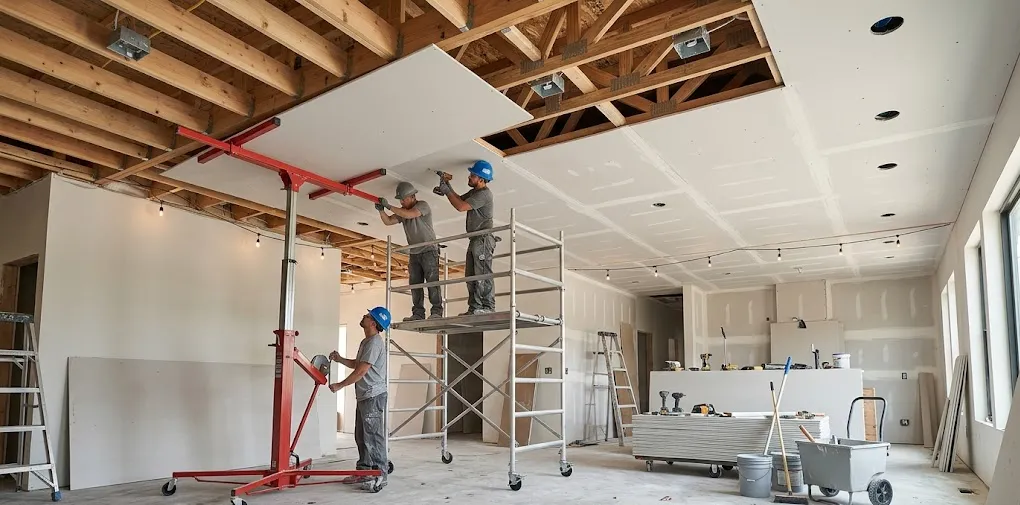
Drywall ceiling installation costs between $3.50 and $5.50 per square foot. For a standard 144-square-foot room, you can expect the total price to range from $350 to $800. Contractors working on suspended, acoustic, gypsum, or specialty ceiling systems often rely on professional Ceiling Estimating Services to prepare accurate material takeoffs and labor budgets before installation begins.
The materials alone run about $0.45 to $0.65 per square foot for a standard half-inch drywall panel. Adding professional labor, framing, and painting quickly pushes the total bill higher. Ceilings always cost more to finish than standard interior walls. Working overhead takes physical effort and usually requires extra equipment like a mechanical lift. Ceilings also frequently need specialty boards, like fire-resistant or moisture-resistant panels, which increase the upfront material price. The overall complexity of the overhead work and any necessary retrofitting make ceiling projects more expensive.
New Construction vs. Remodeling Drywall Costs
Remodeling projects cost more than new construction. Installing drywall in a new build costs between $1.50 and $3.50 per square foot. In a brand new house, contractors work with open wall studs. They just hang the boards and finish the joints, which means you only pay for the basic raw materials and direct labor.
Remodeling costs jump to $2.00 to $5.50 per square foot. If you are planning a full home update, knowing how to estimate renovation costs helps you budget for the extra demolition and site protection required in an older space.. The crew must tear out and haul away the old walls before they can start the new installation. They also spend more time protecting your floors, dealing with existing trim, and working around old plumbing lines. The demolition process and the careful finishing required for retrofitting make remodeling a much more expensive job.
Key Factors That Affect Drywall Installation Costs
Your final bill depends on more than just the size of the room. Specific project details shift the overall price. The materials you select, the scope of the work, and the shape of the room all play a direct part in the final quote.
- Scope of the Project: Larger projects often get a lower price per square foot. When contractors buy materials in high volume, they get bulk discounts from suppliers. A full-house installation costs more overall, but the rate per foot drops compared to patching a single small room.
- Material Thickness: Thicker panels cost more to produce and buy. Upgrading from a standard thin board to a thick, dense panel directly increases your material bill.
- Type of Drywall: Specialty boards push the price up. Buying moisture-resistant, fire-resistant, or specialized soundproof drywall costs significantly more than standard gypsum boards.
- Accessibility and Complexity: Room layouts with custom angles, tight corners, or vaulted ceilings force workers to make slow, exact cuts. Hard-to-reach areas take more time to hang and tape, which quickly increases the labor fees.
- Finish Level Required: The final surface quality dictates the total labor time. A Level 0 job with no mud or tape is the cheapest option. A Level 5 finish requires a full skim coat across the entire wall and stands as the most expensive choice.
- Geographic Location: Your local market changes the quote. Areas with a high cost of living carry higher hourly labor rates. You will pay more for a professional contractor in a large metropolitan city than in a rural town.
DIY vs. Hiring a Professional Drywall Contractor
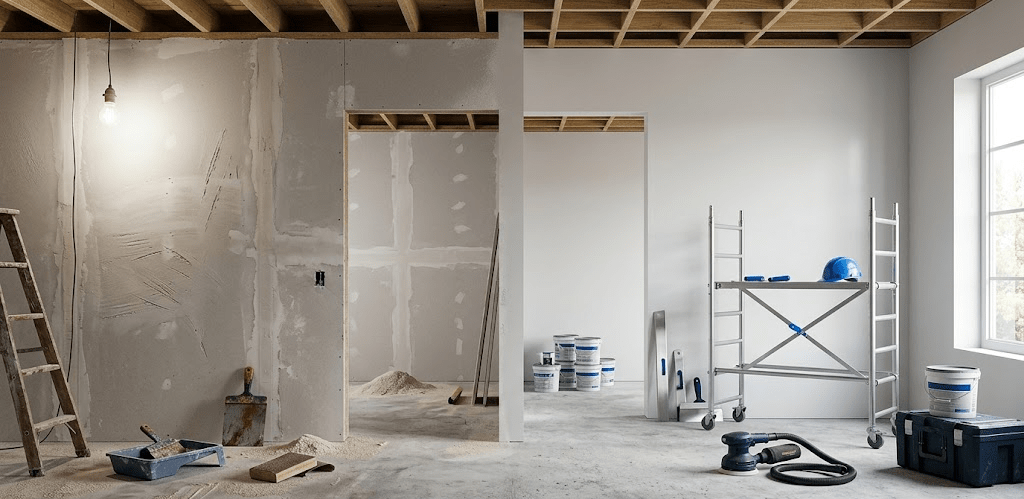
For a beginner, DIY is a solid choice for small patches or tiny rooms. You save a massive amount of money because labor usually accounts for 50% to 70% of the total project budget. By doing the work yourself, you only pay for the raw materials.
However, the time and effort required for a DIY job are high. While a professional has the process down to a science, a beginner often struggles to get a flawless finish. Taping and mudding require a specific skill set that takes years to master. If you do it yourself on a large project, you risk ending up with visible seams and bumps that show through your paint.
Hiring a professional contractor ensures a high-quality, smooth result. They work much faster and bring specialized tools that make the job efficient. If you want to save money but still need a professional look, try a partial DIY approach. You can handle the site preparation, remove old materials, and take care of the final cleanup.
Smart Tips to Reduce Your Drywall Installation Cost
Calculate your exact square footage before purchasing. Knowing how to estimate building materials prevents you from buying extra panels and joint compound that just end up as waste.
- Handle the Prep and Cleanup: Demolition and disposal take time. You avoid paying expensive hourly labor rates by tearing out the old drywall and hauling the debris to the landfill yourself.
- Shop Local: Neighborhood hardware stores and local suppliers often offer better deals and lower delivery fees than massive retail chains.
- Pick the Right Finish Level: Do not pay for a Level 5 finish unless you are using high-gloss paint. A Level 3 or 4 finish costs less and works perfectly for standard flat wall paint. For garages or closets, a Level 1 or 2 finish is all you need.
- Get Multiple Quotes: It always pays to get bids from various contractors and compare prices. This gives you a clear picture of the local market rate and helps you avoid overpaying.
- Order Materials Accurately: Calculate your exact square footage before purchasing. Buying only the panels and joint compound you actually need prevents material waste.
Get Precise Drywall Estimates with ACON Engineering
Outsourcing construction estimating prevents shortfalls and wasted materials on your projects. ACON Engineering provides detailed quantity takeoffs to help you manage the different drywall requirements in residential and commercial construction builds. Our certified estimators follow strict AACE standards to calculate exact board counts, joint compound volumes, and labor hours.
We deliver detailed reports within 24 to 72 hours. Our team uses the best construction estimating software, like PlanSwift, Bluebeam, and RSMeans, to measure your blueprints and apply accurate local pricing. We offer affordable estimating plans that fit the specific needs of contractors, developers, and homeowners. With our detailed deliverables, you know exactly what your drywall project will cost before you start.
Frequently Asked Questions (FAQs)
How long does a drywall project take?
A professional crew finishes a standard room in three to four days. Hanging the boards only takes one day. The taping and mudding process takes longer because each coat of joint compound must dry completely before the next step.
Do I need a permit to install drywall?
You do not need a permit to patch small holes or do basic repairs. However, if you are building a new room or finishing a basement, local building codes require an inspection. An inspector must look at the open wall framing, electrical wiring, and plumbing lines before you cover them with drywall panels.
When should I replace drywall instead of repairing it?
Patching small cracks and nail holes is a quick, cheap repair. You need to tear out and replace the drywall if it has water damage, heavy mold, or large structural holes. Installing new panels is often cheaper and faster than trying to fix a ruined wall.
Does drywall insulate a room?
Standard drywall does not provide thermal insulation. It blocks drafts, but it will not keep a room warm. You have to install fiberglass or foam insulation inside the open wall cavities before you hang the drywall.

Tim C. is a construction estimating expert and Director at ACON Engineering, specializing in construction cost estimating, quantity takeoffs, and preconstruction planning. He has led thousands of successful project bids and helps contractors make informed, profitable decisions.