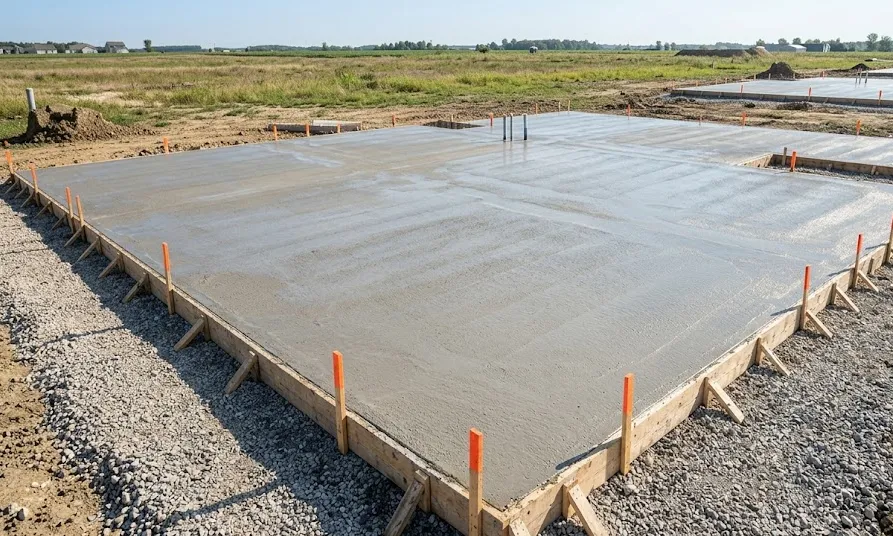
A foundation costs $6 to $50 per square foot. The type sets the price. A concrete slab sits at the low end, and a full basement runs the highest. For a 2,000-square-foot home, that means about $12,000 for a slab and up to $100,000 for a basement.
The final number depends on several factors like area and thickness. A thicker foundation needs more concrete. Reinforcement like rebar adds cost. Poor soil, a sloped site, or a high water table all push the price up before the first pour. Where you build matters too, since labor and material rates change by region.
The foundation carries the whole house, so the choice is worth getting right. Each type suits a different soil, climate, and budget. This guide breaks down the cost per square foot for slab, crawl space, basement, and pier-and-beam foundations, along with the factors that move the number.
How Much Does a Foundation Cost Per Square Foot?
A foundation costs $6 to $50 per square foot, and the type you pick decides where you land in that range. Construction Estimating Services help you understand exactly where your specific project lands within that range before the first shovel hits the ground. A concrete slab keeps costs down because it pours in a single layer. A basement sits at the top because it adds deep walls and excavation. Here is what the four main types run per square foot.
| Foundation Type | Cost per Square Foot |
| Concrete slab | $6 – $14 |
| Pier and beam | $9 – $20 |
| Crawl space | $8 – $18 |
| Basement (unfinished) | $35 – $50 |
The gap between the cheapest and the priciest comes down to how much structure each type needs. A slab rests flat on prepared ground. A crawl space and a pier and beam lift the house off the soil, so both call for perimeter walls or piers and extra digging. A basement goes furthest down and adds the most concrete, which is why it can cost five times what a slab does on the same house.
Crawl Space Foundation Cost
A crawl space foundation costs $8 to $18 per square foot, or about $16,000 to $36,000 for a 2,000-square-foot home. That price covers the excavation, the footings, the foundation walls, the vents, and a basic vapor barrier. It is one of the more affordable ways to lift a house off the ground.
| Pros | Cons |
| Easy access to utilities | More prone to pests |
| Better pest protection than a slab | Moisture and mold risk |
| Adapts to sloped and uneven sites | Not as energy efficient |
| Warmer floors than a slab | Needs upkeep to stay dry |
| Cost-effective alternative to a basement |
A few things move the cost. A sloped or uneven lot needs more excavation and grading, which raises the number. An unventilated crawl space costs less upfront, but encapsulating it for moisture and mold control runs about $3 – $10 per square foot more. Plumbing, HVAC, local labor, and material rates shift the total as well.
Basement Foundation Cost
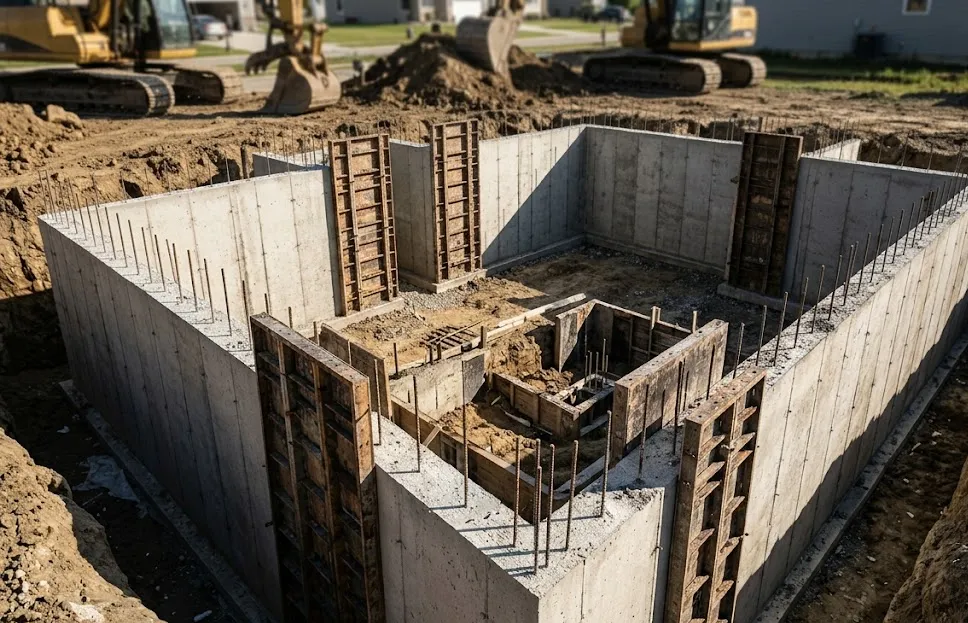
An unfinished basement foundation costs $35 to $50 per square foot, or around $60,000 to $100,000 for a 2,000-square-foot home. It is the most expensive foundation type because it adds full walls and deep excavation on top of the floor.
| Pros | Cons |
| Adds abundant storage and square footage | High cost to build |
| Energy efficient | Vulnerable to moisture intrusion |
| Strong safety in storms | Repairs can be expensive |
| Increases home value | Prone to radon risk |
| Easy utility access |
The wall type is a big part of the price. Poured concrete walls run $15 to $40 per square foot, while concrete block walls run $15 to $30. Hard excavation pushes the cost higher. And if you finish the space with framing and drywall, plan for about $25 to $50 per square foot on top of the build.
Pier and Beam Foundation Cost
A pier and beam foundation costs $7 to $12 per square foot. It sets the house on piers and beams above the ground, which suits sloped lots, flood-prone areas, and unstable soil.
The size of the home drives most of the cost. Basic leveling or shimming runs $1,000 to $3,000 when there are no major structural problems. Soil conditions, plumbing, and drainage all move the number too, so the final figure varies from one site to the next.
| Pros | Cons |
| Easy access to utilities | Moisture risk under the house |
| Works well in unstable soil | Prone to pests and rodents |
| Better protection in floods | Higher upfront cost |
| Easier to upgrade and adjust | Ongoing maintenance |
Temp Foundation Cost
A temporary foundation costs $2,000 to $10,000, depending on the size of the structure. It supports a home for a short time, usually while the house is lifted or the permanent foundation is repaired. It works for small structures and short-term needs, not long-term use.
The cost depends on the setup. Here is what the common options run:
| Temporary Foundation Option | Cost |
| Gravel pad | $1 – $3 per square foot |
| Concrete piers | $2 – $4 per square foot |
| Prefabricated metal or plastic grid kit | $200 – $600 for basic sizes |
| Pre-cut wood floor kit | $500 – $1,200 total |
Structural shoring, an engineering inspection, the labor to lift the house, and any temporary housing all add to the total. A temporary foundation is built to install and remove quickly, so it does not offer the stability or the lifespan of a permanent one.
Foundation Cost by Home Size
The bigger the home, the more you pay, since the foundation covers the whole footprint. More floor area means more concrete, more digging, and more labor. The table below shows national average ranges for the three most common types across four home sizes.
| Home Size | Concrete Slab | Crawl Space | Basement (Unfinished) |
| 500 sq ft | $3,000 – $8,000 | $3,000 – $9,000 | $10,000 – $25,000 |
| 1,000 sq ft | $5,000 – $15,000 | $6,000 – $18,000 | $20,000 – $50,000 |
| 2,000 sq ft | $10,000 – $32,000 | $12,000 – $35,000 | $40,000 – $100,000 |
| 3,000 sq ft | $16,000 – $48,000 | $18,000 – $55,000 | $60,000 – $140,000 |
Find your home size and read across to your foundation type. The slab holds the lowest cost at each size, and the basement runs the highest by a wide margin. Treat these as starting ranges. Site preparation, soil conditions, and your local climate all shift the final figure, sometimes by thousands, so factor them in before you set a budget.
Foundation Cost by Thickness
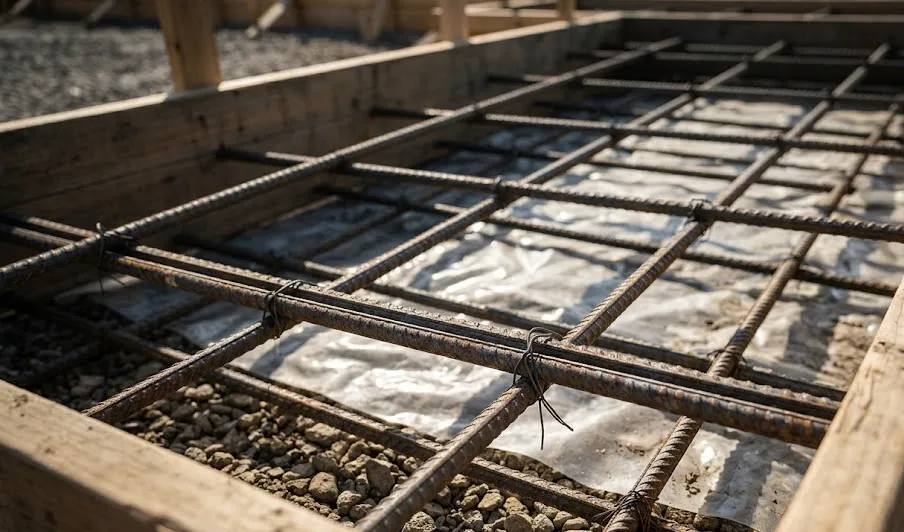
Foundation cost climbs with thickness, since a thicker slab needs more concrete and more reinforcement. A standard 4-inch slab runs $4 to $8 per square foot. An 8-inch slab, common on commercial projects, runs $10 to $15. Each added inch raises the cost by roughly $1 per square foot.
| Foundation Thickness | Cost per Square Foot |
| 4 inches | $4 – $6 |
| 6 inches | $6 – $10 |
| 8 inches | $8 – $14 |
| 10 inches | $10 – $15 |
A 4 inch slab suits sheds and outbuildings. A 6 inch slab handles most homes. An 8 to 10 inch slab goes under multi-story homes, commercial buildings, and foundations in cold climates, where the load and the frost line call for more depth.
Reinforcement adds to the number. Wire mesh runs $0.30 to $0.50 per square foot, while Rebar Estimating typically prices steel reinforcement at $1.50 to $4 per square foot depending on grade and spacing. Site preparation, such as clearing, grading, and compacting the soil, also raises costs. The foundation type also plays a role, since a standard monolithic slab usually costs less than a stem wall.
Concrete Foundation Cost
Concrete Estimating for a standard foundation slab runs $6 to $14 per square foot, though the price shifts with the type you build. A 2,000-square-foot home runs about $12,000 to $28,000. Smaller pads under 1,000 square feet often cost more per square foot, because contractors charge a minimum for the job.
A few things push the number up. Permits and engineering add cost. Site preparation matters too, since a slope, poor lot conditions, or extra clearing and grading all raise the price before the pour starts.
Monolithic Slab Foundation Cost
A monolithic slab costs $6 to $14 per square foot, or about $12,000 to $30,000 for a 2,000-square-foot home for a deeper breakdown of what drives concrete slab cost, including thickness variables and reinforcement options, that guide covers each factor in full detail. It pours the footings and the slab in one piece, which saves time and labor compared to a foundation poured in stages.
The price moves with a few things. A thicker slab needs more concrete. Reinforcement adds cost. And the site preparation matters, since clearing and excavation raise the number before the pour. A standard slab runs 4 to 6 inches thick, and more thickness means more material and more labor.
A monolithic slab comes in two forms. A one-way beam slab pours the beams at the same time as the slab and supports the foundation on two edges. A two-way beam slab supports all four edges at once, which gives a more stable base.
Stem Wall Foundation Cost
A stem wall foundation costs $6 to $18 per square foot, or around $12,000 to $35,000 for a 2,000-square-foot home. That covers the materials and the poured slab. A stem wall is a short perimeter wall that sits partly below ground, which makes it a good fit for sloped lots.
Several factors shift the price. Wall height changes the material needed. Local soil conditions add cost, since poor soil calls for deeper footings, which is why accurate Surface Grading Estimating Services should be priced in before the pour. Steel rebar adds $1.50 to $4 per square foot. Labor runs $50 to $150 per hour, and excavation and site clearing move the total as well.
Floating Slab Foundation Cost
A floating slab foundation costs $6 to $12 per square foot for an insulated or frost-protected version, or about $12,000 to $24,000 for a 2,000-square-foot home. The slab “floats” on the ground without deep footings, which suits sheds, garages, and homes in milder climates.
The cost depends on size and thickness. A thicker slab adds roughly $1 per square foot. Reinforcement changes the number too, since rebar costs $1.50 to $4 per square foot compared to basic wire mesh. Site preparation and location can push the price toward the upper end.
Raft Foundation Cost
A raft foundation costs $6 to $12 per square foot, or around $12,000 to $24,000 for a 2,000-square-foot home. Once you add reinforcement, labor, and excavation, the full cost can reach $10 to $25 per square foot. A raft spreads the weight of the house across one large slab, which works well on weak soil.
Here is how the per-square-foot cost breaks down:
| Cost Component | Per Square Foot |
| Concrete | $3 – $7 |
| Reinforcement (rebar) | $1.50 – $4 |
| Labor | $3 – $7 |
| Site preparation | $1 – $5 |
Site conditions, slab thickness, beams, location, and access all affect the total, so weigh them before you set a budget.
Poured Concrete vs Block Foundation Walls
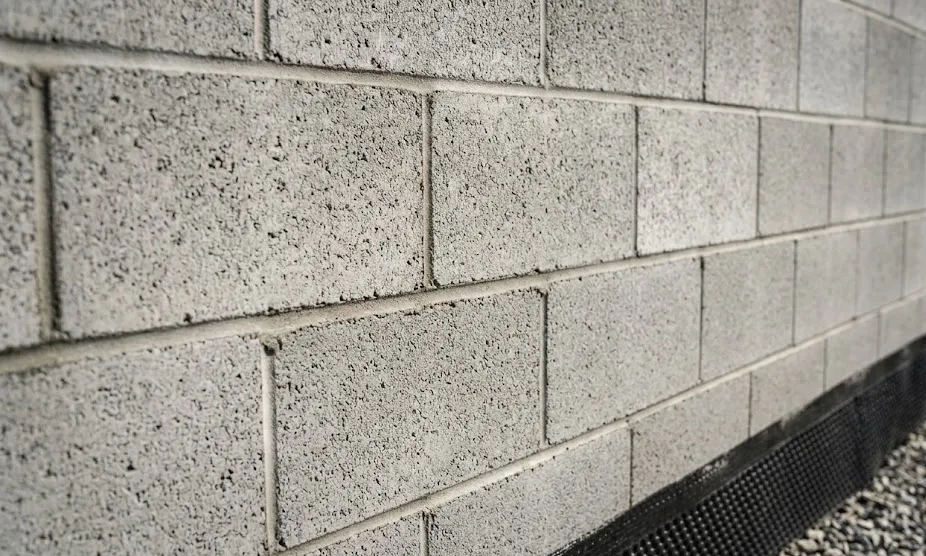
Poured concrete or cinder walls cost $15 to $40 per square foot, and $20 to $40 on a full basement. Concrete block walls cost $15 to $30 per square foot. The choice comes down to strength, water resistance, and labor.
Poured concrete is stronger and more moisture-resistant, since it forms one solid, sealed wall. It also installs faster, which lowers the labor cost. Block walls cost less upfront, but the seams between blocks are natural weak points where water can get in. Block needs solid exterior waterproofing and good drainage to stay dry.
| Wall Type | Cost per Square Foot | Strengths |
| Poured concrete | $15 – $40 | Stronger, water-resistant, faster to install |
| Concrete block | $15 – $30 | Cheaper upfront, needs waterproofing |
Foundation Labor Cost
Foundation labor costs $3 to $7 per square foot, which works out to about half the total project cost. For a 2,000-square-foot home, plan for $5,000 to $20,000 in labor, depending on the crew and the site. Contractors charge $50 to $150 per hour.
The foundation type sets the labor time. A simple slab pours fast, so it costs less to install. A full basement takes far longer, since it needs deep excavation and wall work. Site preparation, clearing, location, and access all affect how many hours the job runs.
What Factors Affect Foundation Cost
Foundation cost depends on more than the type and size. The list below covers the main factors that move the final number.
Foundation type
The type sets the baseline. A basic concrete slab is the most affordable. A full basement costs the most, since it adds excavation and waterproofing on top of the floor.
Size and complexity
More square footage means more material and labor. A larger footprint or a complex design with many corners needs extra formwork, which raises the cost.
Soil conditions
Poor soil or a high water table calls for deeper footings, soil stabilization or moisture barriers. A sloped lot needs grading and accurate Earthwork Estimating Services ensure these site preparation costs are captured before the foundation pour begins.
Site accessibility
If equipment cannot reach the property easily, the job takes more time and coordination, which raises the labor cost.
Permits and engineering
Permit fees vary by area, and some sites need an engineer’s sign-off. Both add to the total before construction starts.
Location
Material delivery and labor rates change by region. High-cost markets like New York run well above the national average.
Reinforcement
A heavier load needs a thicker slab, deeper footings, and more steel. More rebar adds cost, but
it gives the foundation its structural strength.
Finishing costs
Plumbing, foundation drywall, and specialized work like waterproofing or drainage all add to the build if the project calls for them.
Equipment rental
Concrete pumps, excavators and other machinery come with rental fees that raise the overall cost.
Cost to Fix or Replace a Foundation
Foundation repair costs $2,000 to $8,000 on average, but the range runs wide depending on the damage. Minor crack sealing or patching costs $300 to $1,000. Major structural work climbs to $15,000 to $30,000. A full replacement, where the old foundation comes out and a new one goes in, costs $20,000 to well over $100,000, since it doubles the work.
Here is how the common repairs break down:
| Repair Type | Cost |
| Minor crack sealing or patching | $300 – $1,000 |
| Average foundation repair | $2,000 – $8,000 |
| Wall stabilization | $3,000 – $12,000 |
| Slab settlement or piling | $5,000 – $20,000 |
| Major structural work | $15,000 – $30,000 |
| Full foundation replacement | $20,000 – $100,000+ |
The final cost depends on the foundation type and how much the soil has shifted. Your location matters too. In a seismically active region, the job may call for seismic retrofitting, which adds to the total.
The catch is that the true cost depends on your soil, your site, and your local rates, which makes a slab harder to price than a single number suggests. For an accurate figure, it helps to work with a top-rated American estimating firm like ACON Engineering, which can price the job to your plans and your location.
How to Get an Accurate Foundation Estimate
A cost per square foot gives you a rough estimate. It does not show what your foundation will actually cost. A professional takeoff measures the real quantities from your plans and prices them for your project. You get an estimate you can trust before construction begins.
A real estimate from ACON Engineering includes the full picture, which is a detailed breakdown of the material cost, the labor cost, and a contingency for the unknowns, delivered in a clear PDF. That level of detail is what keeps a foundation project from going over.
ACON Engineering brings 15 years of estimating experience and a team of certified estimators who cover all CSI trades. The pricing is flexible and affordable, with packages built for residential, commercial, and industrial projects alike, so the right estimate is within reach, whatever you are building.
Frequently Asked Questions (FAQs)
What is the cheapest foundation in construction?
A monolithic concrete slab on grade is the cheapest, at $6 to $12 per square foot, and a basic version can reach $4. It pours in a single piece with little excavation, which keeps the cost low. That is why it is the most common foundation.
How long does it take to finish a foundation?
A foundation takes one to three weeks to complete. That covers the site preparation, the formwork, the reinforcement, the pour, and the curing time. The concrete needs time to reach full strength, which is why the timeline stretches beyond the pour itself.
How do you choose the right foundation type?
Start with the soil. Check the bearing capacity, the moisture level, and the water table depth, usually through a geotechnical survey that measures how much load the soil can hold. Then weigh the climate, the site topography, and the building load. Those factors tell you whether a shallow foundation like a slab or a deep foundation is the right call.
How long does a foundation last?
A well-built foundation lasts around 100 years, and a high-quality one can pass a century with ease. The lifespan depends on the soil, the construction quality, the drainage, and the moisture the foundation is exposed to over time.
Does a bigger house always cost more per square foot?
Not always. Larger foundations cost more in total, but the per square foot rate often drops, since fixed costs like mobilization and contractor minimums are spread across more area. A very small pad can cost more per square foot than a large one for that reason.
Is a foundation included in the price of building a house?
The foundation is one of the first line items in a new build, but it is priced separately from the framing and finishes. On most homes, it runs 5 to 15 percent of the total build cost, depending on the type and the site.
Should I get more than one foundation estimate?
Yes. Comparing two or three estimates for the same foundation type shows you the real market rate and flags any number that is off. Make sure each estimate covers the same scope, materials, labor, excavation, and site work, so the comparison is fair.
How much does a 2,000-square-foot foundation cost?
A 2,000-square-foot foundation costs about $12,000 to $28,000 for a concrete slab, $16,000 to $36,000 for a crawl space, and $60,000 to $100,000 for an unfinished basement. The type sets the range, and your soil, site, and local rates decide where you land within it.

Tim C. is a construction estimating expert and Director at ACON Engineering, specializing in construction cost estimating, quantity takeoffs, and preconstruction planning. He has led thousands of successful project bids and helps contractors make informed, profitable decisions.