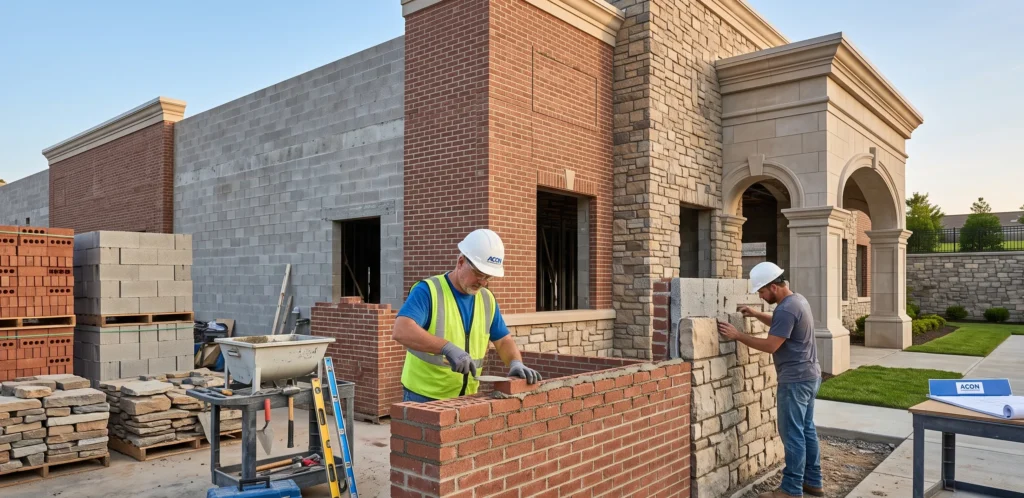
Masonry work costs $40 to $100 per hour, and the rate can run as low as $30 for basic help and as high as $150 for expert work. What you pay depends on the project type, the mason’s experience, the location, and the job’s complexity. A simple brick repair sits at the low end, while custom stonework or a structural rebuild runs much higher.
Masonry is a core part of nearly every building, whether it is a home, a commercial property, or an industrial site. It shapes the walls, foundations, facades, and finishes, and it holds up for decades. Because it carries so much of a project, knowing what masonry costs helps you budget with confidence. This guide breaks down the rates by skill, material, and project type, so you understand the full cost from every angle.
What is Masonry Work?
Masonry work is the craft of building strong structures using individual units. Masons carefully stack these units and lock them together with mortar. Here are the most common types:
- Brick Masonry: Builders use clay bricks for both indoor and outdoor walls. Bricks offer great strength and a classic look.
- Stone Masonry: This uses natural stones like granite or limestone. It creates highly durable structures, but it requires top-level skill because natural stones are heavy and uneven.
- Concrete Block Masonry: Masons build with precast concrete blocks. This is a budget-friendly choice that works perfectly for strong foundations and large walls.
- Veneer Masonry: This process adds a thin layer of brick or stone strictly for looks. It does not provide any structural support.
Masons use a handful of specific tools to get the job done right. They rely on a trowel to spread the mortar and a level to keep the wall perfectly straight. To finish the mortar joints and give them a clean look, they use a jointer or a striker.
Masonry Labor Rates by Skill Level
Masonry labor costs $15 to $150 per hour, and the rate rises with the mason’s skill and the complexity of the work. A helper who mixes mortar costs far less than a master who lays custom stone. Here is how the rates break down by skill tier.
| Skill Level | Experience | Cost Per Hour |
| Apprentice | 0 – 2 years | $15 – $25 |
| Journeyman Mason | 2 – 8 years | $30 – $75 |
| Master Mason | 8 – 15 years | $75 – $100 |
| Restoration Specialist | 15+ years | $100 – $150 |
An apprentice is still learning the trade, so they manage support tasks like mixing mortar, moving materials, and basic prep. A journeyman mason is fully proficient and manages most standard work, though the most complex projects are still beyond their range.
A master mason takes on custom stonework, intricate patterns, and high structure builds. A restoration specialist is the top tier, with the experience to handle historic preservation and detailed architectural repairs on older buildings.
Masonry Cost Per Square Foot by Material
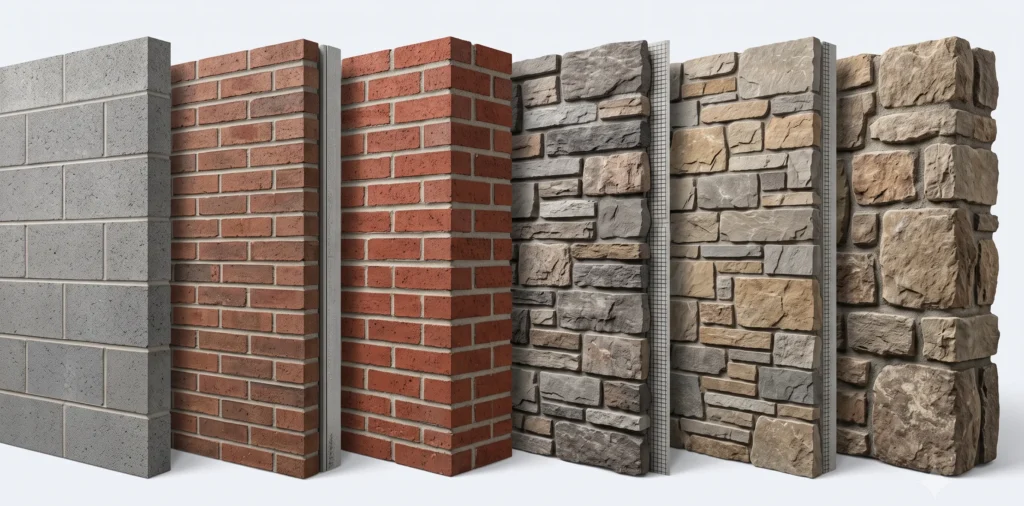
Masonry costs $15 to $100 per square foot installed, depending on the material. Concrete block sits at the low end, while full bed natural stone runs the highest. The material sets a large part of the price, since heavier and harder to cut stone takes more labor time. Here is the cost by material.
| Material | Cost Per Square Foot |
| Concrete block | $15 – $30 |
| Manufactured stone veneer | $15 – $30 |
| Brick veneer | $15 – $35 |
| Brickwork | $20 – $45 |
| Natural stone veneer | $25 – $50 |
| Full-bed natural stone | $40 – $100 |
Concrete block is the most affordable and the fastest to lay, which keeps the cost down. Brickwork runs higher because the units are smaller and the work is slower. Stone is the premium option. A manufactured veneer costs less than natural stone, and a full bed natural stone wall costs the most, since it carries real weight and takes the most skill and time to build.
Masonry Cost by Project Type
Masonry costs $10 to $150 per square foot, depending on the project. The price tracks the complexity of the work, so a standard veneer costs far less than a structural rebuild or a custom stone feature. Here is the cost by project type.
| Project Type | Cost Per Square Foot |
| Bricklaying and veneers | $10 – $45 |
| Patios and walkways | $15 – $35 |
| Paving and hardscape | $15 – $40 |
| Retaining walls | $25 – $50 |
| Restoration projects | $20 – $40 |
| Stonework | $20 – $100 |
Bricklaying and veneers cover the widest range, from a standard brick veneer at the low end to a full structural rebuild at the top. Patios, walkways, paving and hardscape depend on the pattern and the material. Retaining walls cost more because they need reinforcement and drainage, making landscape estimating services valuable for accurately estimating hardscape and retaining wall projects.
Stonework is the premium option, and the price swings with the stone, whether it is fieldstone, flagstone, or manufactured. Restoration projects run high for the square footage, since they take more time, careful material matching, and skilled structural work.
For a wall finish, stucco costs $10 to $18 per square foot, depending on whether it is traditional three coat, one coat or synthetic. For an average 2,000 square foot home, a full stucco job runs about $10,000 to $30,000.
Masonry Repair Costs
Masonry repair costs $3 to $30 per square foot, or $250 to $10,000 depending on the damage. A small mortar repair sits at the low end, while a structural rebuild runs the highest. Here is the cost by repair type.
| Repair Type | Cost |
| Repointing and tuckpointing | $3 – $25 per sq ft |
| Brick replacement | $10 – $30 per sq ft |
| Waterproofing and sealing | $2 – $10 per sq ft |
| Crack repair | $250 – $800 per crack |
| Chimney repair | $150 – $1,000+ |
| Structural or bowing wall repair | $2,000 – $7,000 |
Repointing and tuckpointing scrape out and replace damaged mortar joints to stop water from getting in, and a small area runs $400 to $500. Brick replacement swaps out cracked or spalling brick. Crack repair runs $250 to $800 per crack, depending on the depth and whether the crack points to structural distress.
Structural and bowing wall repair averages $2,000 to $6,500 and climbs to $10,000 for a large rebuild. Chimney repair starts around $150 for minor work and passes $5,000 for a full rebuild. Waterproofing and sealing protect the brick from moisture.
Hidden Costs of Masonry Projects
Labor and materials are not the whole bill. A few costs catch owners off guard, so factor them in before you set a budget. Here is what to plan for.
Site preparation clears, levels, and grades the work area before any masonry goes down, and a difficult site adds cost. Structural and foundation work covers the footing or base the masonry sits on, which is required on most walls. Material delivery runs $60 to $200, since brick, block, and stone are heavy and need a truck. Waste disposal costs $50 to $200 to haul off the old material and debris. Permits and municipal approvals run $50 to $500, and most walls over four feet and most structural work require one.
Scaffolding and lift rental add cost on chimney and second-story work, and can raise the labor total. Cleaning and pressure washing run $0.15 to $0.45 per square foot when a wall needs prep before repair. Mortar match testing costs $150 to $500 on historic work, to match the new mortar to the old. Specialty materials and any regulatory compliance on a protected or historic building add to the total.
What Affects Masonry Cost?
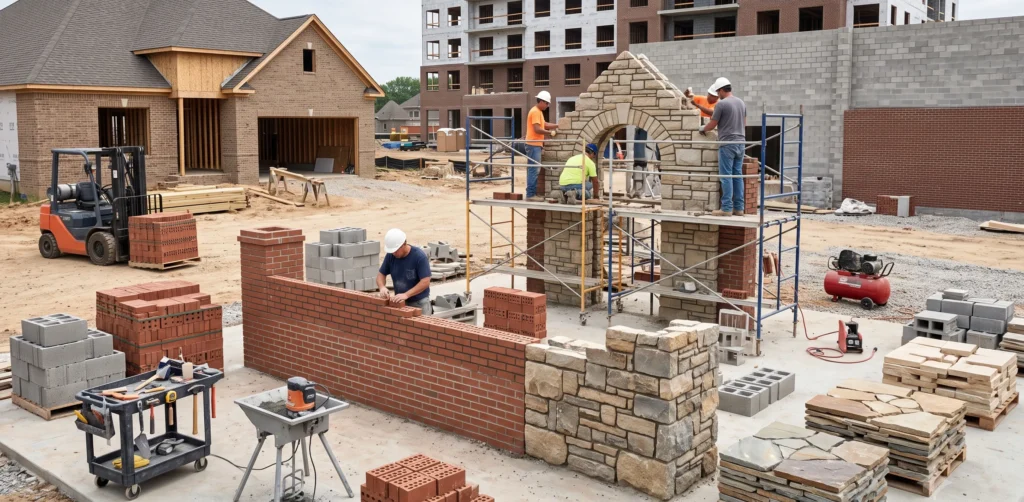
Masonry cost is set by a handful of factors that push the rate up or down. Each one moves the price on its own, and most jobs stack two or three together. Professional masonry estimating services evaluate these cost drivers to produce accurate project estimates. Here is how each affects the total.
- Experience and skill level. The mason’s tier sets the hourly rate. An apprentice charges $15 to $25 per hour, while a master or restoration specialist charges $100 to $150. A skilled mason costs more but works faster and gets it right the first time.
- Project type. Repair work costs more per hour than new construction, since the scope is unpredictable until a wall is opened up. A simple veneer is cheaper than a structural rebuild or a custom stone feature.
- Material. The material drives both the cost and the labor time. Concrete block is the cheapest, brick sits in the middle, and natural stone runs the highest, since it costs 25 to 50 percent more in labor time to cut and set.
- Location. Rates rise with local demand and cost of living. Coastal and metro markets bill 35 to 70 percent more than rural areas for the same work.
- Licensing and insurance. A licensed, insured firm charges 20 to 40 percent more than an unlicensed handyman. The wage difference is small, and the rest covers the insurance, the warranty, and the code compliance you are paying for.
- Height and access. A hard to reach job would automatically cost more. Scaffolding, excavation, and lift rental on chimney or second story work can raise the labor total by up to 40 percent.
- Labor size. A solo mason charges less per hour but takes longer, while a crew finishes faster at a higher combined rate. Union crews bill 15 to 30 percent more than non-union.
How to Estimate Your Masonry Cost
You can estimate a small masonry job in five steps, from the wall size to the final number. Here is how to work it out.
Step 1: Measure the square footage. Multiply the wall’s length by its height. A 20-foot wall at 8 feet tall is 160 square feet. Subtract any large openings.
Step 2: Estimate the material quantity. Use the unit that matches your material. A standard modular brick covers about 7 bricks per square foot. Concrete block (CMU) covers 1.12 blocks per square foot. For mortar, plan on about 3 bags of mix per 100 blocks.
Step 3: Add a waste factor. Multiply your material total by 1.1 to cover breakage and cuts. A 10 percent waste factor is safer than 5 percent on most jobs.
Step 4: Add the labor. A mason lays about 400 bricks or 200 blocks (approx) in an eight hour day. Divide your unit count by that to get the days, then multiply by the hourly rate. Rates run from about $40 an hour for entry level work to $100 or more for a restoration specialist.
Step 5: Add overhead and contingency. Add about 10 percent for fuel, equipment rental and supplies, then another 10 percent as a contingency for surprises.
This gives you a solid ballpark on a small project. For a medium or large job, the math gets far more complex, and a missed quantity costs real money. For those, professional construction estimating services provide accurate quantity and cost analysis before bidding or construction begins. ACON Engineering, a US based estimating firm with deep market experience, delivers accurate masonry estimates, often within 24 hours, so you can bid or build with a number you trust.
DIY vs Professional Masonry
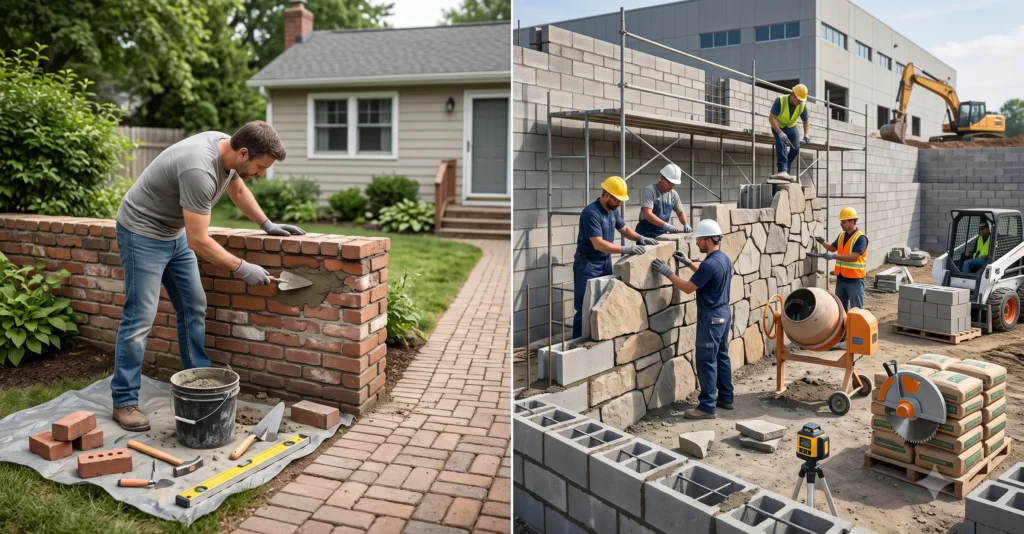
DIY works for small, simple jobs. A basic garden path, a patch on a small brick crack or a minor cosmetic repair is within reach for a careful beginner. Doing it yourself saves money, gives you control over the schedule and comes with real satisfaction. The trade off is the work involved. You have to source the right materials, and a small mistake on a wall can cost far more to fix than it saved.
For anything structural, hire a professional. Large-scale structural projects often rely on commercial estimating services to prepare accurate budgets before construction starts. Foundation repairs, retaining walls and load bearing features need a licensed mason who delivers quality results, meets local building codes and works efficiently. The cost is higher, and you work around their schedule, so the job takes longer to start. For a structural project, that trade off is worth it, since a failure costs far more than the mason ever would.
How to Lower Your Masonry Cost
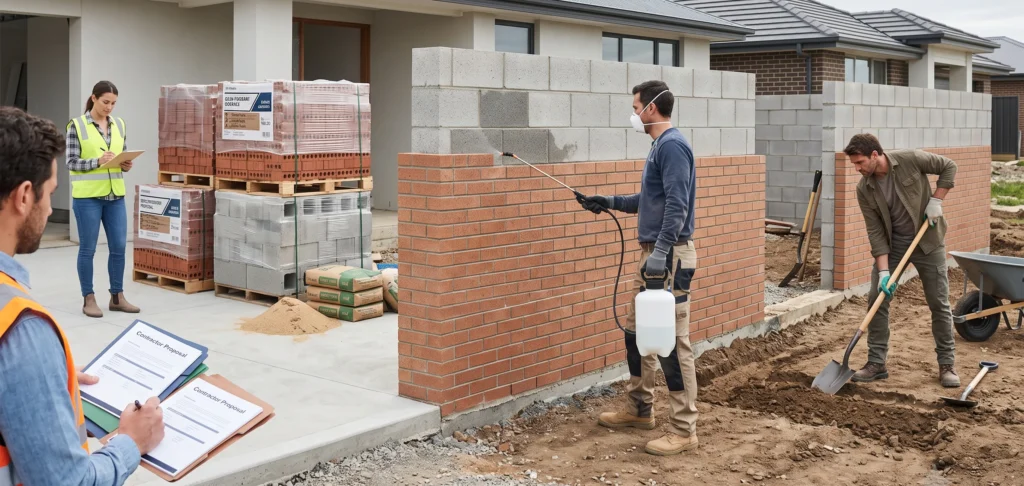
You can cut masonry costs without cutting quality. Here is where the savings sit.
- Simplify the design. Custom stonework and detailed patterns are labor intensive, and the labor is where the cost climbs. A simple, traditional layout costs far less to build.
- Use cost effective materials. Concrete block costs less than brick or natural stone and goes up faster, which lowers both the material and the labor line.
- Buy local and in bulk. A local supplier saves on delivery, and a bulk order often earns a discount. Local yards also know the area’s codes and conditions.
- Do the prep yourself. Clearing debris, basic demolition, and site cleanup are tasks you can manage, which cuts the hours you pay a mason for.
- Get multiple bids. Collect three itemized quotes and compare them. That shows you the market rate and gives you room to negotiate.
- Maintain the finished work. Sealing and basic upkeep keep small problems from turning into costly repairs. Neglecting a wall costs far more over time.
- Schedule in the off season. Masons are often more available and more flexible on price outside the busy building months.
Does Masonry Cost Per Hour Change by Season?
Yes, masonry costs fluctuate based on the time of year. During peak construction seasons, which generally run from April to October, prices often rise by 10% to 50%, making effective MS Project scheduling services valuable for planning work around seasonal labor availability and weather conditions. This happens because weather heavily impacts the work. Mortar cannot cure properly when the temperature drops below 40 degrees Fahrenheit.
In regions with milder climates, like the South and West, you might find lower hourly rates in early spring. Masons are highly available, and contractors face lower overhead costs. However, in colder climates like the North and Northeast, winter work gets expensive. Contractors must charge premium rates to cover extra steps like ground thawing, setting up heated enclosures, and managing slower mortar cure times.
Skilled Mason vs. Handyman Cost Differences
When you hire someone for a project, you usually have to choose between a skilled mason and a handyman.
A skilled mason is an expert in the trade and always in high demand. Because of this, they charge higher rates, usually ranging from $45 to $100 per hour. You want a skilled mason for complex jobs. They handle major structural repairs, build retaining walls, and install massive stone fireplaces.
A handyman requires a smaller budget, typically charging between $30 and $50 per hour. They manage simpler tasks and quick fixes. You can hire a handyman for common, everyday jobs like patching a small mortar crack or replacing a few decorative bricks.
Frequently Asked Questions
Should You Pay Masons by the Hour or by the Square Foot?
Paying by the hour is not necessarily cheaper. Hourly rates make sense for small repairs where the timeline is a bit unpredictable. For large projects, paying by the square foot gives you a fixed budget and protects you from paying extra if the work slows down.
Do Union Masons Justify Their Higher Hourly Rates?
Union masons charge more, but they bring verified training and strict safety standards to the job site. If you have a complex structural project, their expertise helps prevent expensive mistakes. For small fixes, a non-union worker can usually handle the job just fine.
Which Masonry Materials Are the Most Popular?
Brick and concrete blocks take the top spot. Builders love clay bricks because they resist fire and look great. Concrete blocks are incredibly popular for commercial walls and foundations because they are strong and very cost-effective.
How Do You Know Your Masonry Needs Repair?
You should look for visible damage on your walls. The most common signs include crumbling mortar, deep cracks in the stones, or walls that lean outward. If you spot these issues, bring in a professional before the damage gets worse.
What Makes Masonry Work So Expensive?
Masonry requires intense physical labor and highly specialized skills. The raw materials are heavy and cost a lot to transport. A mason must mix the mortar perfectly and place every single brick or stone by hand, which simply takes a lot of time.
What Are the Average Hourly Rates for Masons?
A skilled professional mason typically charges between $45 and $100 per hour. If you hire a handyman for a minor repair, expect to pay around $30 to $50 per hour.
What Does a Contractor’s Hourly Rate Cover?
The hourly rate covers much more than just the worker’s paycheck. It pays for business overhead, including insurance, equipment wear and tear, travel time, and local taxes.

Tim C. is a construction estimating expert and Director at ACON Engineering, specializing in construction cost estimating, quantity takeoffs, and preconstruction planning. He has led thousands of successful project bids and helps contractors make informed, profitable decisions.