
Many contractors find themselves stuck in a loop where they spend hours on paperwork only to lose the job, or they win it and realize their price was too low to make any real money. If you are just throwing out rough numbers to hit a deadline, you are eventually going to run into a project that costs you more than it pays.
Figuring out how to grow construction business requires a strategy that focuses on the right projects and uses exact local data. Winning more contracts isn’t about being the lowest bidder every time. It is about proving to the client that you understand their project better than anyone else while still protecting your own profit.
In this guide, we will go over six ways to help you win more bids and keep your margins high. We will talk about how to get your pricing right, how to pick the best jobs to go after, and how to build better connections with the people who hire you. The goal is to help you stop wasting time on the wrong leads and start winning the projects that are actually beneficial for your business.
Key Takeaways
- Stop bidding on everything: Knowing when to walk away is just as important as knowing how to bid. Use a strict “bid or no-bid” checklist so you stop wasting hours on projects that do not fit your expertise or timeline.
- Track your win rate: Regularly calculating your bid-hit ratio tells you immediately if your pricing is completely out of touch with the local market or if you are chasing the wrong leads.
- Get your numbers exact: Guessing on materials or relying on outdated labor rates will destroy your profit margin. If you do not have the time to do precise takeoffs, outsource the estimating so you do not end up paying out of pocket to finish a job.
- Look past the blueprints: Never rely entirely on digital files. Always perform a physical site visit and ask sharp questions (RFIs) to catch hidden geographical or structural issues before you lock in your price.
- Transparency beats the lowest price: A winning proposal is rarely just the cheapest one. Clients look for detailed scopes of work, realistic timelines, and explicitly stated exclusions so they know exactly what they are paying for without fear of hidden fees.
- Follow up, even when you lose: A quick, polite follow-up asking for feedback after losing a bid gives you the exact data you need to adjust your next proposal. It also leaves a highly professional impression that project owners will remember the next time they need to hire.
What is a Bid-Hit Ratio, and Why Should you Track it?
A bid-hit ratio is the specific metric that compares the number of bids you submit to the number of projects you actually win. It measures the effectiveness of your bidding strategy and serves as a primary indicator of your company’s competitive health. By calculating this rate, you can determine if your pricing is in line with the market and if you are spending your resources on the right opportunities.
To find your ratio, simply divide the total number of bids you sent out by the number of contracts you signed. For example, if you bid on 12 projects in a month and win 1 of them, your bid-hit ratio is 12:1. This means that for every 12 jobs you pursue, you successfully secure one.
Tracking this number is vital because it reveals the efficiency of your entire business process. If your ratio is 10:1 or higher, you are likely wasting a massive amount of time and overhead on paperwork for jobs you have almost no chance of winning. On the other hand, if your ratio is 1:1, your prices might be too low, meaning you are leaving money on the table.
Regularly analyzing this metric helps you identify exactly where things are going wrong. It allows you to see if you are more successful with certain types of clients or specific project sizes. By understanding it thoroughly, you can stop chasing every lead and focus your time and resources on the bids that have the highest probability of turning into a profit.
6 Strategies to Win More Construction Bids
The bidding process is highly competitive, but the contractors who consistently take home the best jobs are not just hoping for the best. They follow a strict, repeatable process.
Below are six practical strategies you can apply to your business right now. These steps will help you tighten up your pricing, stand out from other contractors, and secure more profitable contracts without wasting your time on dead-end leads.
1. Why are Accurate Cost Estimates Important?
If your estimate is off by even a small percentage, you risk losing the bid entirely or winning a job that actually drains your bank account. Knowing exactly how to estimate construction costs allows you to protect your profit margins and ensures you can cover every expense.
To get these numbers right, you have to dig into the details. This means looking at current material prices, local labor wages, and subcontractor quotes while also accounting for overhead and base factors. You need a complete scope review to measure every quantity and material needed for the site. Even with a contingency budget in place, small errors in your initial math can quickly spiral out of control.
Calculating all of this yourself is a massive time commitment that often leads to mistakes. This is where ACON Engineering can help. With 15 years of experience in the industry, we provide fast and highly accurate estimates within 24 to 72 hours. Our team delivers zip-code-specific pricing across the U.S. By using our construction estimating services, you can save up to 60% on your estimation costs compared to an in-house team.
2. Use a “Bid or No-Bid” Strategy to Protect Your Time
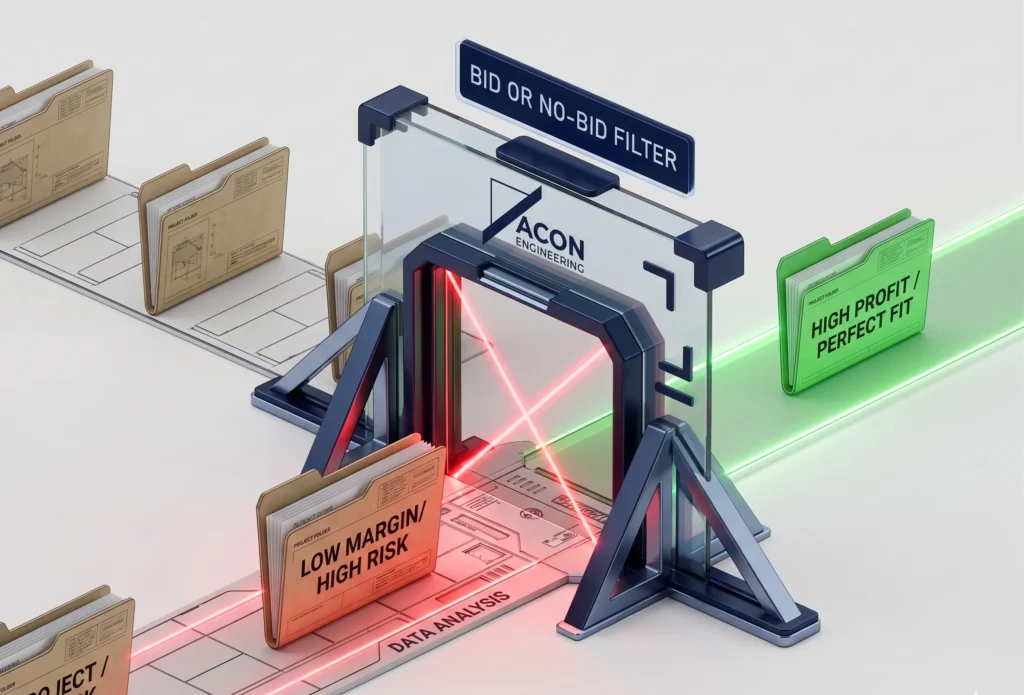
One of the most effective ways to improve your win rate is knowing when to walk away. Before you spend a single minute on a proposal, you need to decide if the project is actually a good fit for your business. Bidding on everything is a quick way to burn through your overhead without seeing a return.
Start by reviewing the plans and the scope of work to see if they match your specific expertise. Ask yourself if you have the right crew and equipment available to finish the job on time. You should also study the project owner and their past work to understand how they operate and if they are reliable. If the timeline is impossible or the competition is too high for you to make a fair profit, it is usually better to skip the bid.
Taking the time to assess the schedule, the location, and your own specialization will significantly increase your bid-hit ratio. By only pursuing the jobs where you are the best fit, you improve the quality of your work and build a much stronger reputation in the market. This strategic approach keeps your portfolio professional and ensures you are only taking on projects that help your company grow.
3. Conduct thorough research before submitting your bid
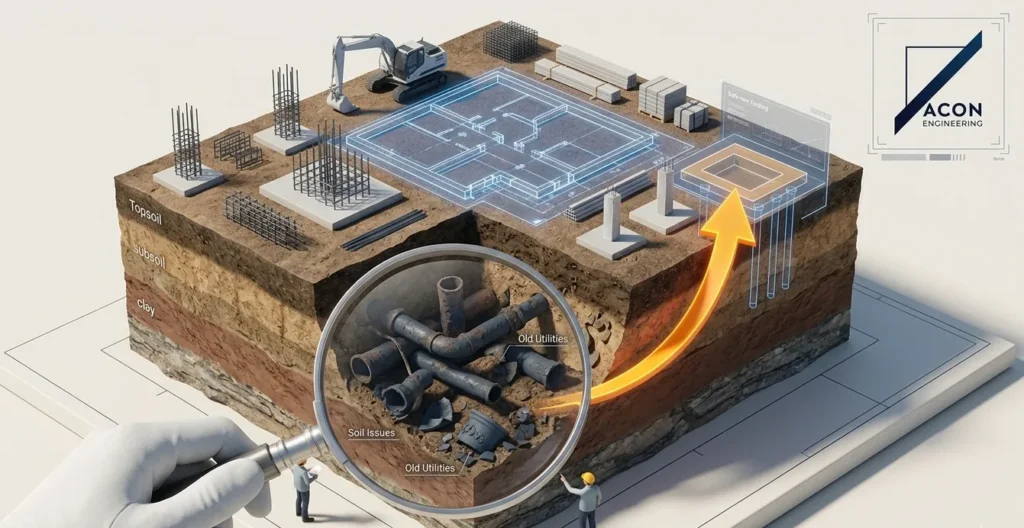
Once you decide to move forward with a project, you need to look beyond the basic blueprints. Relying only on digital files is a risk because they often miss site-specific challenges. A physical site visit is the best way to identify geographical risks, soil conditions, or accessibility issues that could slow down your machinery. Catching these details early gives you a major advantage over competitors who are pricing the job based on assumptions.
This phase is also the time to perform a deep analysis of the Request for Proposal (RFP) or Invitation to Bid (ITB). You should scan these documents for any missing information or vague requirements. If you find any ambiguities, do not hesitate to send a Request for Information (RFI) to the project owner. Asking sharp, technical questions does not make you look inexperienced; instead, it proves you are a diligent professional who understands the complexities of the work. Clear communication during this research phase helps you submit a more accurate price and builds trust with the owner before the contract is even signed.
4. Build a high-quality and transparent proposal
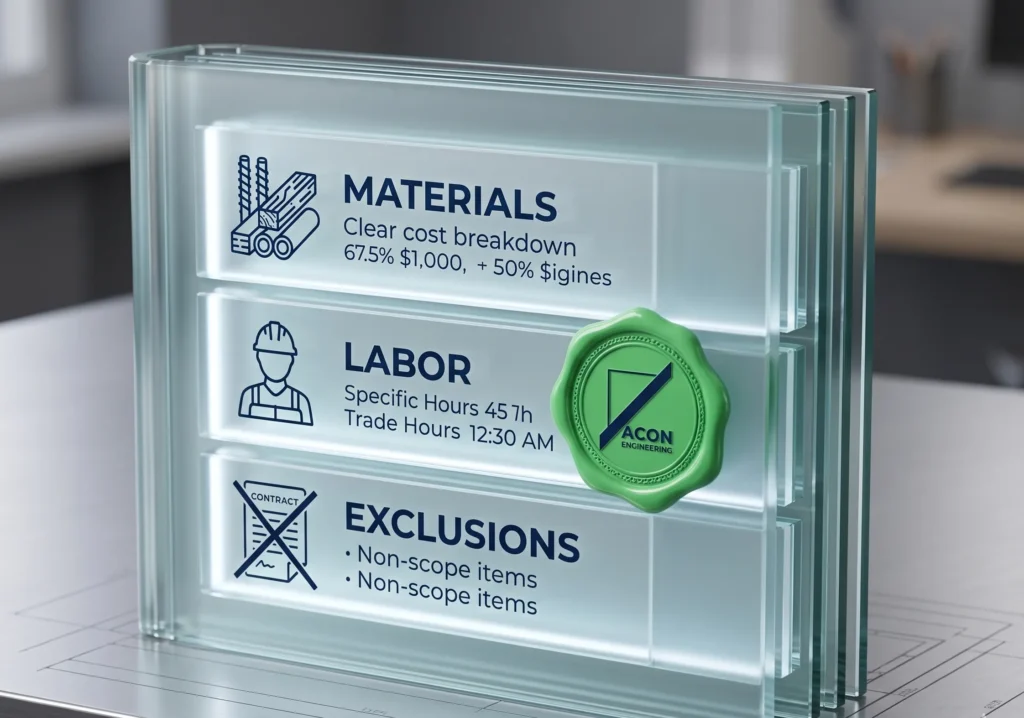
Understanding how to bid construction projects means realizing that your proposal must be professional, organized, and easy for the owner to understand. Clients want to see that you have a clear plan for their project. Your proposal should outline a transparent cost structure and a realistic timeline that accounts for every phase of construction. Providing this level of detail shows that you are honest about your process and that there are no hidden fees.
To stand out, you must include your specific qualifications and a portfolio of similar projects you have completed. Clearly define your scope of work and explicitly list any exclusions. This prevents “scope creep” and protects you from doing extra work for free later on. By including proof of your insurance, safety records, and specialized services, you provide the owner with the confidence they need to choose your company over a slightly cheaper but less organized competitor.
5. Build Strong Relationships to Win More Work
Working out how to get clients as a contractor often comes down to relationship building. You should approach every interaction as a problem-solver rather than just another contractor looking for a check. This starts with proactive communication and showing a genuine interest in the owner’s specific goals for the project.
Transparency is the foundation of any long-term partnership. When you provide a highly detailed pricing breakdown, you show the client that you have nothing to hide. One of the best ways to demonstrate this level of professionalism is by using a specialized service like ACON Engineering. By leveraging their expertise, you can provide plans and estimates that follow American industry standards and use advanced data like RSMeans. This shows the owner that you invest in the best technology and certified expertise to ensure their project is handled correctly from the start.
Being professional also means doing your homework on the client. Personalize your communication and show that you understand their previous projects and their business values. When you combine personalized service with accurate, data-backed proposals, you position yourself as a high-value partner.
6. Use Professional Follow-Ups System
Project owners and developers are incredibly busy, and your proposal can easily get buried under a mountain of other paperwork. A professional follow-up is a simple way to show that you are serious about the work and ready to get started. It keeps your name at the top of their mind and gives you a chance to answer any final questions they might have about your price or timeline.
Even if you lose a bid, following up is still one of the most useful tactics for your business. Reach out to the owner and politely ask for feedback on why your company wasn’t selected. Whether it was the pricing, the schedule, or a specific qualification, this information is vital for your future strategy.
By staying helpful and professional even after a loss, you build a unique reputation. Owners often remember the contractor who was gracious and inquisitive. If their first choice falls through or a new project comes up, you will be the first person they call. Consistent follow-ups ensure that no effort is wasted and that every bid you submit helps strengthen your long-term position in the market.
Start Winning More Construction Bids with Acon Engineering
Winning bids take time, intense focus, and highly reliable data. If you are spending your nights trying to balance spreadsheets and count materials instead of managing your actual builds, it is time to bring in professional help. Acon Engineering has over 15 years of experience helping contractors secure profitable jobs.
Our team of certified estimators follows the strict guidelines set by the AACE and the American Estimators Organization standards. We are highly proficient in industry-leading software like PlanSwift, Bluebeam, and RS Means. We cover all CSI trades and guarantee a fast turnaround, delivering your complete and highly accurate breakdown within 24 to 72 hours.

We provide a true 360-degree angle of estimation services to handle any project you take on. Our services include:
- Construction Estimating
- Cost Estimating
- Construction Takeoff
- Bid Management
- Preliminary Estimating
- Estimating Consulting
- MEP Estimating
- Residential Estimating
- Industrial Estimating
Send us your plans today to get a free quote on your submission, and let us give you the hard data you need to win your next big contract.
Frequently Asked Questions (FAQs)
What is considered a good bid-hit ratio for a construction contractor?
A healthy bid-hit ratio usually falls between 4:1 and 6:1 for private commercial projects. This means you win one out of every four to six jobs you pursue. For public government work, the ratio is often closer to 10:1 because the bidding is open to everyone and highly competitive.
How do I win a bid if another contractor offers a much lower price?
You beat a lower price by proving you offer higher value and less risk. Experienced clients know that an unusually cheap bid almost always leads to expensive change orders later. To win, point out the specific details you included in your proposal, like a complete scope of work, exact material takeoffs, and a realistic schedule.
Can you negotiate a construction bid after submitting it?
Yes, negotiation is very common in private and commercial construction. If a project owner likes your proposal but your price is slightly over their budget, they will often ask if you can adjust the cost. Instead of just dropping your price and losing your profit, negotiate by changing the scope of work.

Tim C. is a construction estimating expert and Director at ACON Engineering, specializing in construction cost estimating, quantity takeoffs, and preconstruction planning. He has led thousands of successful project bids and helps contractors make informed, profitable decisions.