Construction lead generation is the process of identifying, attracting, and converting potential clients into paying projects. Contractors winning consistent work are not the ones generating the most leads. They are the ones generating the right leads through the right channels and responding faster than everyone else.
Lead generation channels each carry distinct costs, timelines, and quality profiles. Knowing which channel fits which growth stage prevents budget waste and protects margin on every project won.
Referrals convert at the highest rate of any channel, while construction as an industry records the lowest lead-to-MQL conversion rate of any sector tracked. The gap between those two numbers is where a structured lead generation system creates competitive separation.
Free lead generation through Google Business Profile, SAM.gov, and state procurement portals produces warm, high-intent leads at zero direct cost. Paid platforms deliver volume faster but require a fast follow-up system to capture value before a shared lead reaches multiple competing contractors simultaneously.
Accurate cost estimates close more leads than most contractors realize. A contractor who responds to a qualified lead with a professionally formatted, ZIP-code-accurate estimate within 24–48 hours differentiates from every competitor who responds with a vague ballpark or no response at all.
Why Does Construction Lead Generation Matter?

The construction industry’s lead generation challenge is structural. Homeowners and commercial owners conduct extensive online research before contacting a single contractor. Average cost-per-lead across channels ranges from $48 to over $310 depending on channel and region, according to Siana Marketing’s 2026 contractor lead generation analysis.
Paid lead platforms sell the same inquiry to multiple contractors simultaneously, creating a race where speed of response determines who gets the callback. Contractors who respond within 5 minutes are 9 times more likely to convert a lead than those who respond later, as reported bymarketingltb.com’s construction lead generation guide.
Without a structured, multi-channel system, even skilled contractors lose bids to competitors with inferior work but superior marketing.
Before implementing a structured lead generation system, contractors depend on referrals and word of mouth, producing feast-or-famine revenue cycles that prevent planning, hiring, and growth. After implementing a structured system, lead volume becomes predictable, pipeline becomes manageable, and revenue growth becomes scalable rather than accidental.
The 9 Most Effective Construction Lead Generation Strategies
Contractors who generate consistent, high-quality leads combine digital and traditional strategies into a layered system. Each channel has distinct economics, timelines, and lead quality characteristics. Understanding those differences prevents overspending on channels that produce volume without value.
1. Local SEO and Google Business Profile Optimization
Local SEO is the highest-ROI long-term channel for construction lead generation.
When a homeowner or developer searches “general contractor near me” or “commercial builder in Houston,” Google returns a map pack of local businesses above all organic results. Contractors appearing in that map pack receive the majority of clicks and calls from that search.
Claiming and optimizing a Google Business Profile (GBP) is the foundation. A complete GBP includes business name, address, phone number, service categories, service area, business hours, project photos, and a consistent stream of client reviews.
The business name, address, and phone number must be identical across every online directory including Yelp, Angi, Houzz, and HomeAdvisor, because inconsistencies signal unreliability to Google’s local ranking algorithm.
Location-specific service pages on the contractor’s website amplify local SEO results further. A Texas-based GC should build individual pages for Houston, Dallas, Austin, and San Antonio rather than a single generic Texas page. Each page covers local building codes, regional material considerations, and client testimonials from that specific city.
ACON Engineering’s construction estimating services support contractors at the bid stage. A contractor cannot reach the bid stage without first winning the lead. Local SEO fills that funnel.
2. Google Search Ads and Pay-Per-Click
Google Search Ads deliver the fastest lead generation results of any digital channel.
A contractor can launch a campaign, select target keywords, and begin receiving calls within 48 hours. The tradeoff is cost. Construction and contractor paid search averages $5.31 per click and $165.67 per lead, according to LocaliQ’s 2025 Home Services Search Advertising Benchmarks.
PPC works best for contractors who need leads immediately, have a proven follow-up process, and can sustain daily ad spend without depending on a single campaign.
Targeting high-intent, project-specific keywords such as “concrete contractor Houston quote” or “commercial framing subcontractor Dallas” produces higher conversion rates than broad match terms like “construction company.”
Paid ads deliver fast volume. SEO builds durable visibility. Contractors who treat PPC as a bridge while SEO matures generate leads at a lower average cost over time.
3. Lead Generation Platforms and Directories
Several online platforms aggregate homeowner and developer project requests and connect them with local contractors. Each platform operates on a different business model, and understanding those models determines whether a platform fits a contractor’s growth strategy.
The following platforms each serve a distinct segment of the construction market.
Houzz Pro serves residential builders, general contractors, remodelers, and design professionals. Unlike platforms that charge per lead, Houzz Pro operates on a flat-rate subscription model. The platform’s concierge team provides direct client introductions through a white-glove process, eliminating the multi-contractor bidding race that other platforms create. Houzz Pro is trusted by more than 3 million contractors and design professionals according toHouzz Pro’s own platform data. It is particularly effective for residential GCs and remodelers whose ideal clients browse Houzz for design inspiration before searching for a contractor.
Angi and HomeAdvisor operate a high-volume shared lead model. A contractor pays per lead, and the same lead is typically sent to multiple competing firms. Both platforms work for contractors who can contact new leads within minutes and sustain a high volume of follow-up activity. Contractors who cannot respond within 5–10 minutes of receiving a shared lead will lose it to a faster competitor before the first conversation begins.
The Blue Book Network is the primary directory for commercial construction contractors. Owners, developers, and GCs use The Blue Book to solicit bids from prequalified contractors in their region. ACON Engineering is recognized on The Blue Book, reinforcing credibility with commercial clients who use that platform to identify professional estimating partners.
iSqFt and Dodge Data and Analytics provide project intelligence for commercial contractors. These platforms publish pre-bid project data including owner, architect, project type, location, bid date, and project value, allowing GCs and specialty subcontractors to identify relevant bid opportunities before they are publicly advertised.
4. Referral Programs and Strategic Partnerships
Client referrals generate a 56% lead-to-MQL conversion rate, the highest of any channel, according to First Page Sage benchmarks cited by Landbase. A referred lead arrives with pre-existing trust, validated need, and social proof that no advertising channel can replicate.
Referral systems do not operate passively. Contractors who systematize referral generation through post-project follow-up emails and referral fee programs produce consistent referral volume rather than occasional windfalls.
Strategic partnerships multiply referral reach. Real estate agents regularly need contractors for renovation estimates. Architects need contractors to bid their designs. Property managers need reliable trade contractors for recurring maintenance contracts.
Identifying three to five partnership relationships in each of those categories, formalizing the referral agreement, and delivering exceptional work on the first referred project produces compound lead volume over time.
5. Content Marketing and SEO Blogging
Businesses that publish blogs consistently generate 13 times more leads than those that do not, according to HubSpot data cited in Martal’s lead generation statistics report.
For construction contractors, blog content that answers the questions buyers are actively searching attracts high-intent organic traffic from owners and developers in active project planning mode. Examples include “how much does a commercial warehouse cost to build in Texas,” “what permits do I need for a residential addition in Florida,” and “how to compare contractor bids.”
Content marketing has a longer ramp-up period than PPC. A well-optimized blog post takes 3–6 months to rank for competitive keywords. The economics are superior over time. SEO-driven inbound leads typically cost under $30 per lead once content infrastructure is established, versus $165.67 per lead through Google Search Ads according to LocaliQ’s 2025 benchmarks.
ACON Engineering’s blog content, including guides on construction cost estimation and Outsourcing Construction Estimating attracts contractors actively researching estimating solutions. Each post that ranks for a relevant query generates passive inbound leads without additional ad spend.
6. Social Media Marketing
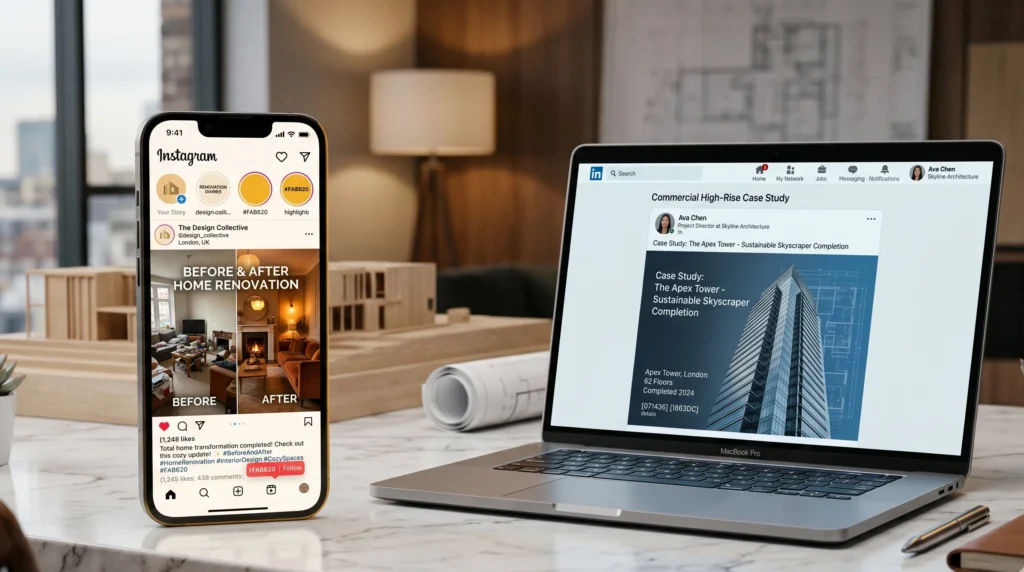
Social media generates construction leads through two distinct mechanisms: organic content that builds brand visibility and trust, and paid social advertising that targets specific demographic and behavioral profiles.
Facebook remains the most effective paid social platform for residential construction lead generation. Contractors can target homeowners within a defined ZIP code radius, filter by home ownership status and income range, and serve before-and-after project photos to audiences most likely to need construction services.
Facebook CPLs for local contractor campaigns range from $30 to $60, according to theAged Lead Store’s home improvement lead cost guide.
Instagram and YouTube serve visual project portfolios. A contractor posting high-quality project photography on Instagram and documenting the construction process in short-form video builds a library of social proof that converts website visitors who discover the firm through search.
LinkedIn is the correct platform for commercial construction lead generation. Developers, real estate investment trusts, property managers, and corporate facility managers use LinkedIn professionally. A GC whose ideal clients are commercial owners should maintain an active LinkedIn presence with case studies and project completions rather than the consumer-facing content Instagram rewards.
7. Email Marketing and Lead Nurturing
Email marketing converts leads who are not ready to hire immediately into clients who contact the contractor when they are.
A contractor who captures an email address from a website visitor through a downloadable project budget guide, a free estimate request form, or a newsletter signup, and follows up with a structured email sequence, keeps the firm visible throughout the lead’s decision cycle.
Companies with strong lead nurturing programs generate 50% more sales-ready leads at 33% lower cost, according to data cited in Martal’s lead generation statistics report. For construction, where project decisions can take weeks or months, email nurturing fills the gap between initial inquiry and hire.
8. Online Reviews and Reputation Management
Reviews are the social proof that converts a lead from browsing to calling.
Homeowners and commercial owners compare contractors on Google, Yelp, Houzz, Angi, and The Blue Book before contacting anyone. A contractor with 4.8 stars across 60 reviews receives more inbound contacts than a competitor with superior work but 3 reviews.
The systematic approach is simple: request a review from every satisfied client within 48 hours of project completion, when satisfaction is highest and the project is fresh. A text message or email with a direct Google review link removes all friction from the process.
Negative reviews require direct, professional responses. A contractor who responds to a critical review with a factual, respectful clarification demonstrates professionalism that often converts skeptical browsers into clients more effectively than a page of 5-star reviews alone.
9. Bid Boards and Public Procurement Platforms
Commercial and public-sector construction leads appear on dedicated bid board platforms before they reach general awareness.
SAM.gov publishes federal construction contracts and subcontracting opportunities across the United States at no cost. State and municipal procurement portals publish local public works bids. BidNet, BidSync, and ConstructConnect aggregate public and private commercial bid opportunities into searchable databases.
Contractors who monitor these platforms systematically, apply only to projects within their capacity and expertise, and submit professionally formatted bids with supporting documentation win a disproportionate share of public-sector contracts compared to competitors who bid reactively.
ACON Engineering’s bid management services support contractors through the full commercial bid cycle, from bid package review through proposal submission, ensuring every bid submitted is accurate, competitive, and professionally presented.
How to Enrich and Action Your Construction Lead List?
Generating construction leads produces a list of company names, project types, geographic areas, and sometimes job titles. The gap between a list and a conversation is contact data. Without a direct email address or phone number for the decision-maker, whether that is the project owner, the developer, or the GC’s estimating manager, a lead sits idle.
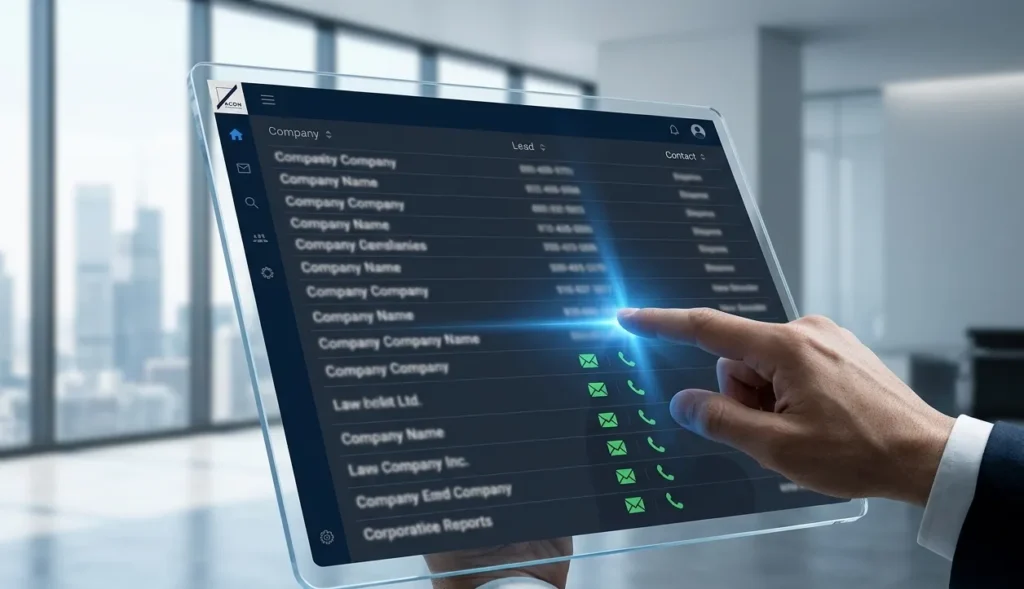
FullEnrich solves this gap through waterfall enrichment. The platform aggregates contact data from more than 20 premium data vendors simultaneously, running each contact through multiple providers in sequence to find the email address and phone number that any single provider alone would miss.
FullEnrich reports an 80% or higher find rate, meaning that for every 10 contacts a contractor uploads, 8 or more return with verified direct contact information.
For construction contractors, the practical application works as follows:
A GC attending a commercial real estate developer conference, a subcontractor receiving a list of active project permits from a municipality, or a contractor downloading project leads from Dodge Data, all produce lists of company and contact names without direct contact details. Uploading that list to FullEnrich returns verified emails and phone numbers for direct outreach within minutes.
FullEnrich integrates with more than 1,000 CRM and outreach applications including HubSpot, Salesforce, and Apollo, enabling contractors to move enriched contacts directly into follow-up sequences without manual data entry. The platform offers 50 free leads with no credit card required, making it accessible for contractors testing enrichment before committing to a paid plan.
Lead generation identifies that a potential client exists. Lead enrichment finds the specific person and contact information required to begin a conversation. Both steps are necessary. FullEnrich makes the second step reliable, fast, and affordable.
How Much Does Construction Lead Generation Cost?
Understanding cost benchmarks by channel prevents budget misallocation. The following figures are drawn from verified published benchmarks.
| Lead Generation Channel | Average Cost Per Lead | Lead Exclusivity | Speed to Lead |
| Google Search Ads | $165.67 (construction/contractors) | Exclusive | Immediate |
| Facebook/Meta Ads | $30 – $60 | Exclusive | 1-3 days |
| Shared Lead Platforms (Angi, HomeAdvisor) | $20 – $75 | Shared (3-5 contractors) | Immediate |
| Houzz Pro (subscription) | Flat monthly rate | White-glove introduction | Varies |
| SEO / Content Marketing | Under $30 (long-term) | Exclusive inbound | 3-6 months to rank |
| Referrals | Near zero direct cost | Exclusive | Warm introduction |
| Bid Boards (SAM.gov, ConstructConnect) | Subscription or free | Competitive bid | Per bid cycle |
A $165 Google Ads lead that converts into a $180,000 commercial contract produces far better ROI than a $25 shared platform lead requiring 8 hours of follow-up that still loses to a faster competitor. Cost per lead must always be evaluated against average project value and close rate. Evaluating CPL in isolation produces decisions that optimize for the wrong metric.
Contractors who allocate 5-15% of projected revenue to lead generation and invest consistently in SEO as a long-term foundation build the most cost-efficient lead systems over time, according to theAged Lead Store’s guide.
Free Construction Lead Generation: What Actually Works Without a Budget
Paid channels produce leads faster. Free channels produce leads that are warmer, more qualified, and more likely to convert. The six methods below generate real construction leads at zero direct cost.
Google Business Profile generates organic local search leads at no cost beyond the time investment. This is the single most impactful free action a contractor can take.
SAM.gov lists federal construction procurement opportunities at no charge. Any contractor registered on the platform can view and bid on federal projects.
State and Municipal Procurement Portals list construction bid opportunities continuously. Every U.S. state maintains a public portal and access is free.
LinkedIn Outreach allows commercial contractors to identify and connect directly with developers, property managers, and institutional facility directors. Personalized connection requests followed by value-led messages generate conversations that paid ads cannot replicate.
Referral Requests cost nothing and produce the highest-converting leads of any channel. Asking every satisfied client directly within 48 hours of project completion is the most overlooked free lead generation tactic in the construction industry.
Houzz and Angi Free Profiles generate organic inbound inquiries without a paid subscription when the profile includes complete project photos and client reviews.
What Separates High-Converting Construction Lead Generation from Low-Converting?

Lead volume is not the goal. Qualified, closeable lead volume is the goal. The gap between those two outcomes is determined by three variables: channel selection, response speed, and follow-up discipline.
Channel selection determines lead intent. High-intent channels such as branded search ads targeting specific project keywords, referrals, and SEO pages optimized for transactional queries produce leads who know what they need and are ready to hire. Low-intent channels produce volume with poor close rates that inflate marketing spend without delivering proportional revenue.
Response speed determines conversion. Contractors responding within 5 minutes are 9 times more likely to convert a lead, according tomarketingltb.com’s guide. Most contractors waste 20-40% of their leads through slow response alone. An automated acknowledgment such as an immediate text or email confirming receipt and committing to a call within the hour bridges the gap between lead arrival and human response.
Follow-up discipline determines close rate. Most construction leads require multiple contacts before converting. A structured follow-up sequence of call, voicemail, email, text, and second call executed over 5-7 business days converts leads that a single outreach attempt loses.
A contractor who responds to a commercial lead using professional Preliminary Estimate Services to deliver a ZIP-code-accurate estimate within 24-48 hours differentiates from every competitor who responds with a vague ballpark or no response at all
Frequently Asked Questions
What is the best lead generation service for contractors?
The best service depends on project type, budget, and capacity to follow up. For residential contractors, Houzz Pro delivers high-quality introductions through a flat-rate subscription that avoids shared lead competition. For commercial contractors, Dodge Data and ConstructConnect provide pre-bid project intelligence. Google Search Ads produce the fastest volume for contractors who can sustain the $165 average cost-per-lead. Referrals produce the highest conversion rate at 56% lead-to-MQL. No single platform replaces a multi-channel system.
How much do construction lead generation companies charge?
Costs vary significantly by platform and model. Shared lead platforms such as Angi and HomeAdvisor charge $20–$75 per lead. Google Search Ads average $165.67 per lead for construction and contractor keywords. Houzz Pro charges a flat monthly subscription rather than a per-lead fee. SEO-driven inbound leads cost under $30 per lead once content infrastructure is established. Contractors should allocate 5–15% of projected project revenue to lead generation and track cost-per-lead alongside close rate and average project value to evaluate true ROI.
How to get construction leads for free?
Free construction lead generation works through five primary channels. Optimizing a Google Business Profile with complete information, project photos, and client reviews generates organic local search calls at no cost. Registering on SAM.gov gives access to federal bid opportunities at no charge. State procurement portals list public construction bids freely. LinkedIn outreach to commercial clients generates conversations without paid advertising. Systematically requesting referrals from satisfied clients produces the highest-converting free leads available to any contractor.
How does lead enrichment improve construction lead conversion rates?
Most lead lists contain company names and project information but lack direct contact details for the decision-maker. Lead enrichment tools such as FullEnrich append verified email addresses and phone numbers to those contacts by searching across 20 or more data vendors simultaneously, achieving an 80% or higher find rate. For contractors doing outbound prospecting, enrichment converts a static contact list into an actionable outreach sequence that reaches the right person rather than a general company inbox.
What close rate should contractors expect from construction leads?
Close rates vary significantly by lead source and follow-up quality. Referral leads close at the highest rates due to pre-existing trust. Paid platform leads close at lower rates because the same lead reaches multiple competing contractors simultaneously. A close rate below 30% on qualified leads signals a sales process problem rather than a lead quality problem, according to marketingltb.com’s construction lead generation guide. Contractors who respond within 5 minutes, provide a professional estimate within 24–48 hours, and follow up consistently across 5–7 contacts produce the highest close rates regardless of channel.

Tim C. is a construction estimating expert and Director at ACON Engineering, specializing in construction cost estimating, quantity takeoffs, and preconstruction planning. He has led thousands of successful project bids and helps contractors make informed, profitable decisions.