
Many skilled contractors face a frustrating reality. They do excellent work on the job site, but they still struggle to find new projects regularly.
Word-of-mouth referrals are great when they happen, but they are completely unpredictable. When those referrals slow down, the business suffers. You still have to pay for your equipment leases, office space, and your core team, even when no new contracts are coming in. Waiting around and hoping for past clients to reach out is not a sustainable way to run a company.
To survive and grow, you need a proactive system to acquire new clients. This guide covers the exact steps you can take right now to build a reliable pipeline and secure profitable contracts year-round.
1. Build a strong online presence
Your digital footprint is the very first impression a potential client gets. If they cannot find your business or if your site doesn’t look professional, they will simply click away and call a competitor. When figuring out how to market a construction business, establishing a solid online foundation gives you visibility and builds immediate trust with people who are actively looking to hire.
- Create an optimized website: Your website needs to load fast and look great on a mobile phone. Dedicate clear pages to your main services so visitors know exactly what you do. Add a professional about section to introduce your team. Upload high-quality photos of your finished projects and write case studies that explain how you solved specific building problems.
- Claim your Google Business Profile: When a property owner has an urgent project, they search Google. A verified business profile puts you directly in front of them. Keep this profile completely updated with your correct address, phone number, and working hours. Make it a habit to ask every happy client for a review. Replying to those reviews professionally shows you actually care about customer feedback.
- Target local SEO: You want your business to show up when someone searches for a commercial contractor in your specific city. Write blog posts and service pages that naturally include location-based keywords. Covering local search intent helps your company drive highly qualified traffic.
- Maintain active social media profiles: Consistency matters here. Use platforms like LinkedIn to connect with property managers, developers, and architects. Post regularly about your current projects. Sharing photos of your crew at work proves you are active in the market and gives people a visual reason to trust your skills.
- Share authentic content: People buy from contractors they trust. Post short behind-the-scenes videos showing how your team approaches a difficult structural issue. Talk about the materials you use and why you chose them. Keeping your content honest and educational establishes your company as a true authority in the local construction market.
2. Network directly with general contractors
The most profitable construction jobs rarely make it to public job boards. General contractors usually pass these projects directly to a trusted list of preferred subcontractors. If you want those contracts, you have to get out of the office and actively shake hands with the people running the big sites.
Start by joining industry groups like the Associated General Contractors of America (AGC). Attending their meetings puts you in the same room as the major players in your local market. You should also check out your local Chamber of Commerce. These regular meetings bring business leaders and local builders together. It is a perfect place to introduce yourself and start building a strong local reputation.
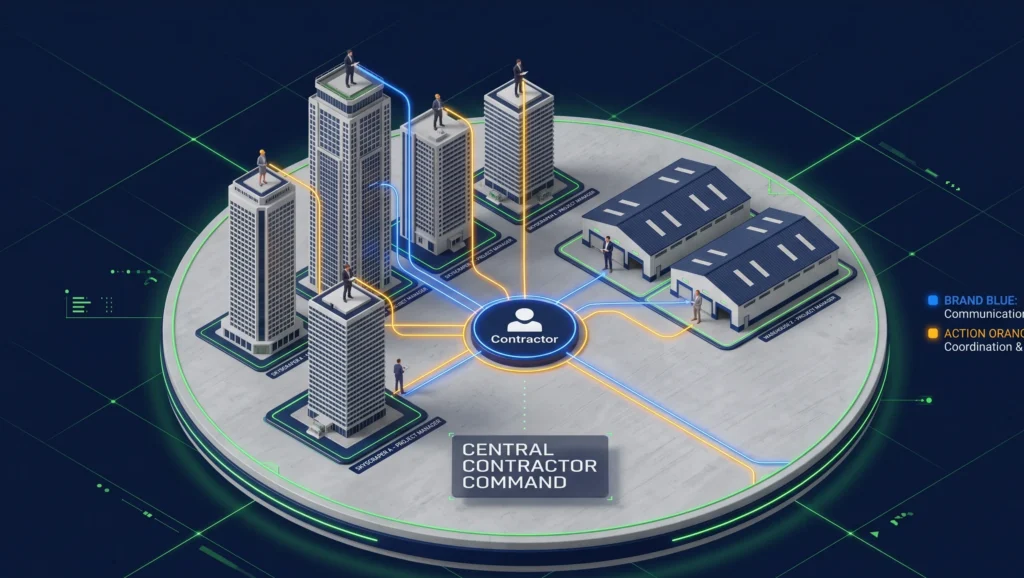
Networking also happens online and right out in the field. Use LinkedIn to find the lead project managers at major local firms. Send a simple, respectful message and try to offer some actual value before you ask for work. You can also visit active job sites in person. Walk up to the main office trailer, introduce yourself, and ask what kind of trades they need for upcoming phases. Just be highly respectful of their schedule. If a general contractor does not respond right away, do not worry. Send a polite follow-up a few weeks later to keep your name fresh in their mind.
3. Ask past clients for reviews and referrals
Many contractors completely overlook one of the easiest ways to find new work. They finish a job, hand over the final invoice, and walk away. If you want to keep your pipeline full, you need to actively ask your past clients for reviews and direct referrals. A personal recommendation from a happy property owner carries much more weight than an expensive online advertisement.
The best time to ask is the exact moment you finish the physical work. When the client is standing in the finished space and feeling great about the project, simply ask them to leave a quick review on your business profile. You should also ask if they know any other property owners or developers who might need your specific services.
To make this strategy even stronger, set up a basic referral program. You can offer a small reward to anyone who sends a new paying client your way. When someone does send a referral, always reach out with a genuine thank-you note. Showing real appreciation builds a lasting relationship and turns your past clients into an active word-of-mouth marketing team for your business.
4. Use construction lead generation services
When you need to find clients quickly, lead generation services are a great tool. Platforms like Thumbtack, Angi, Houzz, and Building Radar put you directly in front of property owners who are actively looking to hire a contractor right now.
To make these platforms work, you have to optimize your profiles to stand out. Upload clear photos of your work and write exact descriptions of the services you offer to increase your visibility. Once your profile is live, use their active search tools to find projects that match your skills.
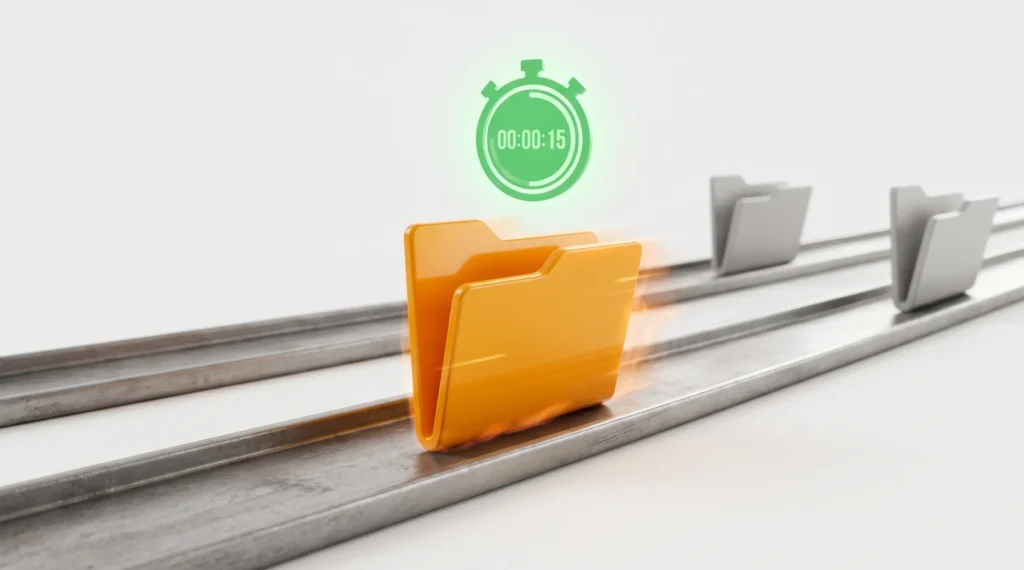
The biggest rule with these services is speed. When a new lead pops up, you are usually competing with a few other local contractors at the same time. You must respond to messages and call prospects back immediately. If you wait a few hours to reach out, someone else has already claimed the job.
You also need to watch your numbers very closely. Buying leads gets expensive fast. Track your Key Performance Indicators (KPIs) and measure your Return on Investment (ROI) every single month. If a specific platform costs you more money than it actually brings in, drop it and focus your budget somewhere else.
5. Participate in commercial bidding platforms
If you want to step away from small residential jobs and win large commercial contracts, you need to join dedicated bidding networks. Platforms like ConstructConnect provide massive databases filled with private commercial projects that you will never find through a simple internet search.
These platforms let you filter active projects by your exact trade and zip code. You get direct access to the blueprints and the contact information of the project owners.
You should also look into government portals. Websites like SAM.gov list major public works and local municipal projects. Learning how to bid on construction projects for the government requires strict compliance and extra paperwork, but public projects offer a highly reliable source of steady income. Signing up for these specific commercial databases puts your company in the running for the biggest contracts in your city.
6. Outsource your cost estimation to bid faster
Finding a great lead means nothing if you cannot submit a highly accurate bid on time. If you do not know exactly how to estimate construction costs and end up guessing on your numbers, you completely waste the opportunity. Hiring a specialized estimator lowers your office overhead, improves your accuracy, and drastically increases your bidding speed.
To make this work, you have to select a qualified and authentic partner. Establish clear communication right from the start. Provide them with detailed drawings, a complete scope of work, and your exact Key Performance Indicators (KPIs), so they know exactly what you expect.
You can skip the trial and error by partnering directly with ACON Engineering. They provide highly accurate, zip-code-specific pricing with a fast 24 to 72-hour turnaround. Passing this work to them allows you to bid on three times as many projects without spending your nights doing manual math. Their certified estimators strictly follow AACE and American Estimators Organization standards, using industry-leading software like Bluebeam and RS Means.
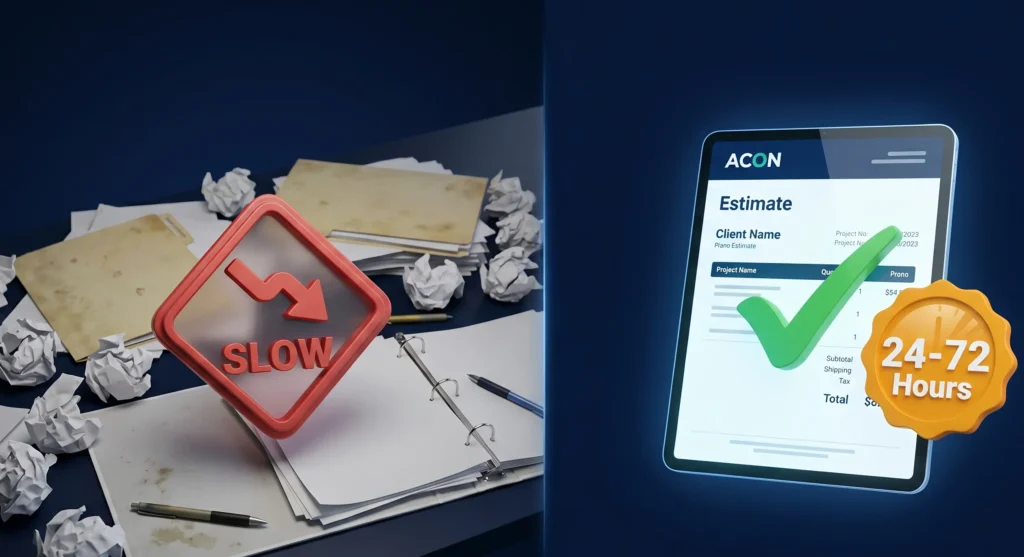
ACON Engineering covers a massive range of needs by offering professional construction estimating services, including construction takeoffs, bid management, and estimating consulting. Whether you need specialized MEP estimating, residential estimating, or complex industrial estimating, they handle it all. Outsourcing this step saves you a significant amount of money on full-time salaries while helping you figure out how to win construction bids consistently.
7. Start with small projects to build trust
Major developers and property managers rarely hand massive contracts to unproven contractors. If you want to build a strong local reputation, you need to start with smaller, low-risk projects. Taking on minor residential renovations or basic outdoor improvements allows you to manage the job properly from start to finish.
These smaller jobs are the perfect place to establish your professionalism early. Practice active listening with the property owner and keep your communication completely transparent. Document every phase of the project, show up consistently on time, and match your core business values with your actual daily work.
When you complete a smaller project efficiently, it naturally leads to highly positive customer feedback. You can use these successful jobs to build a strong physical portfolio and network locally with the neighbors and adjacent businesses. Earning trust on a small scale proves your reliability and directly opens the door for much larger contracts and steady business growth in the future.
8. Partner with local real estate professionals
Real estate agents, property managers, and house flippers constantly need reliable contractors to fix up properties before a sale or maintain rental units. Building a strong relationship with these professionals creates a steady, repeating stream of clients for your business.
Start by visiting local open house events. Walk in, introduce yourself to the real estate agent, and have a friendly conversation. Present your services clearly and explain how you can help them close deals faster by handling quick repairs. You should also opt for targeted outreach. Look for active agents by checking local “for sale” signs, billboards, and online networking tools. Do your industry research to find the top producers in your city and reach out to them directly.
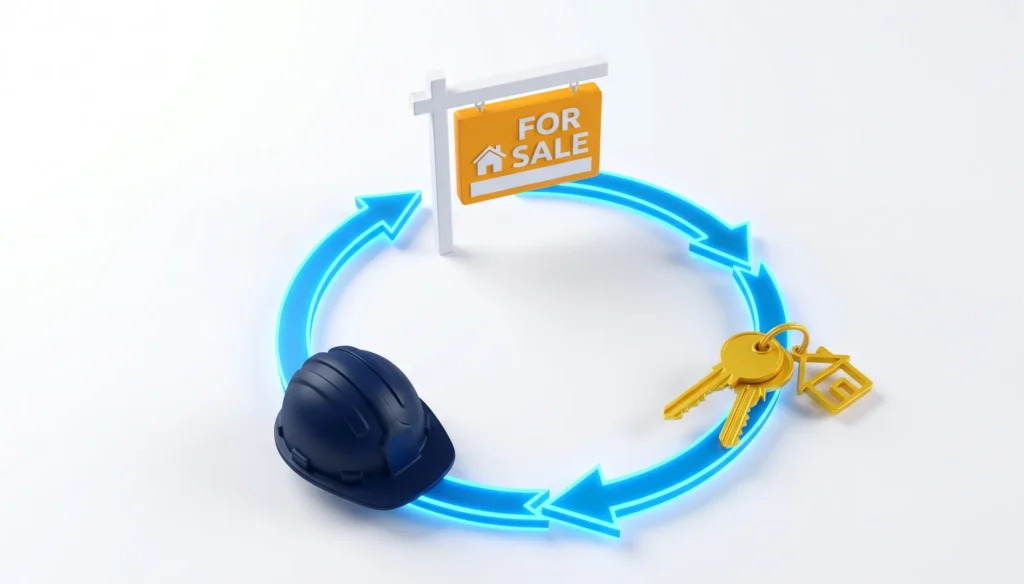
To win their business, you have to offer value first. Provide value-driven incentives, like discounted priority inspections, to make your company their immediate go-to source. You can also suggest co-marketing partnerships where you both share each other’s services with your local audiences. Above all, you must deliver consistency and reliability. Show up exactly when you promise, maintain high professionalism, and always show genuine gratitude when an agent sends a new project your way.
9. Use a CRM to track and follow up on leads
Finding a new prospect takes a lot of hard work, but most contractors lose clients simply because they forget to call them back. When you try to manage your contacts through sticky notes or text messages, important details fall through the cracks. To fix this, you need to use a Customer Relationship Management (CRM) tool to track every single lead from the first phone call to the final invoice.
A good CRM acts as a centralized system for all your communication and project documents. You can set up automatic lead capture straight from your website so you never miss an inquiry. It gives you a highly visual sales pipeline, allowing you to see exactly which prospects are waiting on a quote and which ones are ready to sign a contract. Most importantly, you can use smart follow-up features that automatically remind you to reach out to a client a few days after you submit a proposal.
You can also use this software to track your active bids and estimates in one organized place. Keep things simple by selecting one straightforward CRM and training your entire team on how to use it. Make it a habit to review your performance data regularly to see exactly which lead sources bring in the most money, allowing you to streamline your entire sales system.
Final thoughts
Being a great builder is only half the job. The other half is making sure people actually know you exist. Start by cleaning up your website and your local search profiles so property owners can find you quickly. Talk to real estate agents, meet with general contractors, and always ask your happy clients to spread the word. If you back up that daily effort with an organized CRM and fast, accurate bids from a partner like ACON Engineering, the contracts will follow.
Frequently Asked Questions (FAQs)
How do independent contractors find clients?
Independent contractors find clients by combining local networking with a strong digital footprint. They actively talk to local developers and real estate agents to get word-of-mouth referrals. At the same time, they keep their Google Business Profile updated and use local SEO to capture leads from property owners who are searching for help online.
How can I get construction leads for free?
The most effective way to get free leads is by asking your past clients for direct referrals and online reviews. You can also attend local community events, join community Facebook groups dedicated to your city, and claim your free Google Business Profile so local searchers naturally find your company without you paying for ads.
Should I focus on residential or commercial projects to grow faster?
This depends entirely on your current cash flow. Residential projects usually pay faster and have shorter timelines, making them great for keeping cash moving. Commercial projects offer much higher payouts but often require a lengthy bidding process and longer wait times for the final check. Many growing companies start with residential work to build a financial buffer before slowly taking on commercial contracts.
How do I stand out when competing against larger construction companies?
You stand out by offering a highly personal client experience and moving much faster than the big competitors. Large firms often move slowly and treat smaller jobs like numbers on a spreadsheet. If you answer your phone immediately, provide an incredibly detailed and accurate estimate on time, and communicate clearly from day one, clients will often choose you over a massive company.

Tim C. is a construction estimating expert and Director at ACON Engineering, specializing in construction cost estimating, quantity takeoffs, and preconstruction planning. He has led thousands of successful project bids and helps contractors make informed, profitable decisions.